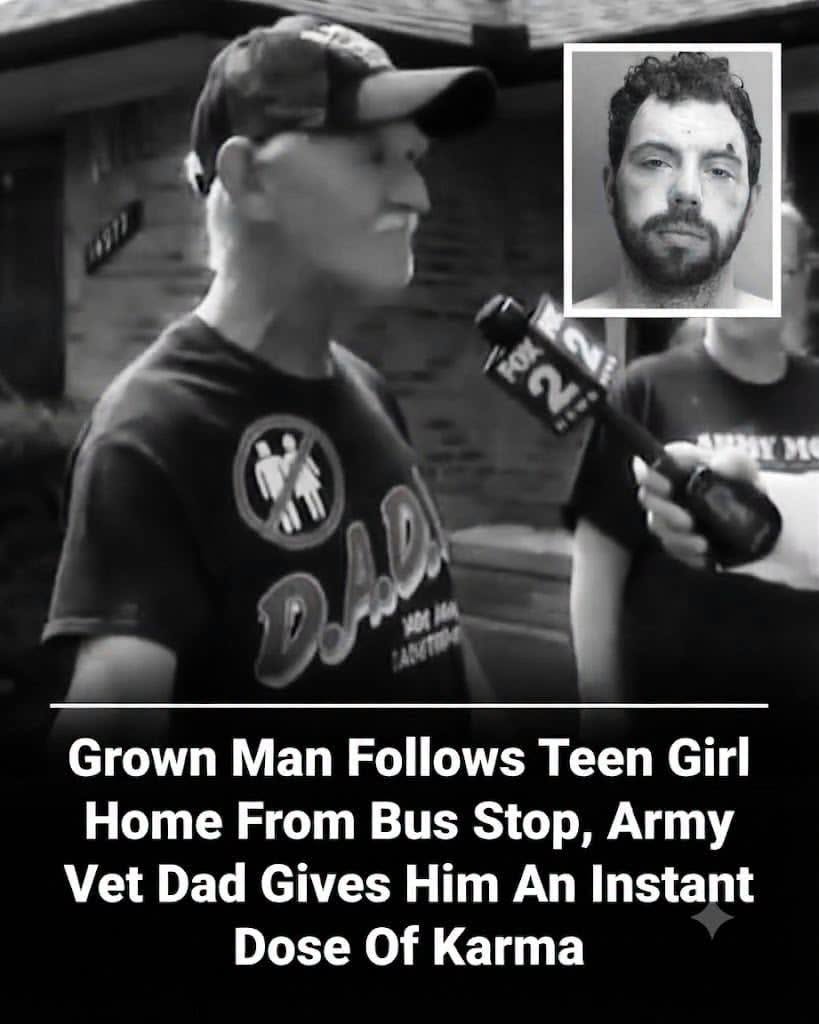
What began as an ordinary afternoon in a quiet Livonia neighborhood quickly became the kind of frightening experience no parent ever wants their child to face.
A teenage girl had just gotten off the bus and was making her way home when she realized something was wrong.
A grown man was following her.
At first, she may have hoped it was simply a coincidence. Perhaps he was walking in the same direction. Maybe he would turn onto another street.
But he didn’t.
The farther she walked, the more obvious it became that the man was continuing to follow her. What should have been a routine trip home suddenly became a desperate attempt to reach the safety of her house.
She eventually made it inside, but the fear did not disappear when the door closed behind her.
Her father knew immediately that something was seriously wrong.
For a parent, there are moments when instinct takes over before there is time to think. This was one of them.
He didn’t know exactly what the stranger intended to do, but he knew his daughter had been followed home by an adult man, and that was enough.
The father, an Army veteran, quickly got into his truck and began following the suspect.
He wasn’t acting out of a desire for revenge.
His priority was finding the man, keeping him in sight, and making sure police could locate him before he disappeared.
At the same time, he remained in contact with 911, providing information about where the suspect was going.
It was a tense pursuit through otherwise ordinary streets.
The neighborhood that had seemed peaceful only minutes earlier suddenly became the backdrop for a frightening search. The father followed from a distance while emergency dispatchers worked to coordinate a police response.
As word spread among nearby residents, other people began paying attention as well.
Neighbors watched from their homes and yards. Some kept an eye on the suspect’s movements. Others tried to help guide authorities toward his location.
The situation had become a community effort.
Nobody knew exactly what the man’s intentions had been, but the circumstances were disturbing enough that people were unwilling to simply look away.
Eventually, police officers arrived.
The suspect was located and taken into custody, bringing the immediate pursuit to an end.
For the father, however, the story was far from over.
The physical danger may have passed, but his daughter’s sense of security had been deeply shaken.
A place that had once represented routine and familiarity suddenly felt different. The simple act of getting off a bus and walking home had become something frightening.
She was reportedly afraid to return to school.
That detail reveals something important about incidents like this. From the outside, people often focus on the arrest, the charges, and the dramatic pursuit. But for the person who experienced the fear firsthand, the emotional consequences can last much longer.
A police vehicle leaving the neighborhood doesn’t automatically make someone feel safe again.
A suspect being handcuffed doesn’t erase the memory of being followed.
And a criminal case being filed cannot instantly restore the confidence that was lost.
According to the account of the 2019 incident, the man eventually faced charges including breaking and entering and assaulting a police officer.
Those allegations became part of the legal process, where investigators and prosecutors would determine what happened and what consequences were appropriate.
But for the family, the most important outcome was simpler.
Their daughter was safe.
The father had been able to recognize the danger, respond quickly, contact authorities, and help keep the suspect from simply disappearing.
The case also highlighted the importance of paying attention to warning signs.
For teenagers, being followed can be difficult to interpret in the moment. They may wonder whether they are imagining things or worry about overreacting.
That uncertainty can make an already frightening situation even worse.
Parents, meanwhile, often face the opposite problem. They want their children to become independent, but they also understand that independence doesn’t mean being expected to handle every dangerous situation alone.
The incident became a powerful reminder that children should know they can speak up when something feels wrong.
They should know where they can seek help.
They should know that calling a parent, trusted adult, school official, or emergency service is not an overreaction when they genuinely feel threatened.
And they should never be made to feel responsible for another person’s inappropriate or threatening behavior.
The father’s response also demonstrated another important lesson: protecting someone doesn’t always mean confronting danger directly.
His military background may have influenced the way he reacted under pressure, but the most important decision he made was to involve law enforcement rather than attempting to handle the entire situation himself.
He kept the authorities informed.
He observed.
He followed without simply turning the situation into a personal confrontation.
And he allowed trained officers to take over when they arrived.
That distinction matters.
In frightening situations, adrenaline can make people act impulsively. But the safest response is often to create distance, contact authorities, provide useful information, and avoid escalating the encounter unnecessarily.
The neighbors who became involved also played a role in the story.
Communities are often at their strongest when people pay attention to what is happening around them instead of assuming someone else will handle it.
A suspicious person moving through a neighborhood may be noticed by several people before anyone realizes the significance of what they are seeing.
A neighbor who remembers a vehicle.
A resident who notices someone walking where they shouldn’t be.
A witness who calls police.
A person who stays alert rather than turning away.
Small pieces of information can become important when investigators reconstruct an incident.
Years later, the Livonia case remains memorable because of how quickly an ordinary afternoon transformed into a frightening confrontation.
A teenager simply wanted to get home.
A stranger allegedly followed her.
Her father recognized the seriousness of the situation and acted.
Police responded.
And a potentially dangerous encounter ended with the suspect in custody rather than continuing through the neighborhood.
The story is not simply about a father chasing a stranger.
It is about what happens when someone refuses to dismiss a warning sign.
It is about a teenager trusting that something was wrong.
It is about a parent taking his child’s fear seriously.
It is about neighbors paying attention.
And it is about law enforcement stepping in before the situation could potentially become even more dangerous.
Perhaps the most lasting lesson is that danger doesn’t always announce itself.
It can appear during a normal walk home, in a familiar neighborhood, on an ordinary afternoon.
That is why awareness matters.
Children should be encouraged to trust their instincts when something feels wrong. Parents should listen without immediately dismissing their concerns. Communities should remain observant without turning suspicion into vigilante action. And when a genuine threat appears, authorities should be contacted as quickly as possible.
For this family, the experience changed the way an ordinary journey home was viewed forever.
The bus stop was no longer simply a bus stop.
The walk home was no longer simply a walk home.
But the frightening afternoon also showed what can happen when people respond instead of ignoring the warning signs.
The daughter made it home.
Her father acted.
Neighbors paid attention.
Police arrived.
And a terrifying situation ended with an arrest.
Sometimes the most important kind of protection isn’t dramatic.
It is recognizing that something is wrong, refusing to look away, and making sure the right people know about it before the opportunity to intervene disappears.