It began as what seemed like an ordinary afternoon.
People wandered through the busy square, chatting with friends, sipping coffee, taking photographs, and enjoying the day without the slightest hint that they were about to witness something extraordinary. Families pushed strollers across the pavement. Tourists admired nearby landmarks. Street performers entertained small crowds while shoppers moved from store to store, completely unaware that within moments, the peaceful atmosphere would change.
Then the shouting began.
Heads turned almost instantly.
What first sounded like an isolated argument quickly escalated into something much larger. Raised voices echoed across the square as two individuals became the center of attention. Curious bystanders slowed their pace. Others stopped entirely, trying to understand what had sparked such an emotional confrontation.
Within seconds, smartphones appeared.
Almost instinctively, dozens of people lifted their phones into the air, pressing record before they even understood what they were watching. In today’s world, extraordinary moments rarely stay private for long. Before anyone knew how the situation would end, it was already being documented from multiple angles.
The disagreement intensified.
Witnesses later described seeing emotions spiral rapidly beyond what anyone expected. Voices grew louder. Gestures became more animated. The tension attracted an even larger crowd as people gathered around, each person hoping to understand what had happened.
Some observers attempted to calm the situation.
Others urged everyone nearby to step back.
Several people called emergency services.
Meanwhile, the cameras continued rolling.
When police officers arrived, they immediately focused on restoring order rather than reacting to the growing audience surrounding the incident. Officers carefully assessed the situation, speaking firmly while attempting to de-escalate emotions that had already reached an alarming level.
Their challenge extended far beyond the individuals involved.
Every move they made unfolded before hundreds of watching eyes and dozens of recording devices.
Modern policing often occurs under constant public observation, where every decision can be replayed, analyzed, criticized, and shared across countless platforms within minutes.
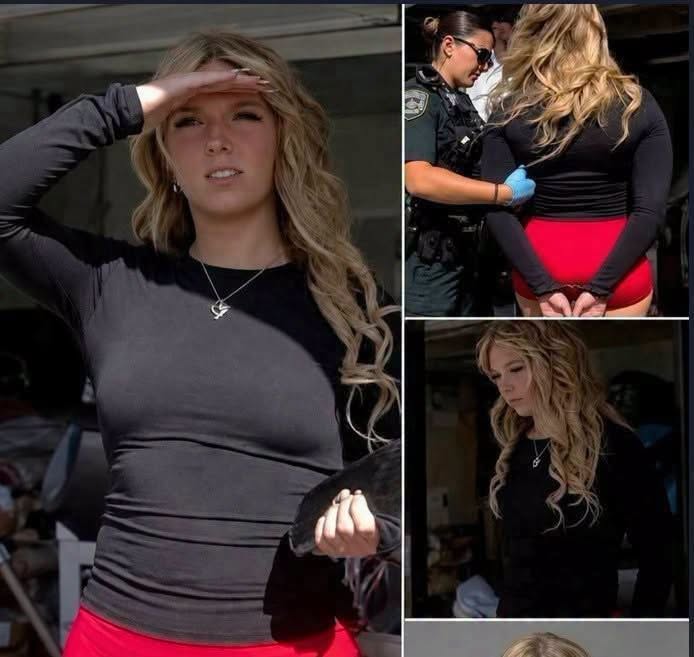
Eventually, officers detained one individual while continuing to ensure everyone else remained safe.
As the crowd slowly dispersed, many assumed the event had reached its conclusion.
In reality, it was only beginning.
Within minutes, short video clips appeared across multiple social media platforms.
Some videos focused only on the argument.
Others captured the police response.
Several removed nearly all context, showing only the most dramatic moments.
Each upload came with its own caption.
Each caption shaped a different narrative.
Some described the event as shocking proof of public disorder.
Others praised the officers’ professionalism.
Still others turned the incident into entertainment, pairing dramatic music with carefully edited footage designed to maximize engagement rather than understanding.
The internet immediately went to work.
Millions of people who had never visited the square suddenly believed they knew exactly what had happened.
Comment sections exploded.
Opinions formed almost instantly.
Many viewers confidently judged the individuals involved despite seeing only seconds of footage.
Others criticized the behavior of bystanders who chose to film rather than intervene.
Another group questioned whether filming itself had become part of the problem.
Experts have increasingly observed this pattern in the digital age.
Extraordinary events no longer end when police leave or crowds disperse.
Instead, they begin a second life online.
Videos are clipped, reposted, slowed down, zoomed in, and interpreted through countless personal perspectives.
A single moment becomes hundreds of different stories depending on who shares it and how they choose to frame it.
Context often disappears.
Emotion remains.
That emotional reaction fuels clicks, comments, and endless debate.
Yet behind every viral clip are real people.
The individual at the center of the confrontation must now live with footage that may continue circulating for years.
Family members, friends, employers, and complete strangers can encounter those videos long after the original event has faded from public memory.
One difficult afternoon becomes part of someone’s permanent digital identity.
The officers involved face similar challenges.
Every gesture, every word, every decision becomes subject to detailed public analysis.
Split-second judgments made under pressure are examined frame by frame by viewers who enjoy the benefit of hindsight and unlimited replay.
Meanwhile, the ordinary people who happened to be nearby unexpectedly found themselves appearing in videos viewed by audiences around the world.
Some had simply been walking through the square.
Others had brought children for a relaxing afternoon.
None expected to become background figures in a viral story discussed by millions.
Psychologists say public fascination with dramatic moments reflects something deeply human.
People naturally seek explanations during unexpected events.
They want heroes.
Villains.
Simple answers.
But reality rarely provides such clarity.
Most real-life conflicts involve complicated emotions, misunderstandings, personal struggles, or circumstances invisible to outside observers.
A short video rarely tells the whole story.
Still, millions often believe otherwise.
Technology has given nearly everyone the ability to become both witness and broadcaster.
Years ago, an event like this might have survived only in local newspaper reports or neighborhood conversations.
Today, almost every public incident has the potential to reach global audiences before official facts become available.
That shift has changed not only journalism but everyday life.
People increasingly behave with the awareness that someone nearby may always be recording.
Some argue this creates accountability.
Others worry it creates constant performance.
Even moments of genuine crisis now unfold beneath countless cameras.
After the square returned to normal, shopkeepers reopened their doors.
Street performers resumed entertaining visitors.
Children laughed again as they chased pigeons across the pavement.
To anyone arriving later, nothing suggested that anything unusual had happened earlier that day.
Online, however, the incident continued growing.
New edits appeared.
Reaction videos multiplied.
Debates expanded into broader discussions about policing, privacy, social media, and public behavior.
The original event gradually became secondary.
The conversation surrounding it became the real story.
Perhaps that reveals something important about modern society.
Technology allows us to preserve moments with incredible accuracy.
But preserving an image is not the same as preserving understanding.
Every camera captures only one angle.
Every upload reflects one perspective.
Every viewer brings personal assumptions that shape what they believe they are seeing.
The footage itself may remain unchanged.
Its meaning rarely does.
That is why moments like these continue resonating long after the crowds disappear.
They force uncomfortable questions about responsibility not only for those involved in the incident, but for everyone watching from behind a screen.
When we raise a phone instead of offering help…
When we share before verifying…
When we judge before understanding…
Are we simply documenting reality?
Or are we helping create a version of reality that follows someone forever?
The square eventually fell silent.
The internet never did.
Long after the police left, after the crowds scattered, and after daily life resumed, the cameras kept telling the story.
Whether that serves justice, curiosity, or something far less compassionate remains a question each viewer must answer for themselves.