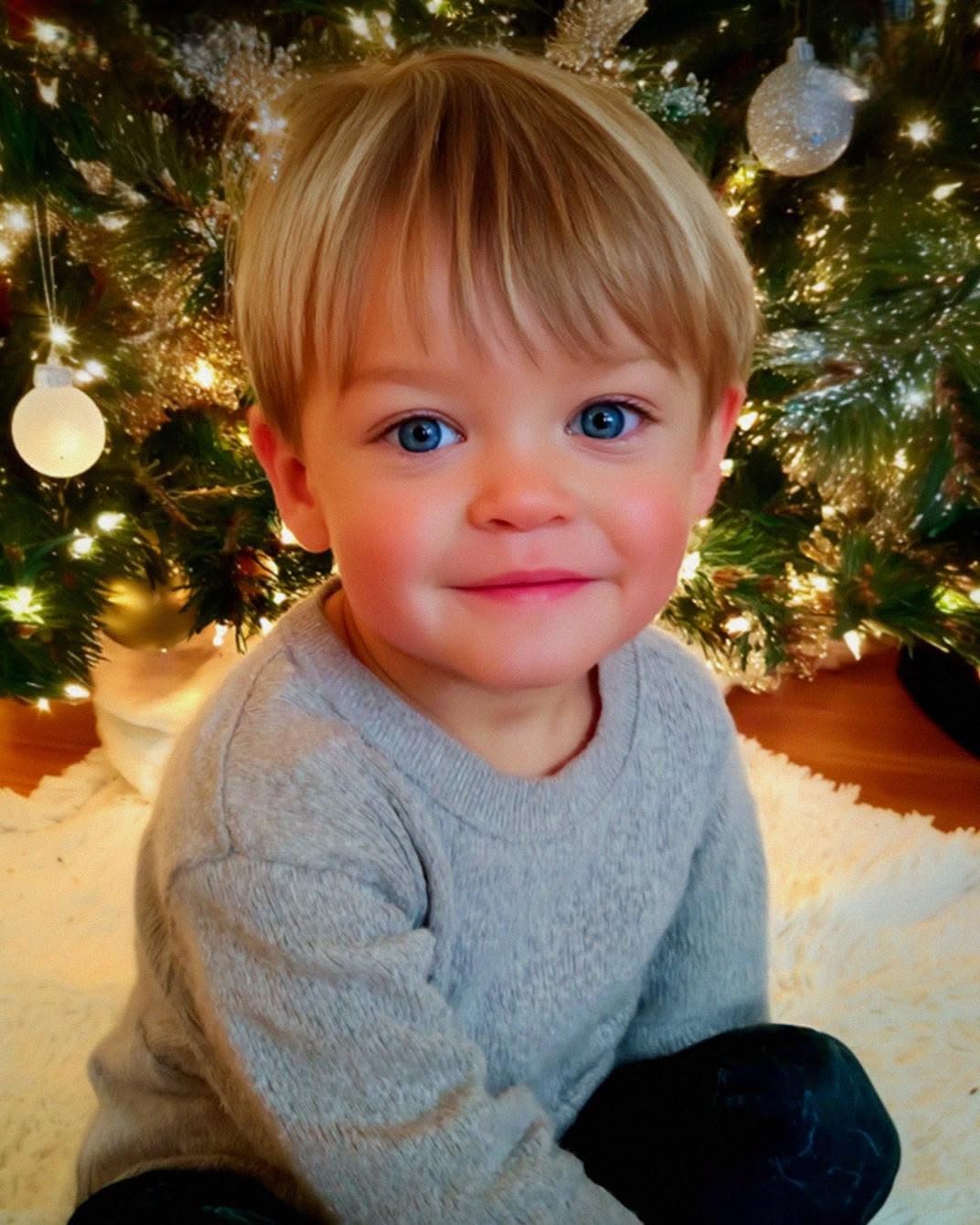
When he first came into our home, he did not arrive like a child looking for a fresh start.
He arrived like someone waiting for the next storm.
He carried no dramatic story that he could explain. No long speeches. No clear words describing what he had survived or what he feared. Instead, everything he felt appeared in the small moments most people might have missed.
The way he stood near the doorway.
The way his eyes searched every room before he stepped inside.
The way he watched our expressions carefully, as if trying to predict what would happen next.
He was a child, but he carried himself like someone who had already learned that safety could disappear without warning.
At first, we did not know how much he had been carrying.
We only knew that something inside him was constantly alert.
He studied the house like it was a place he needed to understand before trusting it. He noticed where the exits were. He remembered where everything was kept. He watched our routines and paid attention to every sound.
The smallest things seemed important to him.
A door closing too quickly.
A voice becoming slightly louder.
A sudden movement behind him.
Things that most children would ignore became signals he needed to analyze.
It was as if his mind was always asking the same question:
“Am I safe here?”
And the hardest part was knowing that we could not simply tell him once and expect him to believe it.
For some children, love is something they accept naturally.
For others, love has to be proven again and again.
He needed evidence.
Not promises.
Not explanations.
Not words that sounded beautiful but disappeared when life became difficult.
He needed consistency.
So we started with small things.
We learned to move slowly around him.
We announced ourselves before entering a room so he would not feel surprised.
We kept our voices calm, even during ordinary moments.
We placed food where he could see it and made sure he understood that it would still be there when he was ready.
There was no pressure.
No expectation that he had to trust us immediately.
We understood that trust is not something you demand from a child who has learned to protect himself.
Trust is something you build.
One ordinary day at a time.
In the beginning, meals were difficult.
He would hesitate before eating, almost as if he was waiting for someone to tell him he could not have it. He would look at others before taking another bite. He seemed unsure whether comfort was something he was allowed to receive.
So we never rushed him.
We simply stayed.
We showed him that food would return tomorrow.
That kindness would still exist tomorrow.
That the same people who smiled at him today would still be there the next morning.
Slowly, the fear began to lose its power.
Not all at once.
Not in some dramatic moment.
But through hundreds of small experiences that quietly rewrote what he believed about the world.
The same person waiting for him after school.
The same bedtime routine.
The same blanket placed neatly at the end of his bed.
The same gentle reminder whenever fear returned:
“You’re safe.”
At first, those words seemed to mean nothing to him.
He heard them, but he did not trust them.
And that was okay.
Healing does not happen because someone says the right thing once.
It happens when someone keeps showing up long enough for those words to become true.
Weeks passed.
Then months.
The silence that once filled every room slowly began to change.
He started asking questions.
At first, they were simple questions.
Questions about the house.
Questions about schedules.
Questions about what would happen next.
But those questions were important.
Because every question was a sign that he was beginning to believe there would actually be an answer.
A child who expects abandonment does not waste energy wondering about the future.
A child who begins to feel safe starts imagining tomorrow.
And then came the little moments we will never forget.
The first time he laughed without immediately looking around.
The first time he asked for something instead of waiting silently.
The first time he made a mistake and did not panic.
The first time he trusted that being imperfect would not make people leave.
Those moments seemed small from the outside.
But to us, they were enormous.
Because we knew how far he had come.
We knew the courage it took for him to lower his defenses.
We knew that every smile represented a battle he had fought quietly.
The biggest change came one night when we noticed something we had never seen before.
He was asleep.
Peacefully.
Completely.
And he was not positioned toward the door.
He was not listening for every sound.
He was not protecting himself while he rested.
For the first time, he had fallen asleep believing that the world would still be safe when he woke up.
That moment stayed with us because it revealed something powerful.
Healing is not always obvious.
It does not always look like a celebration.
It does not always come with a dramatic transformation that everyone notices.
Sometimes healing looks like a child finally relaxing his shoulders.
Sometimes it looks like a deeper breath.
Sometimes it looks like closing your eyes at night without fear.
Love changed him, but not because we rescued him with one perfect act.
Love changed him because we gave him something he had been missing:
Consistency.
Patience.
A place where he did not have to earn care.
A place where he could simply exist.
Over time, he learned that not every goodbye means someone is leaving forever.
He learned that mistakes do not destroy relationships.
He learned that a home is not just a building.
It is a feeling created by people who choose to stay.
His journey reminded us that children do not always need someone to fix everything immediately.
Sometimes they need someone willing to walk beside them while they learn that the world can be different.
The boy who once stood at the edge of every room eventually stepped into the center.
The child who once guarded every emotion eventually began sharing them.
The child who once expected everything good to disappear finally discovered something he could trust.
Love could stay.
And sometimes, the greatest sign of healing is not a child running toward you.
It is a child who finally believes he does not have to run away.