A tense international confrontation has pushed world leaders into unfamiliar territory, with powerful statements, military threats, and diplomatic warnings creating fears of a much larger conflict.
As tensions continue rising in the Middle East, officials around the world are carefully watching every move, knowing that a single decision could determine whether the situation moves toward negotiation or a dangerous escalation.
In Tehran, Iranian Foreign Minister Abbas Araghchi delivered one of the strongest warnings yet, declaring that Iran “reserves all options” in response to what his government described as an attack on its sovereignty.
The statement immediately intensified concerns among diplomats and security experts, who warned that the situation had entered a highly unpredictable phase.
For Iran, the issue is not only about military retaliation.
Officials in Tehran have framed the incident as a violation of international law, arguing that the country has the right to defend itself under the United Nations Charter. Iranian leaders insist that any response would be justified as an act of self-defense rather than aggression.
The message was clear: Iran wanted the world to understand that it would not simply accept the attack without consequences.
Inside the United Nations, emergency discussions began as diplomats attempted to understand the possible outcomes. Some questioned whether the confrontation would remain limited, while others feared it could become the beginning of a much wider regional crisis.
The concern was not only about direct military action.
A major conflict in the region could affect global energy markets, international trade, and security relationships between powerful nations. Any escalation involving Iran, Israel, or other regional actors could quickly create consequences far beyond the Middle East.
Across Western capitals, leaders found themselves facing a difficult balancing act.
Publicly, many called for calm, diplomacy, and restraint. Privately, governments began preparing for possible scenarios involving missile attacks, cyber operations, and disruptions to important transportation routes.
The possibility of instability in major oil-producing regions created additional pressure, as governments worried about economic consequences for people around the world.
For some leaders, the challenge was preventing further escalation without appearing weak.
For others, the priority was protecting allies and maintaining strategic influence.
The situation became even more complicated because of the sharply different messages coming from each side.
Israel described the action as a major achievement and a necessary step for national security. Supporters argued that strong action was required to prevent future threats.
Iran, however, presented the event in completely different terms, describing it as an unlawful attack and promising that the consequences would be remembered.
The gap between these two positions became one of the biggest obstacles facing diplomats.
When governments publicly commit to strong responses, stepping back can become politically difficult. Leaders often face pressure from their own populations, military officials, and political supporters to avoid appearing weak.
This creates a dangerous situation where words can begin limiting the choices available.
Statements made during moments of anger can later become promises that leaders feel forced to keep.
That is why many international observers focused not only on military movements but also on language.
Every speech, warning, and public announcement was being analyzed for signs of possible compromise or preparation for further confrontation.
Meanwhile, countries around the world watched carefully.
Some governments urged immediate negotiations, warning that continued escalation could create consequences nobody could fully control.
Others expressed support for their allies while emphasizing the importance of avoiding a broader conflict.
The uncertainty has created a fragile atmosphere where diplomacy remains possible, but time appears increasingly limited.
The greatest fear among many experts is that a cycle of retaliation could begin.
One side responds to an attack.
The other side answers with another strike.
Each action creates pressure for the next response.
Eventually, what begins as a limited confrontation can grow into something much larger.
History has shown that conflicts can expand quickly when leaders underestimate the consequences of escalation.
That possibility has made international efforts to maintain communication more important than ever.
Behind the public statements, diplomatic channels often continue operating even during moments of extreme tension. Countries may disagree openly while still working quietly to prevent the situation from becoming uncontrollable.
The coming days could determine whether this crisis becomes a short-lived confrontation or a defining moment in global politics.
For now, the world remains caught between two competing possibilities.
One path leads toward further retaliation, military escalation, and uncertainty.
The other requires difficult negotiations, compromise, and political courage.
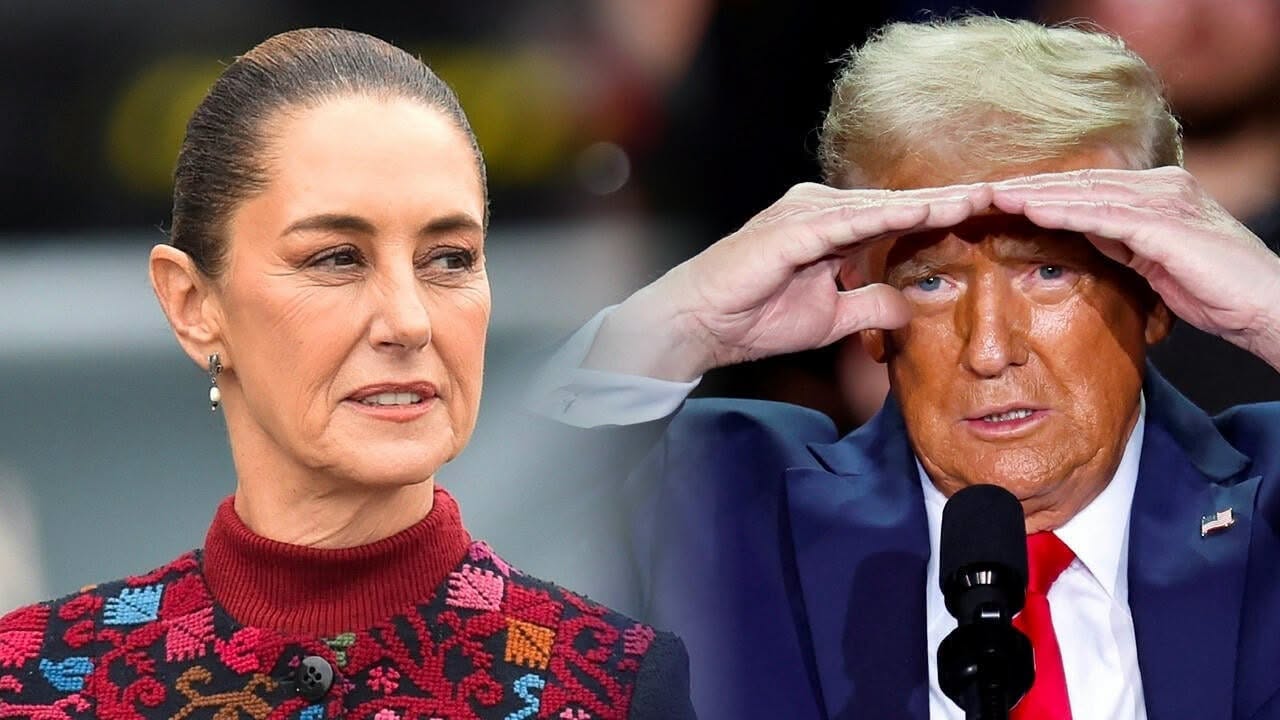
Mexican President Claudia Sheinbaum’s remarks added another voice to the growing international conversation, reflecting concerns shared by many governments about the dangers of unchecked escalation and the importance of respecting international stability.
Her position highlighted a broader message: major global powers cannot ignore the consequences of conflict, because the effects often reach far beyond the countries directly involved.
As leaders continue responding to the crisis, millions of people are left hoping that diplomacy can succeed before military decisions create irreversible damage.
The situation remains unpredictable.
All sides continue sending strong messages.
All sides insist they are acting in defense of their interests.
But between those competing claims lies the central question facing the international community:
Can leaders step back before a crisis becomes something impossible to stop?
For now, the world waits, watching every statement and every movement, aware that the next decision could shape the future of an already fragile global order.