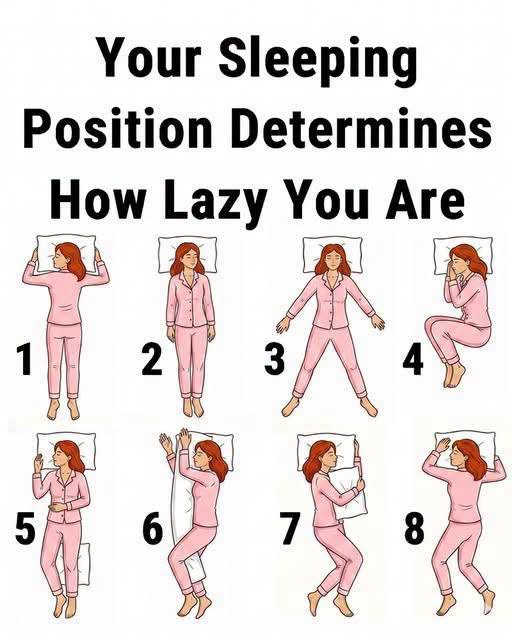
Most people never give much thought to the position they fall asleep in each night.
Once the lights go out, the blanket is pulled up, and exhaustion takes over, your body naturally settles into whatever position feels most comfortable. It becomes such an automatic habit that you probably couldn’t even describe how you usually sleep without thinking about it first.
But according to psychologists and sleep researchers, those nighttime habits may offer fascinating clues about your personality, emotional needs, and the way you approach everyday life.
Despite countless internet claims suggesting your favorite sleeping position can reveal whether you’re lazy, ambitious, successful, or unmotivated, the truth is much more interesting and much more human.
Your sleeping posture doesn’t determine whether you’re hardworking or lazy.
Instead, it often reflects how your body relaxes, how your mind seeks comfort, and how you recover from the demands of daily life.
While no sleeping position can accurately predict your work ethic, each one may provide small insights into your temperament, habits, and emotional preferences.
If you regularly sleep with both arms raised above your head, you’re often someone who embraces life with curiosity.
People who naturally settle into this position are frequently described as open-minded and independent. They enjoy discovering new ideas, learning new skills, and exploring different perspectives.
Rather than following the crowd, they prefer making decisions based on their own experiences and values.
Others may mistake their relaxed attitude for a lack of urgency, but beneath that calm exterior is usually someone quietly pursuing personal goals at their own pace.
They don’t always seek attention.
They simply enjoy doing things their own way.
Sleeping flat on your back has long been associated with people who appreciate order and stability.
Back sleepers often like routines.
They value reliability.
They prefer knowing what to expect rather than constantly chasing uncertainty.
To outsiders, they may appear reserved or even passive.
In reality, once they commit to something, they tend to remain remarkably dependable.
Whether it’s family responsibilities, friendships, or professional commitments, they rarely abandon what they’ve started.
Their consistency often becomes one of their greatest strengths.
Then there are those who completely spread out across the mattress, sometimes called “starfish sleepers.”
At first glance, this position seems to suggest someone who simply enjoys comfort—and that may be partly true.
Starfish sleepers usually appreciate freedom.
They dislike feeling restricted, whether physically or emotionally.
They often enjoy peaceful environments where they can think clearly without unnecessary pressure.
Because they avoid unnecessary conflict and prefer working at their own rhythm, some people mistakenly assume they’re lazy.
However, those closest to them often describe something entirely different.
These individuals frequently become generous listeners, dependable friends, and supportive family members who willingly help others, even if they sometimes procrastinate on their own tasks.
Comfort doesn’t necessarily equal laziness.
It often means they recharge before giving their energy away.
Curled-up sleepers tell another story altogether.
People who sleep in the fetal position are often highly sensitive, even if they rarely show it openly.
The world can sometimes feel overwhelming, so they instinctively protect both their bodies and emotions while sleeping.
Many of them think carefully before making decisions.
They don’t waste energy on unnecessary battles.
Instead, they choose where to invest their attention.
This careful approach can sometimes be mistaken for hesitation, but it’s usually the result of thoughtful consideration rather than fear.
Once they feel safe and confident, they often demonstrate remarkable determination.
Side sleepers, perhaps the most common of all, usually represent balance.
Sleeping comfortably on one side often reflects flexibility in everyday life.
These individuals can adapt when circumstances change.
They know when to work hard and when to rest.
Rather than constantly chasing perfection, they seek sustainable progress.
They understand that life isn’t always about maximum effort.
Sometimes it’s about preserving enough energy to continue moving forward tomorrow.
That balance often allows them to avoid burnout while remaining productive over the long term.
People who frequently shift between several positions throughout the night may possess equally adaptable personalities.
They’re comfortable adjusting to new situations.
Unexpected challenges rarely overwhelm them because they’re accustomed to change.
Instead of rigidly clinging to one plan, they modify their approach until they find what works.
This flexibility often makes them excellent problem-solvers in both personal and professional situations.
Face-down sleepers, especially those who hug their pillow tightly, often prioritize emotional comfort.
The pillow becomes more than just something supporting the head.
It creates a feeling of security.
Many stomach sleepers enjoy predictable routines and familiar environments where they feel fully relaxed.
They usually don’t resist work itself.
They simply need strong motivation before investing significant effort.
Once they find something they truly care about, their dedication often surprises everyone around them.
What appears to be laziness from the outside is frequently caution, selectiveness, or emotional protection.
One of the biggest misconceptions surrounding sleeping positions is the belief that they define someone’s character.
In reality, sleep posture changes throughout life.
Stress, pregnancy, injuries, age, new mattresses, chronic pain, and even room temperature can all influence how someone sleeps.
A lifelong side sleeper may suddenly begin sleeping on their back after developing shoulder pain.
Someone who once curled tightly into a fetal position may gradually stretch out as life becomes less stressful.
These changes don’t necessarily reflect personality shifts.
Often, they’re simply the body’s response to physical or emotional circumstances.
Scientists who study sleep emphasize that no single sleeping position predicts intelligence, motivation, success, or laziness.
Personality itself is far too complex for something as simple as body posture during sleep to define.
However, patterns of comfort do reveal something meaningful.
They show how each individual restores energy.
How they seek safety.
How they recover after demanding days.
Some people recharge through structure.
Others recharge through freedom.
Some seek warmth and protection.
Others prefer space and openness.
None of these approaches is inherently better than another.
They simply reflect different ways human beings recover from the world around them.
Perhaps that’s why these personality quizzes remain so popular.
They’re fun.
They’re relatable.
Almost everyone recognizes at least part of themselves in the descriptions.
Reading about your sleeping position encourages reflection.
You begin noticing habits that normally happen automatically.
You wonder why your body consistently chooses one position over another.
You become curious about yourself.
That curiosity often matters more than whether every description is scientifically accurate.
Sleep itself remains far more important than the position you choose.
Consistently getting enough quality rest supports memory, emotional regulation, concentration, heart health, immune function, and overall well-being.
Whether you sleep curled into a tiny ball or stretched across the entire mattress, your body is performing one of its most essential daily tasks.
It is repairing.
Recovering.
Preparing for tomorrow.
So the next time someone claims your favorite sleeping position proves you’re lazy—or hardworking—remember this:
Your posture while sleeping doesn’t determine your ambition.
It doesn’t define your future.
It doesn’t measure your success.
What it may reveal is something much simpler and perhaps much more valuable.
It shows how your body finds peace after a long day.
How your mind seeks comfort before tomorrow begins.
And how, night after night, you quietly gather the strength you’ll need to wake up and face the world once again.