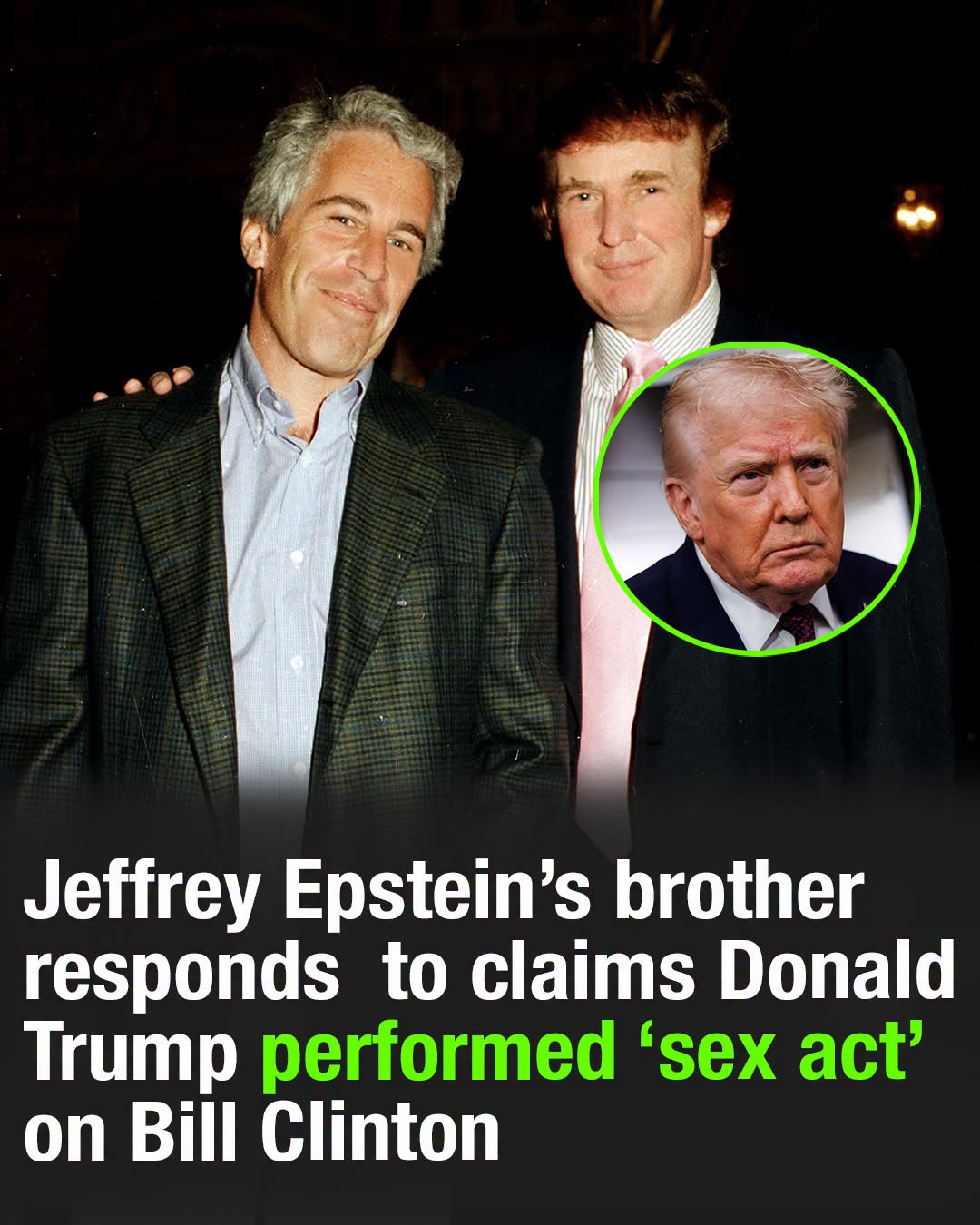
The release of newly unsealed Jeffrey Epstein-related documents was expected by many to bring answers to years of unanswered questions. Instead, the documents opened another wave of controversy, speculation, and public debate surrounding some of the most powerful names connected to Epstein’s orbit.
Rather than creating a sense of closure, the material intensified existing suspicions and raised new questions about what was known, when it was known, and how much information remained hidden from the public.
One image in particular quickly became a focus of online discussion.
A photograph showing Jeffrey Epstein alongside Donald Trump and Ghislaine Maxwell resurfaced during the renewed attention surrounding the documents. For many observers, the image immediately brought back questions about relationships, social circles, and the connections Epstein maintained with wealthy and influential figures throughout his life.
However, the controversy soon moved away from the photograph itself and toward something far more explosive: a private email exchange from 2018 that contained a mysterious phrase that sent social media into overdrive.
The message referenced “photos of Trump blowing Bubba,” a line that quickly spread across the internet and triggered intense speculation about what the wording actually meant.
Within hours, online discussions focused heavily on the identity of “Bubba,” with many users immediately connecting the nickname to former President Bill Clinton, who has long been associated with that nickname in popular culture.
The speculation grew rapidly, with people treating the phrase as a potential revelation despite the lack of evidence confirming that interpretation.
The situation highlighted a familiar pattern in the modern information age: a single sentence, removed from its original context, can become the center of a worldwide debate within minutes.
As the speculation intensified, Mark Epstein, Jeffrey Epstein’s brother, addressed the controversy directly. He rejected the assumption that the reference was connected to Clinton and stated that “Bubba” referred to something else entirely.
According to Mark Epstein, the phrase had been misunderstood and was part of a private joke rather than the explosive claim many people believed it to be.
His explanation, however, did little to calm the online reaction.
For many people following the story, years of distrust surrounding Epstein’s connections to influential figures had already created an environment where even unclear references were viewed through a lens of suspicion.
The controversy was no longer just about one email.
It became part of a much larger conversation about secrecy, accountability, and public confidence in institutions.
Jeffrey Epstein’s history has fueled years of public anger and unanswered questions. His relationships with politicians, celebrities, business leaders, and other prominent figures have repeatedly drawn scrutiny, creating a climate where every new document release becomes a major event.
Supporters of transparency argued that the public deserved complete access to information surrounding Epstein’s network.
Others warned that incomplete documents, unclear language, and internet speculation could easily transform rumors into perceived facts before proper verification took place.
The debate became even more politically charged after Vice President JD Vance acknowledged criticism surrounding the administration’s handling of communications related to the document release.
Vance’s comments that officials had mishandled aspects of the rollout added another layer of frustration among those already demanding greater transparency.
To critics, the communication problems reinforced concerns that officials were not handling the situation effectively.
To supporters, the confusion reflected the difficulty of managing a massive release of sensitive material while separating verified information from speculation.
Regardless of political views, the episode demonstrated how deeply the Epstein case continues to affect public trust.
The name itself has become associated with questions about power, influence, and whether wealthy individuals receive different treatment than ordinary citizens.
Every new detail, even an ambiguous phrase in an email, becomes a symbol of larger concerns about accountability.
The controversy surrounding the “Bubba” reference also showed the challenges of interpreting private communications that were never intended for public consumption.
Emails often contain jokes, nicknames, sarcasm, and references understood only by the people involved. When those messages are later viewed by millions of strangers without the original context, meanings can shift dramatically.
A phrase that may have been meaningless between two people can become the center of a global controversy when placed under public scrutiny.
That reality has become increasingly common in the digital era.
Screenshots spread faster than explanations.
Rumors often travel farther than corrections.
And emotional reactions can shape public opinion before all the facts are available.
The Epstein documents have once again placed this challenge in the spotlight.
For some, the latest revelations represent another reason to demand more transparency and investigation.
For others, they serve as a warning about the dangers of drawing conclusions from incomplete information.
The debate is unlikely to disappear soon.
The questions surrounding Epstein’s relationships, his crimes, and the people connected to his world remain among the most controversial issues of recent years.
But the latest controversy also reveals something broader about society today: trust has become fragile.
Many people no longer automatically believe official statements, while others are increasingly skeptical of viral claims circulating online.
A single word, a nickname, or a private joke can now become a national argument.
In this case, one sentence from a years-old email became a powerful example of how quickly information can transform in the public arena.
What began as a private exchange between two brothers became a worldwide discussion involving politics, celebrities, and questions of credibility.
Whether viewed as a misunderstanding, a serious allegation, or simply another chapter in a much larger story, the controversy shows that the Epstein saga continues to hold an extraordinary grip on public attention.
Years after Epstein’s death, his name remains tied to unresolved questions and intense debate.
And as more documents emerge, every photograph, message, and detail will likely continue to be examined under the brightest possible spotlight.