A small change on the skin can sometimes seem harmless.
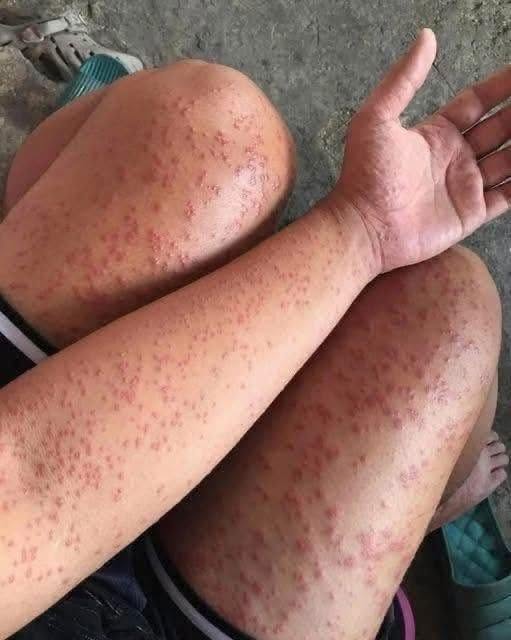
A few red patches.
A little itching.
A handful of raised bumps that appear out of nowhere.
For many people, the first instinct is to ignore it, wait a while, and assume it will disappear on its own.
But in some situations, what appears to be an ordinary rash can be the first warning sign of something far more serious.
When a skin reaction is joined by breathing problems, swelling, dizziness, or sudden weakness, it may signal anaphylaxis a severe allergic reaction that can affect the entire body within minutes.
Unlike a mild allergy that causes temporary discomfort, anaphylaxis is a medical emergency.
The immune system does not simply react in one place.
It releases chemicals that can trigger problems throughout the body at the same time, affecting the skin, airways, heart, and circulation.
That is why recognizing the warning signs quickly can make a life-saving difference.
One of the most dangerous parts of anaphylaxis is that it does not always begin dramatically.
It may start quietly.
A person may notice itching on their skin.
They may see hives appearing on their arms, face, or chest.
Their lips may begin to swell.
Their throat may feel strange.
At first, someone might think it is uncomfortable but manageable.
The problem is that allergic reactions can escalate rapidly.
A person who seems fine one moment can suddenly struggle to breathe only minutes later.
Symptoms that require immediate attention include difficulty breathing, wheezing, tightness in the chest, swelling of the tongue or throat, faintness, confusion, a racing heartbeat, or a feeling that something is seriously wrong.
These signs should never be dismissed as simple irritation.
The body is sending an urgent warning.
Anaphylaxis can be triggered by many different substances.
Some of the most common causes include foods such as peanuts, tree nuts, shellfish, fish, eggs, and milk.
Certain medications, including some antibiotics, can also cause severe allergic reactions in sensitive individuals.
Insect stings from bees, wasps, and other insects are another well-known trigger.
Latex exposure, which can occur in medical settings or workplaces, may also cause reactions in some people.
One of the most frightening aspects is that anaphylaxis can sometimes happen even when someone has never experienced a severe allergy before.
A person may eat the same food many times without problems and then suddenly develop a serious reaction.
That unpredictability is why awareness matters.
The danger is not only the allergic trigger itself.
The greatest risk often comes from hesitation.
People naturally want to believe the symptoms will disappear.
They may tell themselves that the rash is minor.
They may wait a few more minutes to see what happens.
They may hope that drinking water, resting, or lying down will solve the problem.
But with anaphylaxis, waiting can be dangerous.
The reaction can progress quickly, and the body may need immediate medical support.
If someone has signs of a severe allergic reaction, emergency action should be taken right away.
Calling emergency services is the first priority.
If the person has an epinephrine auto-injector prescribed for severe allergies, it should be used according to medical instructions.
Epinephrine is the primary emergency treatment for anaphylaxis because it works quickly to reduce dangerous swelling, improve breathing, and support blood pressure.
After using an auto-injector, medical evaluation is still necessary because symptoms can return even after they temporarily improve.
It is also important not to leave someone experiencing a serious reaction alone.
A person’s condition can change rapidly.
Keeping them safe while waiting for emergency responders can be crucial.
The situation can be frightening, but staying calm and acting quickly gives them the best chance of recovery.
For people who live with known allergies, preparation can reduce the danger.
Carrying prescribed medication, informing friends and family about allergy risks, reading food labels carefully, and understanding personal triggers are all important steps.
Schools, workplaces, and caregivers should also know what to do if someone experiences a severe allergic reaction.
Many tragedies happen not because help was unavailable, but because the warning signs were misunderstood.
A rash alone may not always mean danger.
Many skin reactions are mild and temporary.
But when the skin changes appear together with breathing difficulties, swelling, or signs of circulation problems, the situation becomes completely different.
That combination is the key.
A person does not need to wait until every possible symptom appears before seeking help.
Early action is often the safest action.
Understanding anaphylaxis is not about creating unnecessary fear.
It is about recognizing when a normal-looking symptom becomes something much more serious.
The human body is designed to protect itself, but sometimes the immune system overreacts and creates an emergency of its own.
Knowing the difference between a minor reaction and a life-threatening one can help someone respond with confidence instead of uncertainty.
A few seconds of awareness can change the outcome.
A rash may be nothing more than irritation.
Or it may be the first alarm before a medical crisis.
The difference is knowing what comes next.
When skin symptoms are combined with breathing problems, swelling, or sudden weakness, the message is clear: do not wait, do not ignore it, and do not assume it will simply pass.
Recognizing the warning signs turns a frightening moment into an opportunity to act.
And in a true emergency, that quick decision can be the difference between danger and survival.