Most of us treat public restrooms as places to spend as little time as possible. We walk in, wash our hands, use the facilities if necessary, and head back out without giving much thought to the design of the room around us.
But there is one detail that appears in almost every public restroom that many people never notice.
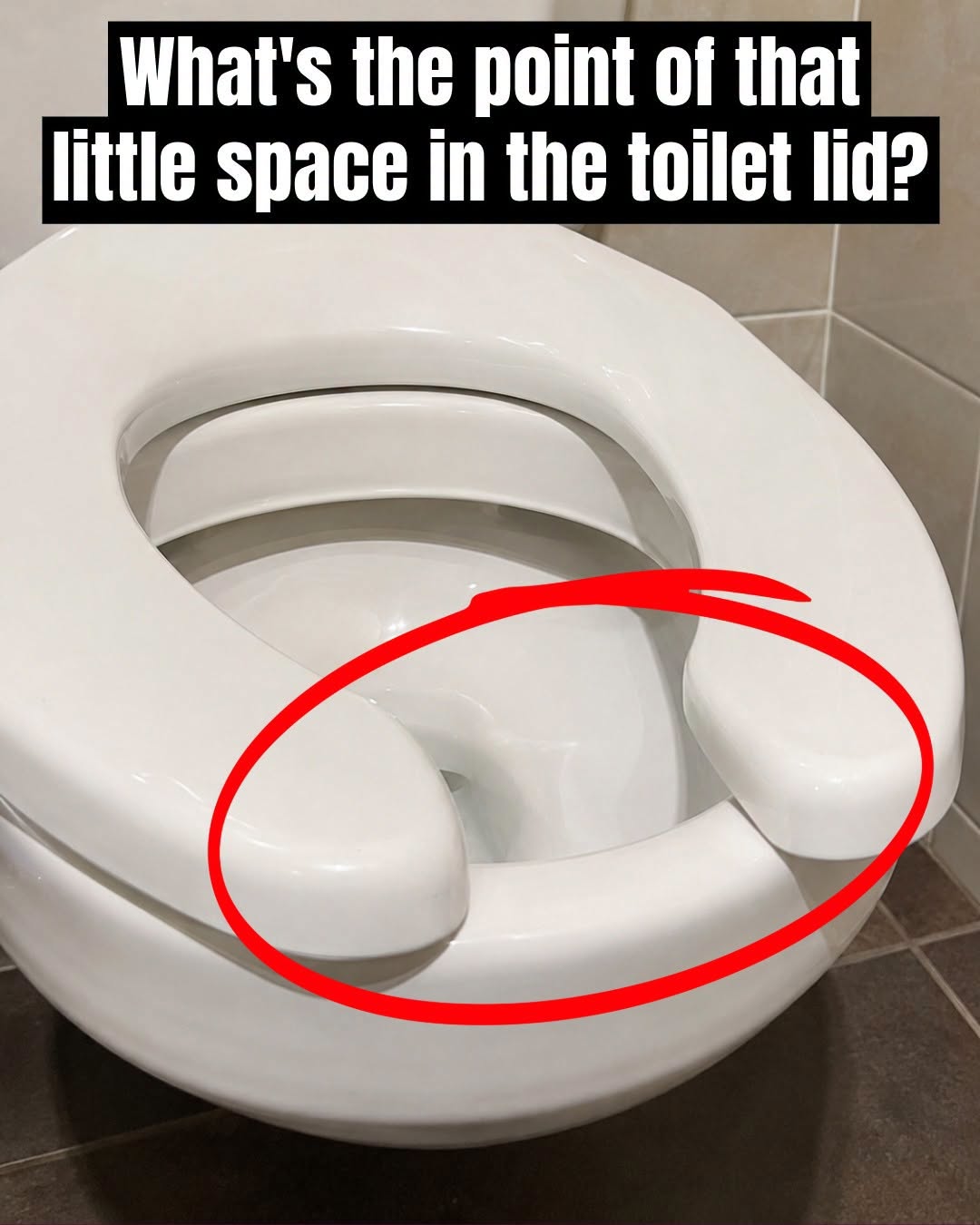
Take a look at the toilet seat.
Unlike the fully enclosed oval seat you probably have at home, public toilets almost always feature a seat with an open front, creating a distinctive U shape.
At first glance, it may seem like an odd design choice.
Some people assume it is simply a stylistic preference.
Others think manufacturers use the shape to save money.
The real answer, however, is far more interesting.
That unusual opening exists because of decades of practical thinking involving hygiene, accessibility, maintenance, public health, and even theft prevention.
What looks like a small design difference actually solves several important problems at once.
The biggest reason is hygiene.
Public restrooms are used by hundreds, sometimes thousands, of people every single day.
Unlike a toilet in a private home, where only a handful of family members use it, a public toilet is constantly shared by strangers.
Because of that, minimizing physical contact wherever possible becomes a priority.
The open-front design reduces the chance that a person’s body will touch the front portion of the seat.
This is particularly helpful because the front edge of a traditional toilet seat is one of the areas most likely to become contaminated through repeated use.
By removing that section entirely, designers reduce unnecessary contact and help create a cleaner experience for every user.
While no toilet seat is ever completely free of germs, every small improvement matters when the same fixture is used countless times throughout the day.
Cleaning crews also benefit.
Janitors responsible for maintaining public facilities often have very limited time to clean each restroom before new visitors arrive.
The U-shaped opening makes it easier to reach every surface quickly without lifting, twisting, or working around the front of the seat.
Less surface area means fewer places where dirt, moisture, and bacteria can collect.
That translates into faster cleaning and more effective sanitation.
Across hundreds of public restrooms, those saved seconds quickly add up.
There is also a practical reason involving personal comfort.
The open front provides additional clearance for users while seated.
For many people, this makes the experience slightly more comfortable and reduces the possibility of accidental contact with the seat itself.
Although it may seem like a minor adjustment, small ergonomic improvements become important when designing products intended to accommodate millions of different people.
Another interesting advantage is cost.
A U-shaped seat requires slightly less plastic or composite material than a fully enclosed seat.
The difference for a single toilet is relatively small.
However, when manufacturers produce hundreds of thousands of seats every year for schools, airports, restaurants, shopping centers, stadiums, hospitals, and office buildings, even a modest reduction in material creates meaningful savings.
Facilities purchasing hundreds of toilets also benefit from lower replacement costs over time.
One of the lesser-known explanations behind the design may surprise you.
Public toilet seats are occasionally stolen.
It sounds unbelievable, but maintenance companies have confirmed that replacement seats sometimes disappear from public restrooms.
A standard closed toilet seat can often fit residential toilets, making it attractive to someone looking for a free replacement.
The open-front commercial version usually will not fit most household toilets properly.
Because it is incompatible with typical home fixtures, it becomes far less appealing to steal.
What seems like an insignificant shape difference quietly discourages theft before it happens.
Accessibility standards have also influenced restroom design over the years.
Modern commercial bathrooms must serve people with a wide range of physical needs.
Open-front seats can make transfers, positioning, and certain medical situations easier for some users while remaining compatible with accessibility regulations.
Designers must consider everyone, not just the average visitor.
Every element of a public restroom is carefully chosen with safety, usability, and maintenance in mind.
There is another important factor that most people never think about.
Public restrooms are designed for durability.
Unlike home bathrooms, where a toilet may only be used several times a day, commercial fixtures experience constant use.
The seats must withstand years of repeated pressure, cleaning chemicals, temperature changes, and accidental abuse.
Manufacturers design commercial seats specifically for these demanding environments.
The U-shaped configuration has become the industry standard because it balances strength, practicality, and ease of maintenance.
Many people assume public restroom design is random.
In reality, almost every detail exists because someone encountered a problem decades ago and found a solution.
The height of the toilets.
The placement of paper dispensers.
The automatic flush systems.
The motion-activated faucets.
Even the gaps beneath stall doors all serve specific purposes related to safety, maintenance, emergency access, ventilation, or cleanliness.
The toilet seat is no exception.
Interestingly, many countries have adopted open-front seats as standard practice, while others continue using fully enclosed seats depending on local regulations and building codes.
In the United States, organizations responsible for plumbing standards have long encouraged or required open-front seats in many commercial settings because of their hygienic advantages.
As a result, the design has become so common that most people never stop to ask why it looks different from the one they use every day at home.
Psychology also plays a role.
People naturally associate cleanliness with thoughtful design.
Even if visitors do not consciously notice the missing front section, many feel more comfortable knowing that unnecessary contact has been reduced.
The visual appearance reinforces the idea that the restroom was designed with public health in mind.
Sometimes the smallest design choices influence our perception far more than we realize.
Of course, the U-shaped seat is not a magical solution to germs.
Proper handwashing remains by far the most effective way to protect yourself after using any public restroom.
No toilet seat shape can replace good hygiene habits.
Still, reducing contact points, improving cleaning efficiency, and simplifying maintenance all contribute to a safer environment.
When combined with regular disinfection and responsible facility management, the design serves its purpose remarkably well.
What makes this story fascinating is how something so ordinary can hide so much thoughtful engineering.
Most of us use public restrooms without ever examining the objects around us.
Yet countless everyday items have evolved over generations through careful observation, testing, and problem solving.
The U-shaped toilet seat is one of those quiet inventions.
It does not demand attention.
It simply performs its job, day after day, making public facilities cleaner, easier to maintain, less expensive to operate, and more practical for millions of people.
The next time you find yourself in an airport, restaurant, shopping mall, school, hospital, or office building, take another look at that familiar toilet seat.
What once seemed like an odd design choice is actually the result of decades of practical improvements driven by hygiene, efficiency, accessibility, durability, and even human behavior.
It is a reminder that many of the objects we barely notice have been carefully shaped by experience.
Sometimes the smartest inventions are the ones we stop seeing altogether because they work so well.