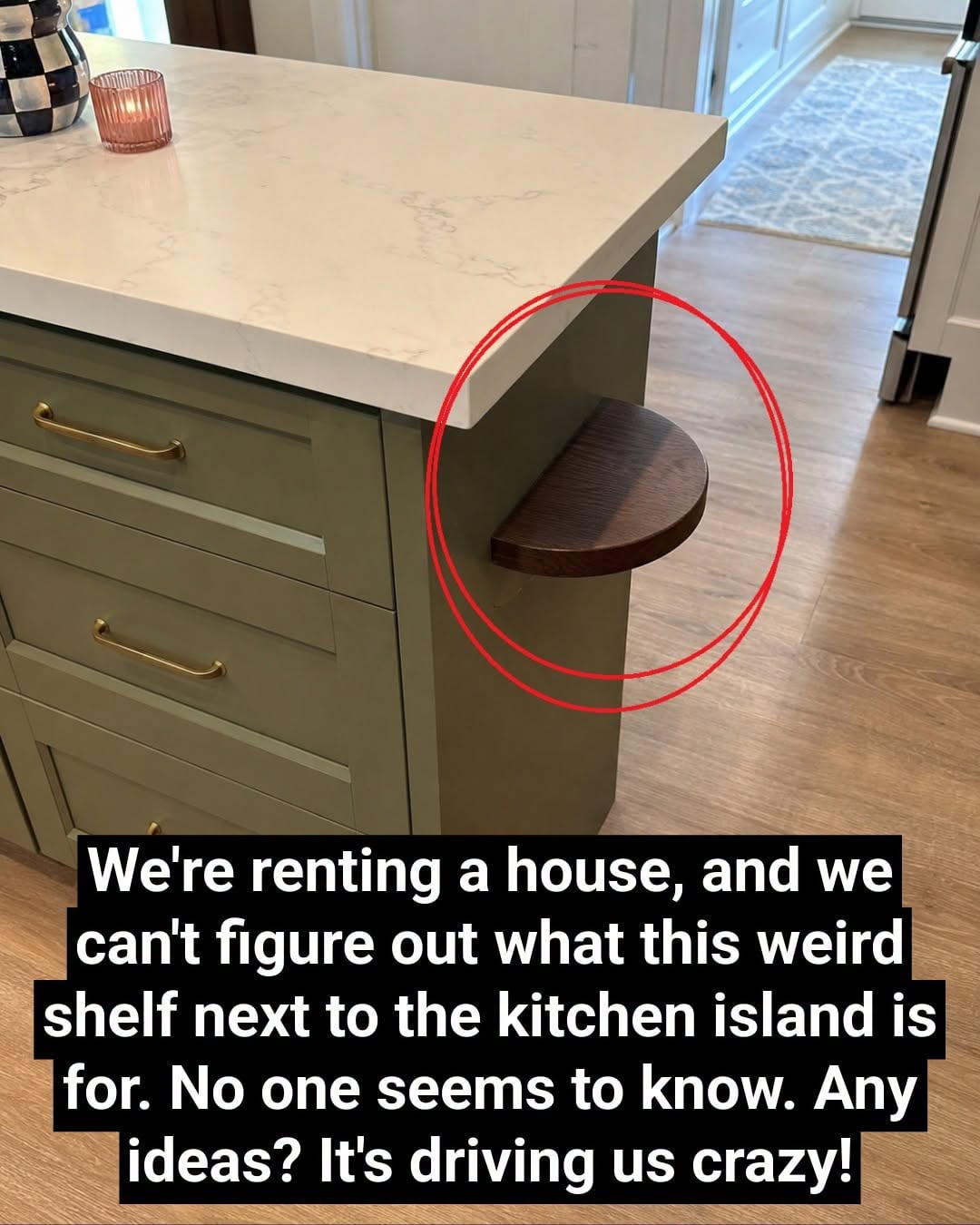
If you’ve ever walked into a modern kitchen and noticed a small curved shelf attached to the side of a kitchen island, you may have wondered why it’s there.
It isn’t large enough to function as a countertop, it doesn’t look like shelving for storage, and it’s certainly not designed to be a chair or a step. At first glance, it can seem like one of those mysterious design choices that serves no real purpose.
In reality, that small ledge has a surprisingly practical role.
Although it may appear decorative, this little shelf was usually added with both style and everyday convenience in mind. It isn’t intended to replace cabinets, drawers, or additional countertop space. Instead, it fills a small but useful gap that many homeowners don’t realize exists until they begin using their kitchen every day.
Think of it as a miniature landing zone.
It’s a place where small items can temporarily rest without taking over your main workspace. While it may not seem important at first, these tiny conveniences often become some of the most frequently used features in a busy home.
Kitchen designers understand that not everything needs a permanent storage location. Throughout the day, countless small objects pass through the kitchen. Car keys, mobile phones, sunglasses, coffee mugs, grocery lists, mail, and water bottles all need somewhere to sit, even if only for a few minutes.
That’s exactly where this small side shelf comes in.
Instead of cluttering the primary countertop where meals are prepared, the ledge offers a convenient resting place for those everyday essentials.
For example, imagine walking into the house carrying groceries.
Rather than placing your phone on a crowded counter or balancing your keys on top of a stack of mail, you can quickly set them on the side shelf while unloading bags.
Or picture yourself making dinner while listening to a recipe on your phone.
Instead of worrying about splashes or spills on the main work surface, the phone can safely sit nearby on the small shelf, remaining visible without getting in the way.
Even something as simple as enjoying your morning coffee becomes easier.
Many people naturally place a mug on that little ledge while chatting with family members preparing breakfast or waiting for toast to pop up. The shelf creates a comfortable spot for drinks without sacrificing valuable prep space.
During parties or family gatherings, its usefulness becomes even more apparent.
Kitchen islands often become gathering places whenever guests visit. People naturally stand around them while talking, eating appetizers, or waiting for food.
A small side shelf gives someone an easy place to set down a glass of wine, a coffee cup, or a small appetizer plate without crowding the main countertop where food may still be prepared.
It’s not large enough to function as a serving buffet.
Instead, it works as a convenient personal landing spot.
That difference is important.
Many homeowners mistakenly assume the shelf should support large serving trays, heavy cookware, or kitchen appliances.
It wasn’t designed for that.
Its purpose is much lighter.
Beyond everyday convenience, the shelf also serves an important visual purpose.
Kitchen islands typically have large, flat side panels that can sometimes look plain or unfinished.
Designers often add decorative elements to these areas to create more visual interest.
Some islands feature built-in wine racks.
Others include open shelving, cookbook cubbies, towel bars, or decorative wood panels.
In many kitchens, however, a small stone shelf provides the perfect finishing touch.
The curved design softens what would otherwise be a sharp corner.
Instead of ending with a flat vertical panel, the island gains a subtle architectural feature that makes the entire kitchen feel more custom and thoughtfully designed.
If the shelf is made from the same granite, quartz, or marble as the countertop, it also creates visual continuity throughout the island.
The result feels intentional rather than accidental.
Its value isn’t measured by how much it stores.
It’s measured by how naturally it fits into everyday life.
Of course, because the shelf is open and relatively small, it isn’t intended to become permanent storage.
This is where many people unintentionally create clutter.
Once a few items begin collecting there, it becomes tempting to keep adding more.
Soon, the attractive design feature disappears beneath receipts, chargers, unopened mail, pens, water bottles, and miscellaneous household items.
Instead of enhancing the kitchen, it begins making the space feel disorganized.
Interior designers generally recommend treating the shelf like a decorative accent rather than another storage compartment.
One carefully chosen item often looks far better than several unrelated objects.
A small vase with fresh flowers.
A decorative bowl.
A candle.
A compact plant.
A simple tray for keys.
Each of these options allows the shelf to remain functional while still complementing the overall design of the room.
The shelf also works well for temporary use.
A cookbook while following a recipe.
A grocery list while putting food away.
A drink while entertaining guests.
A phone charging cable during dinner.
Once the task is finished, the shelf returns to looking clean and uncluttered.
Understanding what the shelf is not intended for is equally important.
Despite being made from strong materials like stone, granite, or quartz, these shelves are typically supported differently than full countertops.
That means they should never be treated like seating.
Children should not climb onto them.
Adults shouldn’t lean their full body weight against them.
Heavy kitchen appliances such as stand mixers or air fryers should remain on sturdier surfaces.
Large serving dishes filled with food may also exceed what the shelf was designed to support.
Hot pots and pans directly from the oven are another poor choice.
Even though stone itself tolerates heat well, the mounting system underneath may not have been intended to support excessive weight combined with sudden temperature changes.
If the shelf ever feels loose, tilts slightly, or shows signs of movement, it should be inspected by a cabinet installer or stone fabricator before further use.
Safety always comes first.
Placement also plays a role in how useful these shelves become.
Many are installed on the end of an island facing a walkway.
That location provides convenient access without interfering with cooking.
However, if too many objects are placed on the shelf, it can narrow walking space and create an obstacle that people accidentally bump into.
Keeping it neat prevents those problems while preserving the original design intention.
Ultimately, this small shelf represents one of those subtle details that quietly improves daily life without drawing much attention to itself.
It isn’t flashy.
It doesn’t transform the kitchen overnight.
But over time, homeowners often discover themselves using it dozens of times each week without even thinking about it.
The strange little ledge that once seemed unnecessary becomes the perfect place for a coffee mug during breakfast, a phone while following recipes, a glass of wine during conversations, or a decorative accent that gives the island a polished, custom appearance.
Like many thoughtful design features, its value isn’t found in doing one big job.
It’s found in making dozens of small everyday moments just a little more convenient while helping the kitchen feel warm, organized, and truly lived in.