A rare and devastating rabies case involving an 11-year-old boy has left Canadian doctors urging the public to take even the smallest wildlife exposure far more seriously, after a situation that appeared harmless at first turned fatal within weeks.
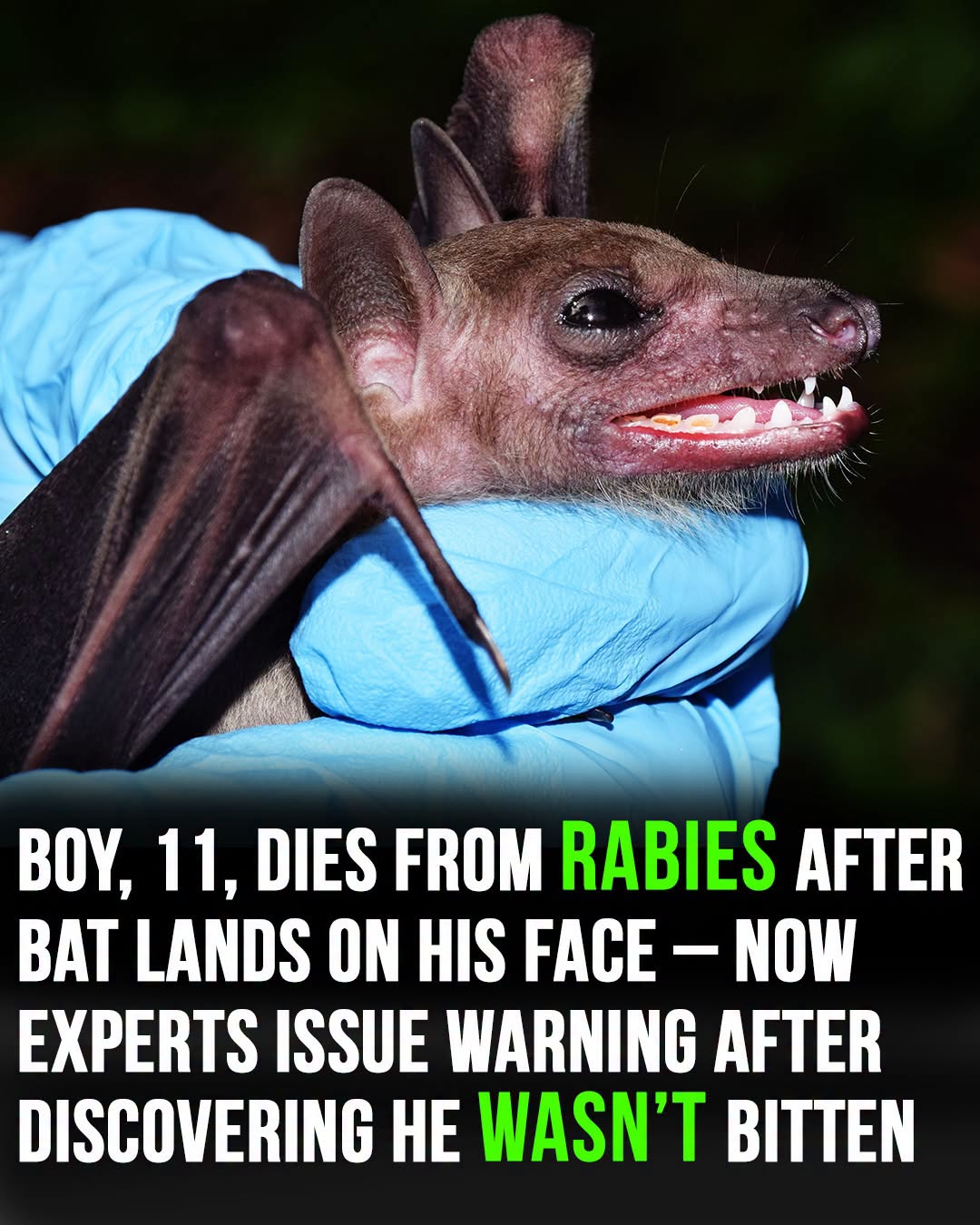
The child, whose identity has not been publicly released, reportedly woke up to find a bat resting on his face. According to medical accounts shared after his death, there were no visible bite marks, no scratches, and no immediate signs of injury. The bat was removed by his parents, and in the absence of any obvious wound or distress, the incident was initially not treated as a medical emergency.
Like many parents in the same situation, they believed the risk was minimal once the animal was gone. Life continued as normal.
Nineteen days later, everything changed.
The boy began experiencing unusual symptoms, including vomiting and strange sensations affecting his face. By the time these signs appeared, the rabies virus had already progressed deep into his nervous system. Medical professionals later confirmed that once symptoms of rabies begin, the disease is almost always fatal, leaving little to no effective treatment options available.
Despite the best efforts of doctors, the illness rapidly advanced, and the child’s condition deteriorated beyond recovery. His death has since been described by physicians as both extraordinarily rare and, in all likelihood, preventable.
Rabies is a viral disease that affects the brain and central nervous system. It is typically transmitted through the saliva of infected animals, most commonly through bites. However, experts emphasize that in cases involving bats, even the slightest contact can carry risk, especially because bites or scratches may be so small that they go unnoticed.
What makes this case particularly alarming to medical professionals is the absence of any visible wound. It reinforces a long-standing concern in public health: that bat-related exposures are frequently underestimated because injuries are not always obvious at the time of contact.
In the wake of the tragedy, doctors involved in the case, along with public health officials, have emphasized a clear and urgent message aimed at preventing similar outcomes in the future.
They stress that any direct contact with a bat, especially during sleep, should be treated as a potential rabies exposure regardless of whether a bite is visible. The recommendation is immediate medical consultation, ideally with public health authorities or emergency services, to determine whether post-exposure treatment is necessary.
Rabies post-exposure prophylaxis, when administered promptly before symptoms appear, is highly effective at preventing the disease from developing. Once symptoms begin, however, the infection becomes almost universally fatal, which is why timing is considered critical.
Medical experts involved in the case have highlighted that the window for prevention exists only before the virus reaches the brain. In this situation, that window quietly closed in the days following the bat’s contact with the child, without anyone realizing the danger had already been set in motion.
The boy’s family, now faced with unimaginable loss, has joined doctors in sharing his story as a public warning. Their hope is that other families will recognize the seriousness of even seemingly minor wildlife encounters and act immediately rather than assuming no harm has been done.
Public health agencies routinely advise that bats should never be handled directly, and that sleeping individuals, children, or those unable to report a bite should be evaluated carefully if a bat is found in the same space. Even in cases where contact is uncertain, medical evaluation is often recommended due to the severity of rabies once it develops.
The emotional weight of this case has deeply affected the medical community, not only because of the child’s age but because of how easily the outcome might have been avoided with faster intervention. It has become a stark reminder that rabies, though rare in many developed countries, has not disappeared and continues to pose a serious risk in specific wildlife exposures.
Doctors involved in raising awareness about the case emphasize that fear should not replace knowledge, but awareness should replace assumption. They stress that wildlife encounters, particularly with bats, must always be treated with caution.
For the boy’s family, the focus now is not only on mourning but on ensuring that his story prevents future tragedies. Their message echoes the guidance of medical experts: never ignore contact with a bat, no matter how minor it may seem.
In rabies prevention, hesitation can be fatal, and in this case, that reality proved heartbreakingly true.