It usually hides in plain sight.
Tucked into a drawer.
Rolled around in a dusty box.
Forgotten in the bottom of a camera bag that hasn’t been opened in years.
Small.
Plastic.
Unassuming.
And yet, the moment you recognize it, something strange happens.
It doesn’t just look like an object.
It feels like a memory.
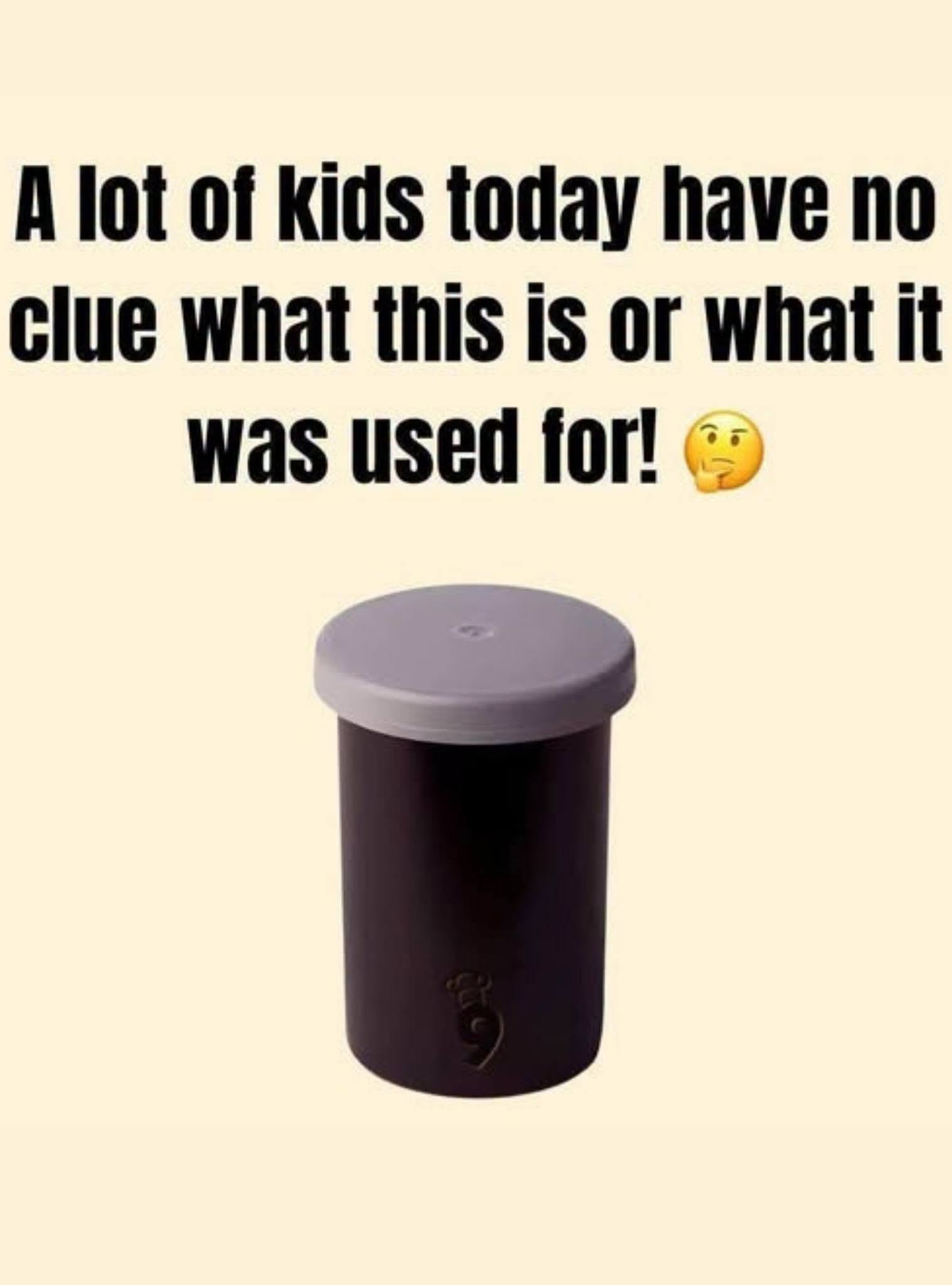
A 35mm film canister.
For anyone who grew up before digital photography took over the world, this little cylinder once played a surprisingly important role in everyday life.
It wasn’t glamorous.
It wasn’t expensive.
But it carried something priceless.
Entire moments.
Entire versions of life that only existed in physical form.
Inside those canisters were fragile strips of film, each one holding images that had not yet been seen.
Not instantly.
Not previewed.
Not edited.
Just captured.
And then hidden away until the right moment arrived.
There was a kind of anticipation built into the process that feels almost foreign today.
You would take a photo and then wait.
Not for seconds.
Not for minutes.
But sometimes for days.
The canister would be dropped off at a photo lab, placed carefully into the hands of a stranger behind a counter.
And then the waiting began.
Everyday life moved on as if nothing important had happened.
But somewhere in the background, your memories were being developed.
When the envelope finally arrived, it felt like opening a time capsule.
Each photograph came with its own surprise.
Some were perfect.
Some were blurry.
Some were accidental masterpieces half smiles, moving hands, sunlight flares, and moments you didn’t even realize you had captured.
Others were failures.
Eyes closed.
Feet cut off.
Overexposed skies.
Yet even those mistakes became part of the story.
Because photography back then wasn’t about perfection.
It was about discovery.
The canister itself became a kind of silent promise.
A promise that something meaningful had been recorded, even if you couldn’t see it yet.
Today, most of these film canisters no longer serve their original purpose.
Digital cameras and smartphones have replaced them entirely.
Images now appear instantly, glowing on screens seconds after they are taken.
They are edited.
Filtered.
Shared.
Deleted.
Reposted.
And often forgotten just as quickly.
In that world of immediacy, the slow mystery of film feels almost unreal.
Yet the canisters remain.
Not in professional studios.
But in everyday places.
Kitchen drawers.
Old storage bins.
Attics filled with forgotten belongings.
Craft boxes where they now hold buttons, sewing pins, beads, or spare coins.
They have been repurposed, but never fully erased.
What makes them especially powerful is not what they contain now, but what they once held.
A simple twist of the cap can still release a faint scent.
Plastic mixed with dust.
A smell that doesn’t belong to the present.
And in that moment, something unexpected often happens.
Memory returns.
Not as a clear image.
But as fragments.
A summer afternoon.
A long-gone pet running across a yard.
A birthday cake with uneven candles.
A family gathering where someone is missing now but was present then.
The canister becomes less of an object and more of a trigger.
A small key to a much larger emotional archive.
In today’s world of infinite storage and cloud backups, it is easy to forget how different memory once felt.
We no longer wait for images to be revealed.
We no longer wonder if they worked.
We no longer hold physical evidence of anticipation.
Everything is immediate.
And because of that, something subtle has been lost.
The pause.
The uncertainty.
The quiet excitement of not knowing how life looked until it was already in the past.
Film photography carried a different rhythm.
Every shot mattered more because it was limited.
Every frame had value because it could not be endlessly repeated.
There was intention behind even the most casual photo.
You didn’t take twenty versions of the same moment.
You trusted the moment itself.
That limitation created a different kind of appreciation.
And that appreciation still lingers inside those forgotten canisters.
Even an empty one carries weight.
You open it expecting nothing.
And yet it still feels full.
Not of film.
But of time.
Of versions of yourself you no longer recognize.
Of people who have changed or disappeared from your life.
Of days that cannot be repeated, no matter how clearly you remember them.
That is why so many people cannot bring themselves to throw them away.
It isn’t about usefulness.
It isn’t about storage.
It is about emotional residue.
The idea that something so small once held entire chapters of a life.
In a sense, the film canister has become a symbol of a slower existence.
A reminder that not everything was always instant.
Not everything was always accessible.
And not everything was meant to be seen immediately.
Sometimes meaning only arrived after waiting.
Sometimes memory required patience.
And sometimes the most ordinary object in a drawer is actually a quiet archive of everything we were before the world started moving too fast.
Even now, when you find one again after years, you might pause without knowing why.
You might turn it over in your hand.
You might even hesitate before putting it back.
Because somewhere in the back of your mind, you understand something simple but powerful.
It isn’t just plastic.
It is a container of time.
And time, once stored like that, never really stops existing.
It just waits to be remembered.