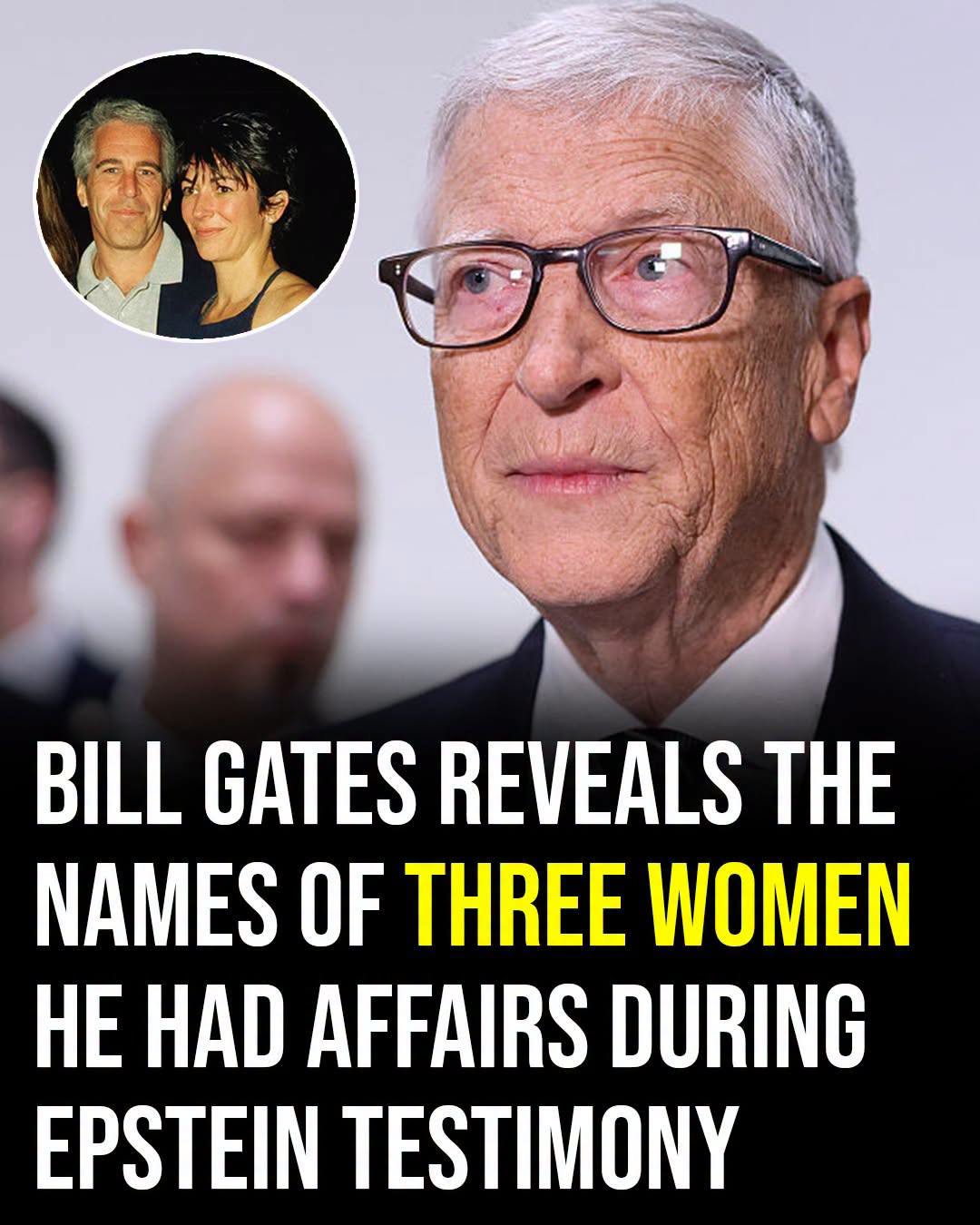
Public figures often discover that their private lives can become subjects of enormous public interest, especially when their names become connected to larger controversies. Few individuals understand this reality more than Bill Gates, whose career as a technology pioneer and philanthropist has made him one of the most recognizable figures in the world.
For decades, Gates was primarily known as the co-founder of Microsoft, a business leader whose influence helped shape the modern digital age. In later years, he became equally associated with global philanthropy through the Bill & Melinda Gates Foundation, supporting health initiatives, education programs, and humanitarian projects around the world.
Yet public attention has increasingly shifted beyond his professional accomplishments.
Recent testimony and renewed political interest surrounding Jeffrey Epstein and his connections to prominent individuals have once again placed Gates under intense scrutiny. Questions about his past relationships, personal decisions, and interactions with Epstein have become part of a larger public conversation that continues to generate headlines.
During a highly watched congressional appearance, Gates faced difficult questions regarding allegations, rumors, and personal relationships that investigators argued had become relevant to understanding his past association with Epstein.
The hearing quickly became one of the most discussed political events of the week.
Lawmakers questioned Gates about several women whose names had appeared in documents and communications connected to the broader investigation. Gates acknowledged certain personal relationships while strongly denying claims that Epstein ever controlled, threatened, or blackmailed him.
His testimony reflected a delicate balance.
On one hand, he admitted mistakes.
On the other, he firmly rejected some of the most serious allegations that have circulated for years.
Observers noted that Gates appeared measured throughout much of the questioning, repeatedly emphasizing that his association with Epstein represented a major error in judgment.
He described those meetings as a significant regret.
For years, Gates has publicly stated that meeting with Epstein was a mistake that he wishes had never occurred. Those comments have been repeated in numerous interviews, especially following increased scrutiny of Epstein’s network and relationships with powerful figures.
The latest testimony brought renewed attention to that period.
Investigators presented documents, emails, and communications that they argued demonstrated Epstein’s interest in Gates’ personal life. Some communications reportedly referenced relationships and acquaintances connected to Gates, leading lawmakers to question whether Epstein was attempting to gain influence or leverage.
Gates rejected those suggestions.
He maintained that Epstein never successfully intimidated him, controlled him, or used personal information against him. He insisted that any suggestion of blackmail was unsupported and inaccurate.
Nevertheless, the discussion highlighted how complicated the relationship between the two men has become in the public imagination.
For many observers, the issue is no longer simply whether Gates committed wrongdoing.
Instead, people continue asking why one of the world’s wealthiest and most influential individuals chose to spend time with a man whose reputation had already generated serious concerns.
That question continues to follow him.
Throughout the hearing, Gates repeatedly emphasized that he has not been accused of criminal conduct and that he was unaware of the full extent of Epstein’s abuses during their interactions.
He expressed sympathy for victims and reiterated his condemnation of Epstein’s actions.
Still, critics argue that prominent individuals have a responsibility to exercise greater judgment regarding whom they associate with, especially when warning signs already exist.
Supporters of Gates point out that mistakes in judgment should not automatically be interpreted as criminal behavior.
They argue that public discussion has sometimes blurred the line between association and participation, creating confusion between proven facts and speculation.
Others remain unconvinced.
For them, the controversy reflects broader concerns about wealth, power, and access. Epstein’s ability to surround himself with influential individuals continues to raise difficult questions about how elite networks operate and how certain people gain credibility despite troubling histories.
The controversy also arrives during a period of significant change in Gates’ public image.
For many years, he represented technological innovation and philanthropy. More recently, however, his divorce, personal relationships, and association with Epstein have become subjects of extensive public discussion.
This shift has complicated how many people view him.
Some continue to admire his charitable work and contributions to global health initiatives.
Others focus increasingly on his personal decisions.
The hearing itself demonstrated how modern public figures often find their private lives becoming inseparable from their public reputations.
Every relationship, every meeting, and every decision can later become part of a larger narrative.
For Gates, that reality has become unavoidable.
His repeated apologies for meeting Epstein suggest that he understands the lasting consequences of those decisions. He has consistently described those interactions as serious mistakes and has acknowledged the pain and concern that the association has caused.
At the same time, he has firmly denied allegations that he knowingly participated in wrongdoing or that he was aware of Epstein’s criminal conduct.
The public reaction remains divided.
Some view his testimony as honest and straightforward.
Others believe important questions remain unanswered.
What is clear is that the controversy surrounding Epstein continues to reach far beyond the financier himself. Years after his death, investigations and public inquiries continue to affect numerous individuals whose names became connected to him.
For Gates, the issue is no longer simply about the past.
It is about reputation, accountability, and the challenge of rebuilding public trust after controversial associations.
As investigations continue and additional information emerges, the debate surrounding his testimony will likely persist.
Some will see a businessman admitting mistakes and attempting to move forward.
Others will continue to question his judgment and decisions.
Regardless of where public opinion ultimately settles, the testimony served as another reminder that even the world’s most powerful individuals remain vulnerable to the consequences of the people they choose to trust.
For Bill Gates, the conversation surrounding Jeffrey Epstein remains one of the most difficult chapters of his public life.
And despite years of explanations, apologies, and denials, it is a chapter that continues to follow him.