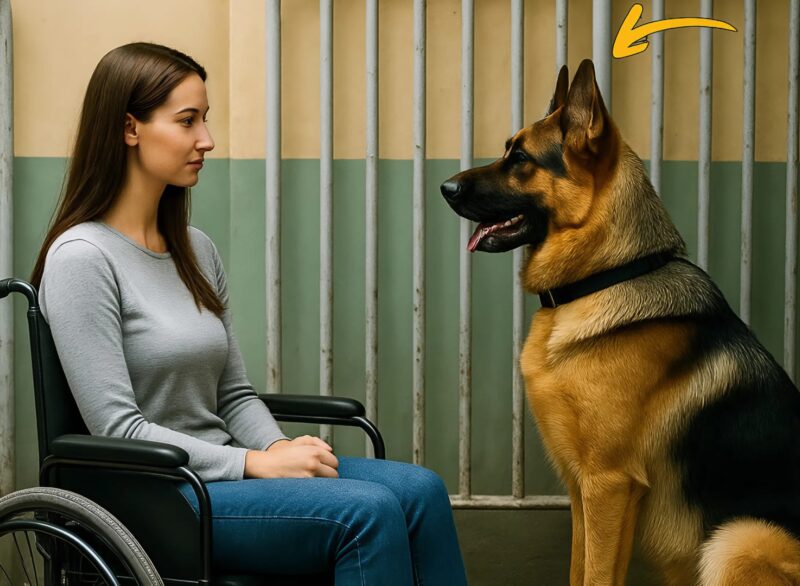
Most of us move through life with an unshakable belief that what we see is real. We trust our eyes without hesitation. We glance at a face and decide whether someone seems friendly. We look at a situation and convince ourselves we understand exactly what is happening. We remember moments from our past and swear that our memories are accurate. After all, if we cannot trust our own senses, what can we trust?
Yet the truth is far more unsettling than most people realize.
Every day, your brain performs countless shortcuts to help you navigate the world. It fills in missing information, interprets incomplete images, and creates a version of reality that feels seamless and certain. Without these mental shortcuts, life would become exhausting. Imagine stopping to analyze every shadow, every sound, every expression, and every movement before deciding what it means. The human mind simply doesn’t have the time or energy for that.
Instead, it creates a story.
The remarkable thing is that this story feels so convincing that we rarely question it. We assume that what we see is what exists. We assume that what we remember is what happened. We assume that our judgments are based on facts rather than assumptions.
Optical illusions expose just how fragile those assumptions can be.
When we encounter an illusion, we often react with surprise or amusement. We stare at a photograph that appears impossible. We see shapes that seem to move despite being perfectly still. We notice faces hidden within objects or discover that two identical colors somehow appear completely different. For a brief moment, our certainty collapses.
Many people think optical illusions are clever tricks designed to fool us. In reality, they reveal something much deeper. They show us how our minds construct reality rather than simply recording it.
The deception was already there.
The illusion merely exposes it.
What makes this realization so powerful is that it extends far beyond images and visual puzzles. The same mental processes that cause us to misinterpret a photograph also shape the way we understand people, relationships, and experiences.
Think about an argument you had years ago.
You may feel completely certain that you remember every detail accurately. You might confidently recall the exact words spoken and the emotions involved. Yet studies repeatedly show that memory is not a perfect recording device. Each time we remember something, we subtly reconstruct it. Over time, the memory itself can change.
What feels like certainty may simply be a story repeated often enough to become familiar.
The same thing happens when we meet strangers.
Within seconds of seeing someone, our brains begin forming conclusions. We judge confidence, intelligence, trustworthiness, and personality before a single meaningful conversation takes place. These judgments happen automatically. They feel natural. Often, they feel correct.
But appearances can be misleading.
The quiet person may be incredibly courageous. The confident person may be deeply insecure. The individual who seems cold may simply be carrying invisible burdens. Our minds constantly fill gaps with assumptions, and those assumptions can shape our entire perception of another human being.
Perhaps the most painful illusions occur within our closest relationships.
Fear, insecurity, jealousy, and past experiences act like filters placed over our vision. A delayed text message becomes evidence of rejection. A distracted expression becomes proof of anger. A brief silence transforms into a sign that something is wrong.
In reality, the other person may be tired, busy, worried, or simply lost in thought.
Yet the brain dislikes uncertainty.
It would rather create an explanation than admit it does not know.
This tendency helps explain why misunderstandings are so common. We often react not to reality itself but to the version of reality our minds have created. We respond to interpretations, assumptions, and imagined narratives without realizing they are not necessarily true.
That is why optical illusions are more than entertaining puzzles.
They are reminders.
They remind us that certainty should be handled carefully. They remind us that confidence does not guarantee accuracy. Most importantly, they remind us that reality is often more complex than our first impressions suggest.
In a world filled with rapid judgments, instant opinions, and constant distractions, these lessons matter more than ever. Social media encourages us to form conclusions within seconds. Headlines demand immediate reactions. Photographs, videos, and carefully curated moments create the illusion that we fully understand other people’s lives.
But we rarely see the complete picture.
We see fragments.
Then our minds rush to fill in the missing pieces.
The danger is not that our brains use shortcuts. The danger is forgetting that those shortcuts exist.
When we become aware of them, something remarkable happens. We become more patient. We become more curious. We become more willing to ask questions instead of assuming we already know the answers.
A person who recognizes the limits of perception becomes less likely to judge harshly. They understand that first impressions can be wrong. They understand that memories can be imperfect. They understand that reality often contains details hidden beyond immediate view.
This awareness does not make life more confusing.
It makes life richer.
Instead of clinging desperately to certainty, we learn to embrace humility. We become comfortable admitting that we may not have the full story. We recognize that understanding requires effort, empathy, and open-mindedness.
The greatest lesson hidden inside every illusion is surprisingly simple.
Seeing is not the same as understanding.
Our eyes provide information, but our minds interpret it. Between those two processes lies a space where mistakes, assumptions, fears, and misunderstandings can flourish. Yet that same space also allows for growth, wisdom, and compassion.
The next time an optical illusion makes you question what you’re seeing, remember that its message extends far beyond the image itself. It is quietly inviting you to reconsider the assumptions you carry through everyday life.
Perhaps the memory you defend so fiercely is incomplete.
Perhaps the stranger you judged deserves another chance.
Perhaps the loved one you misunderstood was never the villain in the story your mind created.
Reality is rarely as simple as it first appears.
And sometimes the clearest vision does not come from trusting our eyes more.
It comes from recognizing when they might be wrong.