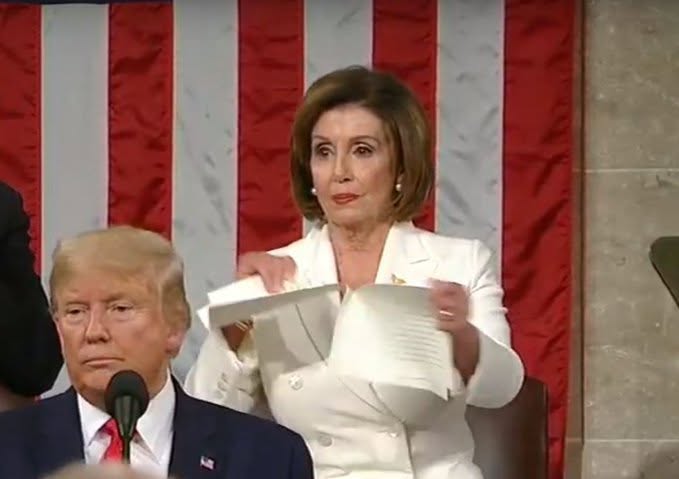
Years after the most turbulent chapters of Donald Trump’s presidency, the political battles surrounding his time in office continue to shape Washington.
Just when many believed the impeachment fights had become part of history, a new effort by some of Trump’s allies has brought those controversies back into the national spotlight.
At the center of the debate is a proposal that supporters describe as long-overdue vindication and critics view as an attempt to rewrite history itself.
The idea is simple in concept but enormously complicated in practice: formally expunge Donald Trump’s two impeachments from the congressional record.
The proposal has reignited fierce arguments over constitutional authority, historical memory, and the enduring legacy of one of the most polarizing presidents in modern American history.
For supporters of the effort, the move represents correction.
For opponents, it represents revision.
And for constitutional scholars, it raises questions that reach far beyond one president.
To understand why the proposal has sparked such intense reactions, it is necessary to revisit the extraordinary circumstances that led to Trump becoming the first U.S. president ever impeached twice.
His first impeachment came in 2019 following allegations that he pressured Ukraine to investigate political rival Joe Biden while military aid was being withheld. The House of Representatives approved articles of impeachment, charging abuse of power and obstruction of Congress.
The Senate later acquitted Trump, allowing him to remain in office.
Then came 2021.
Following the events of January 6 and the attack on the U.S. Capitol, the House impeached Trump a second time, accusing him of incitement of insurrection.
Again, the Senate did not reach the threshold necessary for conviction.
As a result, Trump left office having been impeached twice but never convicted by the Senate.
Those events became defining moments in American political history.
And now, years later, some lawmakers and Trump allies want to revisit them.
The concept of expungement is not entirely new in politics. Congress has occasionally used symbolic resolutions to express opinions about past events, but efforts to erase or nullify impeachments remain deeply controversial.
Supporters argue that because Trump was acquitted both times, the impeachments were politically motivated and should be formally repudiated.
They see expungement as an act of historical correction.
To many of Trump’s supporters, the impeachments represented partisan attacks rather than legitimate constitutional actions.
From this perspective, removing or condemning those proceedings would serve as a declaration that the process itself was flawed.
Critics strongly disagree.
They argue that impeachment is a constitutional act completed at the moment the House votes to approve articles of impeachment.
Whether a president is later convicted or acquitted by the Senate does not erase the fact that impeachment occurred.
In their view, history cannot simply be voted away.
Legal scholars often point out that impeachment functions much like an indictment. The House brings charges, while the Senate conducts a trial.
An acquittal does not erase the charges themselves.
Instead, it reflects the outcome of the constitutional process.
This distinction lies at the heart of the current debate.
Can Congress symbolically condemn a previous impeachment?
Possibly.
Can it truly erase it from history?
That question remains far more difficult.
Constitutional experts across the political spectrum have expressed skepticism about whether any future Congress possesses the authority to nullify historical acts completed under earlier sessions.
Records of congressional votes are part of the nation’s official archive.
They remain documented regardless of changing political winds.
Yet politics has never been solely about legal authority.
It is also about symbolism.
And symbolism carries enormous power.
Even if an expungement resolution has little practical legal effect, its political impact could be substantial.
For Trump supporters, passage of such a measure would represent vindication after years of investigations, legal battles, and political conflict.
It would reinforce a narrative that Trump was unfairly targeted by opponents determined to undermine his presidency.
For critics, however, the effort reflects something different.
They argue that attempts to erase impeachments risk weakening accountability mechanisms built into the Constitution itself.
Impeachment, they contend, was designed as a safeguard against presidential misconduct.
Altering historical records or appearing to do so could set troubling precedents for future administrations of either party.
Beyond the constitutional arguments lies a deeper struggle over memory.
Modern politics is increasingly a battle not only over policy, but over narrative.
How leaders are remembered matters.
How events are interpreted matters.
History itself has become contested terrain.
Few figures illustrate this reality more clearly than Donald Trump.
Supporters often portray his presidency as one marked by economic growth, judicial appointments, and a challenge to political norms they viewed as entrenched.
Critics emphasize investigations, controversies, and unprecedented moments of institutional conflict.
The debate over impeachment sits at the center of these competing visions.
For some Americans, impeachment remains evidence of presidential misconduct.
For others, it represents political overreach.
Neither side appears willing to surrender its interpretation.
That is why efforts to revisit the impeachments carry significance far beyond congressional procedure.
They tap into larger questions about power, accountability, and national identity.
The debate also reflects how deeply divided the country remains.
Years after Trump first entered the White House, few political figures continue to inspire such intense loyalty and equally intense opposition.
His influence over American politics remains undeniable.
Even after elections end, the arguments surrounding his presidency continue.
Every new proposal, investigation, court ruling, or campaign announcement seems to reopen old wounds.
The impeachment debate is no exception.
Whether any resolution ultimately succeeds or fails, its introduction alone ensures that Americans once again revisit some of the most contentious moments in recent political history.
The discussions will revive memories of hearings, televised testimony, Senate trials, protests, and the dramatic events that shaped an era.
For many citizens, those years remain emotionally charged.
For historians, they remain unfinished chapters.
And for politicians, they remain powerful symbols capable of mobilizing supporters and opponents alike.
In the end, the struggle over Trump’s impeachments may be less about changing the past than about shaping the future.
History cannot easily be erased.
But it can be interpreted.
It can be debated.
And it can become a battleground where competing visions of the nation continue to collide.
Long after votes are counted and offices change hands, the fight over Donald Trump’s legacy remains one of the defining political stories of modern America.
The presidency ended.
The arguments never did.