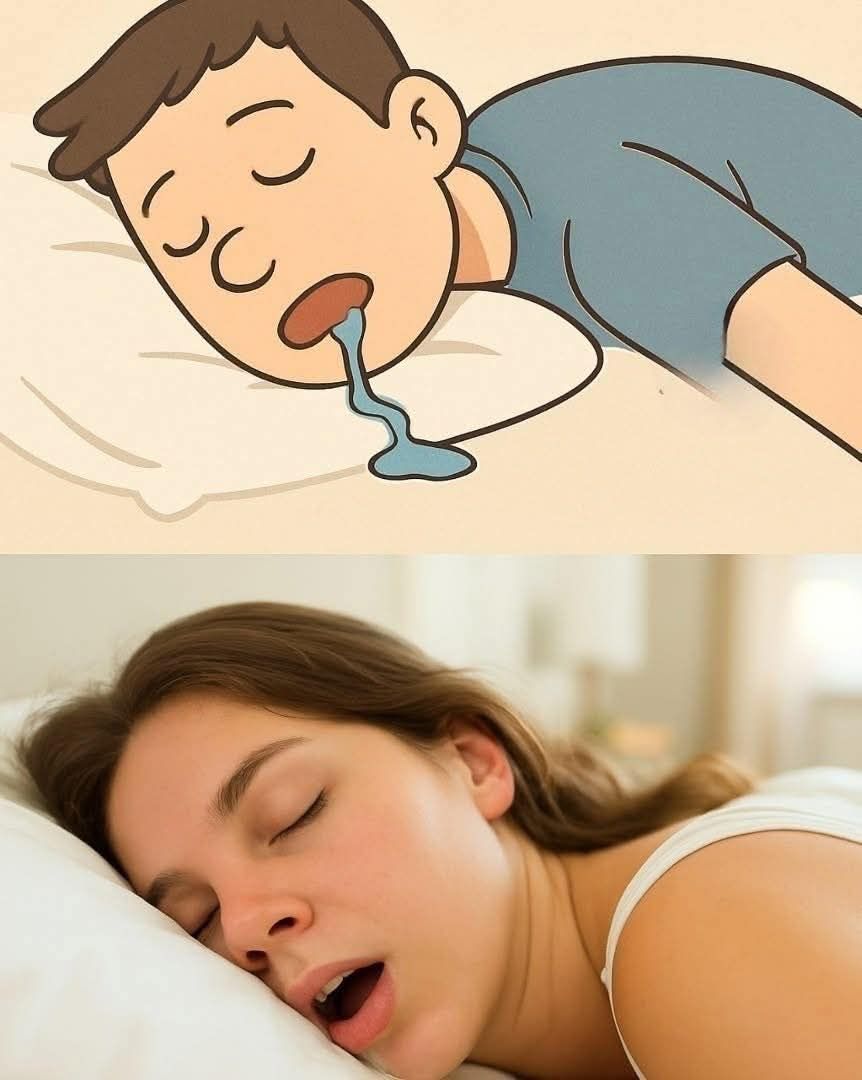
Most people have experienced it at least once.
You wake up in the middle of the night, roll over, and suddenly notice the pillow beneath your face feels damp.
For some, it becomes a small embarrassment they laugh off quietly. For others, it happens so often that it begins to feel frustrating, uncomfortable, or even concerning.
Drooling during sleep is extremely common, and in many cases, it is completely harmless. Yet doctors say that persistent nighttime drooling can sometimes reveal important clues about what is happening inside the body.
What appears to be a minor annoyance may actually point toward breathing issues, medication side effects, sleep disorders, or even neurological problems that deserve attention.
The body often sends subtle signals before larger health concerns become obvious.
Nighttime drooling can be one of them.
Saliva production itself is entirely natural. The human body creates saliva constantly to protect the mouth, aid digestion, and maintain oral health. During the day, people swallow saliva automatically without thinking about it. But during sleep, muscle relaxation and changes in breathing can allow saliva to escape more easily, especially when the mouth remains open for long periods.
For many people, sleep position is the biggest factor.
Sleeping on the side or stomach naturally encourages saliva to flow outward rather than remain inside the mouth. Gravity does most of the work. Combined with relaxed facial muscles during deep sleep, even healthy individuals may wake up with drool on the pillow occasionally.
Mouth breathing makes the situation even more likely.
When nasal passages become blocked due to allergies, colds, or sinus congestion, the body often compensates by breathing through the mouth during sleep. That airflow dries the mouth slightly while also making it easier for saliva to escape.
For people dealing with seasonal allergies or respiratory infections, nighttime drooling may simply disappear once congestion improves.
But not every cause is temporary.
Some people experience chronic drooling because of structural issues inside the nose. A deviated septum, for example, occurs when the thin wall separating the nostrils becomes significantly off-center. This can make normal nasal breathing difficult, especially while lying down. Over time, constant mouth breathing may contribute to frequent nighttime drooling and disrupted sleep quality.
In severe cases, medical procedures may be recommended to improve airflow.
Medication can also play a surprisingly important role.
Certain prescription drugs increase saliva production as a side effect. Sedatives, antipsychotic medications, some antibiotics, and even specific pain medications may trigger excess saliva during sleep. People often do not realize the connection immediately because the symptom seems unrelated to the medication itself.
Doctors sometimes adjust dosage or recommend alternatives if drooling becomes disruptive or affects sleep quality significantly.
Another important cause doctors pay close attention to is Sleep Apnea.
Sleep apnea is a potentially serious condition where breathing repeatedly stops and starts during sleep. Many individuals with sleep apnea breathe heavily through the mouth, snore loudly, or experience interrupted breathing patterns that increase drooling.
Often, the person affected does not fully realize the problem themselves.
Instead, partners or family members notice loud snoring, gasping sounds, choking noises, or restless sleep throughout the night. Meanwhile, the individual may wake up exhausted despite spending many hours in bed.
Excessive daytime fatigue, morning headaches, irritability, and difficulty concentrating are all warning signs that may accompany sleep apnea.
Left untreated, the condition can increase risks involving blood pressure, heart health, and long-term fatigue.
That is why persistent nighttime drooling combined with breathing problems should never be ignored completely.
Oral health itself can also contribute directly.
Dental infections, gum disease, cavities, and inflammation inside the mouth may stimulate the body to produce more saliva than normal. Infections create irritation, and saliva naturally increases in response as the body attempts to protect tissues and maintain balance.
People dealing with oral health issues may also notice symptoms such as swollen gums, mouth pain, bleeding while brushing teeth, bad breath, or discomfort while chewing.
Dentists often identify the underlying issue quickly once symptoms are examined properly.
Beyond these common explanations, neurological conditions can sometimes affect swallowing control and muscle coordination, leading to more severe drooling. Disorders that weaken facial muscles or interfere with nerve signals may make it difficult for individuals to swallow saliva normally, especially during sleep.
Although these cases are less common, persistent or sudden drooling accompanied by muscle weakness, speech changes, or difficulty swallowing should always be evaluated medically.
The emotional side of nighttime drooling is also more significant than many people admit.
Some individuals feel embarrassed discussing it openly, especially adults who associate drooling with childhood or illness. Others experience frustration because damp pillows interrupt sleep or create discomfort night after night.
Yet doctors emphasize that drooling itself is not something people should feel ashamed about.
The body is simply responding to breathing patterns, muscle relaxation, sleep posture, or medical conditions occurring during rest.
In fact, mild drooling during deep sleep can sometimes indicate the body has entered particularly relaxed sleep stages. The concern usually arises only when drooling becomes excessive, sudden, or associated with other symptoms.
Simple lifestyle changes may help reduce it considerably.
Sleeping slightly elevated, improving nasal airflow, staying hydrated, treating allergies, or changing sleep position can often make a noticeable difference. Some people benefit from specialized pillows or adhesive strips designed to encourage nasal breathing during sleep.
Maintaining strong oral hygiene also matters more than many realize.
Regular dental care reduces irritation and infection that may stimulate excess saliva production. Treating congestion early can also prevent prolonged mouth breathing that worsens drooling patterns over time.
Most importantly, people should pay attention to accompanying symptoms rather than focusing on the drooling alone.
Persistent exhaustion.
Loud snoring.
Difficulty breathing.
Swallowing problems.
Chronic congestion.
Facial weakness.
These are the signs that may indicate the body is trying to communicate something more serious.
Modern medicine increasingly recognizes sleep as one of the most important windows into overall health. The body often reveals hidden problems during the night long before they become obvious during the day. Small symptoms that seem insignificant restless sleep, dry mouth, snoring, or drooling can sometimes provide important clues about larger issues developing quietly beneath the surface.
That does not mean every damp pillow signals danger.
Far from it.
For most people, nighttime drooling remains harmless and temporary. But understanding why it happens helps remove unnecessary embarrassment while also making it easier to recognize when the symptom deserves closer attention.
Sometimes the body whispers before it shouts.
And something as simple as waking up to a damp pillow may occasionally be one of those whispers.