
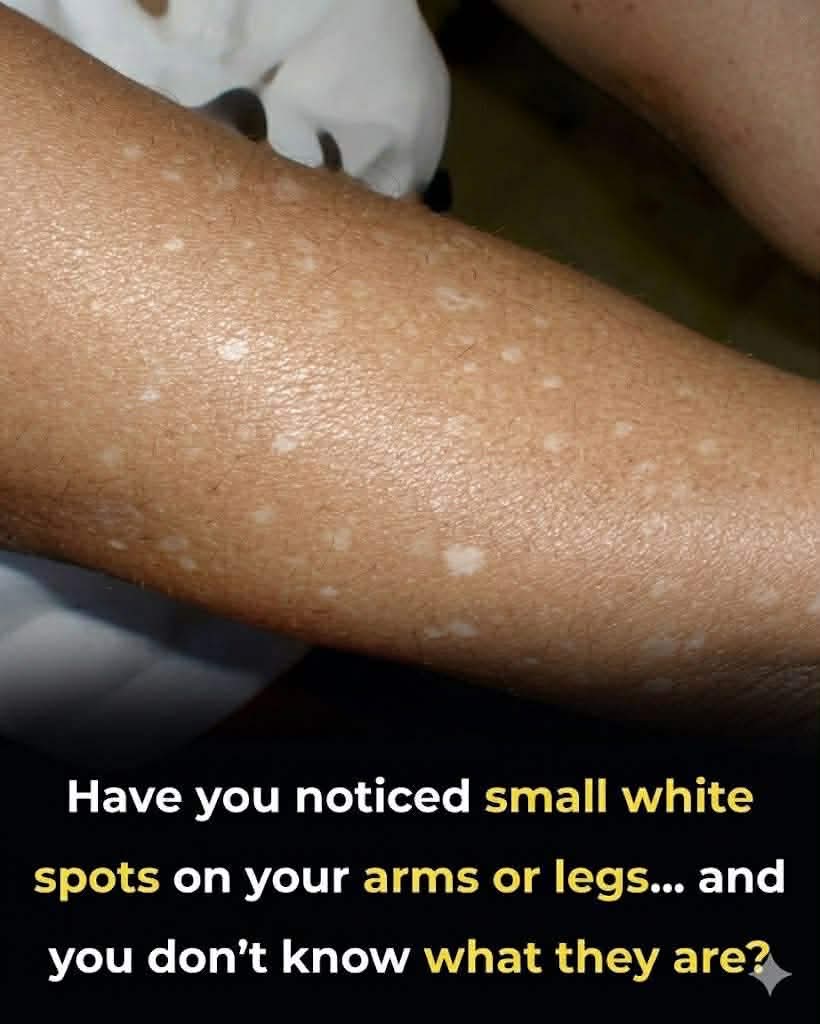
It often begins with a quick glance in the mirror or a random moment under bright sunlight. Maybe you notice a pale dot on your arm, a faint patch near your shoulder, or tiny white marks scattered across your legs that weren’t there before.
At first, it seems harmless. Then the questions start. Is it a vitamin deficiency? A fungal infection? A sign of aging? Something permanent? For many people, those small white spots trigger immediate anxiety because skin changes feel deeply personal. Our skin is the part of ourselves the world sees first, and when it changes unexpectedly, even slightly, it can quietly shake our confidence.
But dermatologists say most of these pale patches are far less dangerous than people fear. In many cases, they are common, manageable, and medically harmless. Still, understanding why they appear matters. Skin is more than a surface. It acts like a messenger, constantly reflecting what is happening internally and externally. Changes in pigment, texture, or tone can reveal how our bodies respond to sunlight, inflammation, aging, fungi, immunity, and even stress.
The central issue behind most white spots is melanin. Melanin is the pigment responsible for the natural color of our skin, hair, and eyes. When melanin production slows down or disappears in certain areas, pale spots begin to appear. Sometimes the change is temporary. Other times it can persist for years. The reasons vary widely, and that is why identifying the type of patch is important.
One of the most common causes is something called Idiopathic Guttate Hypomelanosis, often shortened to IGH. The name sounds intimidating, but the condition itself usually is not. These are the tiny porcelain-like white spots many adults begin noticing after their thirties or forties, especially on the arms and legs. Dermatologists believe years of sun exposure gradually damage melanocytes, the cells that produce pigment. Over time, some of those cells simply stop functioning.
These spots are usually smooth, flat, and very small, often no larger than a few millimeters. They commonly appear on areas exposed to sunlight over decades, such as the shins, forearms, upper back, and face. The important thing to understand is that IGH is considered cosmetic, not dangerous. It is not contagious, not cancerous, and not linked to serious disease. In many ways, experts describe it as part of the skin’s natural aging process.
Even though the condition is harmless, many people still feel self-conscious about it. Some try creams, exfoliation treatments, or retinoids in hopes of restoring pigment. Results vary. Because the melanocytes in those spots are often inactive permanently, repigmentation can be difficult. Prevention becomes more important than reversal. Daily sunscreen use can help reduce further sun damage and limit the development of new spots over time.
Another common cause of white patches is tinea versicolor, a superficial fungal condition that behaves very differently. Unlike IGH, this one is caused by an overgrowth of yeast naturally living on the skin. The yeast, called Malassezia, exists on nearly everyone’s body without causing problems. But in hot, humid conditions or on oily skin, it can multiply excessively and interfere with melanin production.
The result is uneven patches that may appear white, pink, tan, or light brown. These spots often develop on the chest, shoulders, neck, or back. Unlike IGH, they may have a fine, dry scale that becomes more noticeable when scratched gently. Many people first notice the condition after sun exposure because the surrounding skin tans while the affected areas remain pale.
Fortunately, tinea versicolor is usually easy to treat. Antifungal creams containing ingredients like clotrimazole or ketoconazole are commonly effective. Some people also use medicated dandruff shampoos as body washes because ingredients such as selenium sulfide help control the yeast. Even after successful treatment, the skin may take weeks or months to regain normal pigmentation, which can make people believe the infection is still active when it actually is not.
For children and teenagers, another frequent explanation is pityriasis alba. This condition is especially common in kids with dry skin, eczema, asthma, or allergies. It often begins as mildly inflamed pink or red patches that later fade into pale areas. Parents frequently panic when these spots appear on the cheeks or arms, fearing vitiligo or fungal infections, but pityriasis alba is usually mild and temporary.
The patches are often dry, slightly rough, and more visible during summer because the surrounding skin darkens in the sun while the affected spots stay lighter. Hydration becomes the key treatment. Thick fragrance-free moisturizers and gentle skincare routines typically improve the condition over time. In some cases, mild hydrocortisone creams may help calm lingering irritation.
Then there is vitiligo, perhaps the most recognized and emotionally difficult cause of white patches. Vitiligo is an autoimmune condition in which the body mistakenly attacks its own pigment-producing cells. Unlike other conditions that create pale spots, vitiligo often causes complete pigment loss, producing sharply defined milky-white patches.
The condition can affect any part of the body, including the face, hands, knees, elbows, and even hair. Sometimes it progresses slowly over many years. In other cases, it spreads rapidly. Vitiligo is not physically painful or contagious, but its emotional impact can be profound. Because appearance plays such a strong role in identity and social interaction, people living with vitiligo often experience anxiety, isolation, or loss of confidence.
The encouraging news is that treatments for vitiligo have improved significantly in recent years. Dermatologists now use targeted light therapy, corticosteroids, immune-modulating medications, and newer treatments like JAK inhibitors to help restore pigment in some patients. While there is still no universal cure, advances in treatment have given many people renewed hope.
Regardless of the cause, protecting the skin becomes essential whenever pigment loss occurs. Areas lacking melanin are more vulnerable to sunburn and UV damage. Dermatologists consistently recommend broad-spectrum SPF 30 or higher, even on cloudy days. Sunscreen not only protects the skin but also reduces contrast between affected and unaffected areas, making spots less noticeable over time.
Lifestyle factors also matter more than people realize. Tight synthetic clothing that traps heat and sweat can worsen fungal conditions. Chronic dryness can aggravate inflammatory skin disorders. Harsh soaps and over-exfoliation may weaken the skin barrier further. Gentle skincare, hydration, breathable fabrics, and sun protection often make a larger difference than expensive products promising miracle results.
Still, not every white patch should be ignored. Sudden spreading, pain, thickening skin, bleeding, or lesions in sensitive areas should always be evaluated by a dermatologist. While most causes are harmless, rarer conditions can sometimes mimic common pigment disorders. Dermatologists often use a Wood’s lamp, a specialized ultraviolet light, to help distinguish between fungal infections, vitiligo, and other skin conditions with remarkable accuracy.
Perhaps the most important lesson is this: skin changes are incredibly common, and fear often grows faster than facts. Many people immediately assume the worst when they notice pale patches, but in reality, the majority of cases involve conditions that are manageable or medically insignificant. The skin constantly reflects age, environment, immunity, and lifestyle. It evolves just like the rest of the body.
Those tiny white spots are not always warnings of something catastrophic. Sometimes they are signs of sunlight accumulated over decades. Sometimes they reflect dryness, fungi, or temporary inflammation. And sometimes they remind us that our bodies are always changing in subtle ways we cannot fully control.
What matters most is paying attention without panicking, seeking professional guidance when needed, and remembering that skin imperfections do not define health, beauty, or worth. In a world obsessed with flawless appearances, understanding the truth behind these small patches can replace fear with something far more valuable: clarity.