What began as a luxury Antarctic voyage has transformed into a floating nightmare that now has the attention of global health authorities, frightened passengers, and millions of people watching anxiously from around the world.
The cruise ship MV Hondius, once marketed as an unforgettable journey through icy landscapes and untouched wilderness, now sits trapped in a tense and surreal limbo after multiple passengers became seriously ill from a rare hantavirus outbreak.
Inside the vessel, fear has spread faster than facts. Hallways once filled with excited tourists carrying cameras and winter gear have fallen eerily quiet. Cabin doors remain shut for hours at a time. Meals are delivered by masked crew members wearing gloves and protective clothing. Every cough echoes through the corridors like a warning no one can ignore.
The crisis escalated after reports confirmed that two elderly passengers from the Netherlands died within days of developing severe symptoms. Soon after, a British traveler was airlifted to intensive care in critical condition, while several additional passengers began showing signs consistent with the virus. Suddenly, what had seemed like isolated illness became something far more alarming.
Now, nearly 150 people aboard the Hondius are caught in uncertainty, unable to disembark freely while health officials race to understand what exactly is happening on the ship. The World Health Organization has stepped into the situation, issuing statements designed to calm fears while also acknowledging that investigators are dealing with unusual and deeply concerning circumstances.
Hantavirus itself is not a new disease. Scientists have studied it for decades. It is generally transmitted through contact with infected rodents, especially through droppings, urine, or contaminated dust particles inhaled into the lungs. In most cases, outbreaks are rare and isolated, often linked to rural environments, storage areas, or wilderness exposure.
But what makes this situation so unsettling is that investigators reportedly have not identified evidence of rodent infestation aboard the ship. That detail has become the center of growing concern. Without a clear rodent source, experts are now forced to examine the far more troubling possibility that limited person-to-person transmission may have occurred.
That possibility changes the emotional atmosphere entirely.
For many passengers, the fear is no longer simply about getting sick. It is about uncertainty itself. Nobody knows exactly how exposure occurred, who may already be infected, or whether symptoms are still incubating silently in people who currently appear healthy. Some passengers reportedly spend hours refreshing news updates, messaging family members, and searching online for survival rates and symptoms.
The emotional toll has become almost as suffocating as the medical crisis.
One passenger reportedly described the ship as feeling “frozen in time,” where every announcement over the loudspeaker causes panic and every knock on the cabin door sends anxiety surging through the room. Another described passengers avoiding eye contact in shared spaces, quietly studying each other for signs of illness.
The psychological pressure of quarantine at sea is uniquely intense. There is no easy escape, no ability to simply leave the environment causing fear. Outside the windows lies only endless ocean and ice. Inside, people wait for decisions from governments, health agencies, and medical teams they cannot see.
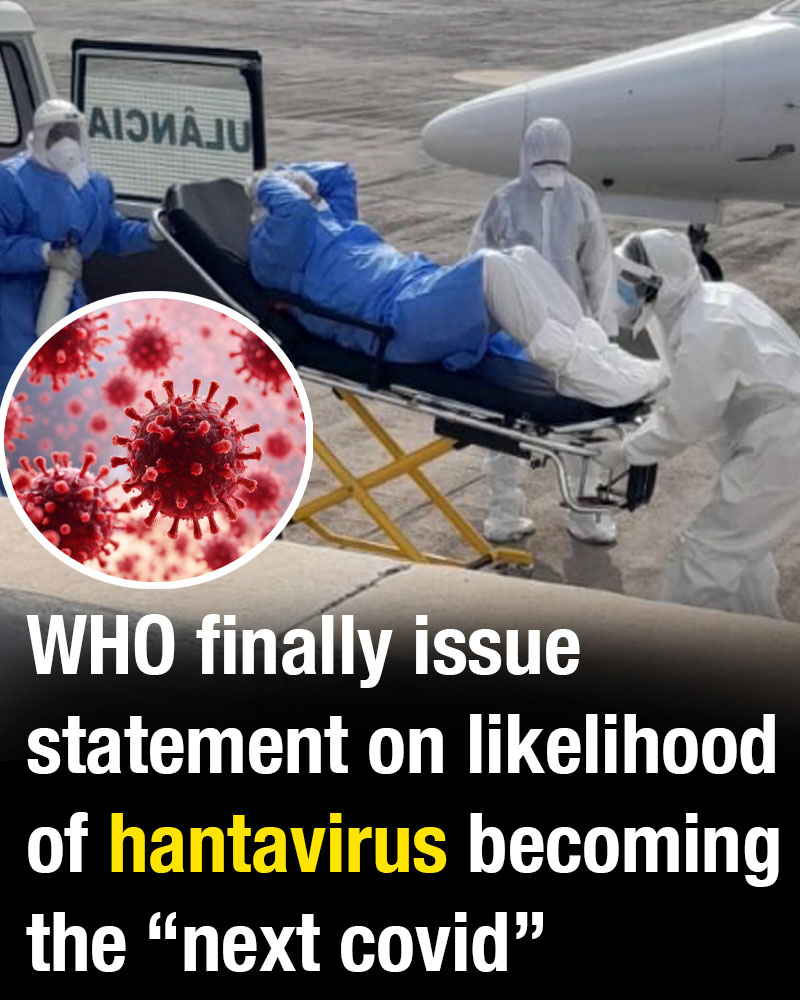
Social media has only amplified the panic. Comparisons to the early days of Covid-19 spread rapidly online after headlines began referring to hantavirus as a potential “next pandemic.” Images of masked crew members and isolated passengers fueled speculation and fear far beyond the ship itself.
But health officials have been careful to draw an important distinction.
According to current scientific understanding, hantavirus does not spread nearly as easily as Covid-19. Unlike coronavirus, which spreads efficiently through everyday respiratory interaction, hantavirus transmission between humans remains extremely rare and limited to only a few documented strains worldwide. Most infections still originate through rodent exposure rather than casual person-to-person contact.
The WHO has stressed that, at this stage, the broader public health risk remains low.
That message, however, has not fully calmed fears.
Part of the problem is that modern society still carries deep psychological scars from the Covid era. People remember how quickly uncertainty became global crisis. They remember early reassurances, conflicting information, overwhelmed hospitals, and rapidly changing guidance. As a result, even a small outbreak now triggers immediate suspicion and heightened emotional reaction.
The Hondius outbreak has become more than a medical story. It has become a reflection of collective trauma and lingering anxiety about how vulnerable the modern world truly is.
Experts say transparency will be critical moving forward. Public trust depends not only on scientific accuracy but also on clear communication. Passengers, families, and the wider public want answers: How did this happen? Was there a hidden source? Could more people become sick? And perhaps most importantly, could this have been prevented?
Meanwhile, medical teams continue testing passengers and monitoring symptoms closely. Authorities are reportedly coordinating potential evacuation procedures and isolation protocols while trying to avoid unnecessary panic. Every hour matters, particularly because hantavirus can progress rapidly once severe respiratory symptoms develop.
Doctors explain that early symptoms often resemble common illnesses: fever, muscle aches, fatigue, headaches, and chills. But in serious cases, the disease can suddenly escalate into dangerous breathing difficulties as fluid accumulates in the lungs. That unpredictability is one reason the virus carries such a frightening reputation despite its rarity.
For families waiting at home, the silence has become agonizing. Some passengers reportedly have limited communication access, leaving loved ones dependent on fragmented updates from news reports and official statements. Across Europe and beyond, relatives now wait beside phones, hoping for reassuring messages that sometimes do not come for hours.
Yet amid the fear, experts continue emphasizing perspective.
The current evidence does not suggest the world is facing another Covid-style pandemic. Scientists caution against sensationalism and remind the public that rare outbreaks require careful investigation, not panic-driven conclusions. Surveillance systems, international cooperation, and rapid medical response are all far stronger today than they were years ago.
Still, the Hondius crisis exposes how fragile the sense of safety can become when disease appears in isolated and mysterious ways. One infected passenger can transform an entire ship from a vacation into a place defined by suspicion, isolation, and dread.
And perhaps that is what makes this story resonate so deeply across the world.
It is not only about a virus. It is about confinement, uncertainty, and the terrifying feeling of waiting for answers while surrounded by invisible risk. It is about how quickly normal life can dissolve into crisis. It is about the realization that even in an age of advanced medicine and constant connectivity, humanity remains vulnerable to forces too small to see.
For now, the ocean around the Hondius remains calm and silent. The ship barely moves. But inside, every passenger understands the same chilling truth: until the investigation ends and the danger is fully understood, nobody aboard can truly relax.
They are not simply waiting to dock.
They are waiting to learn whether fear itself has already traveled farther than the virus ever will.