What should have been a routine update to one of the most recognizable documents in the country has instead ignited a fierce national argument about identity, symbolism, and the boundaries between government and politics.
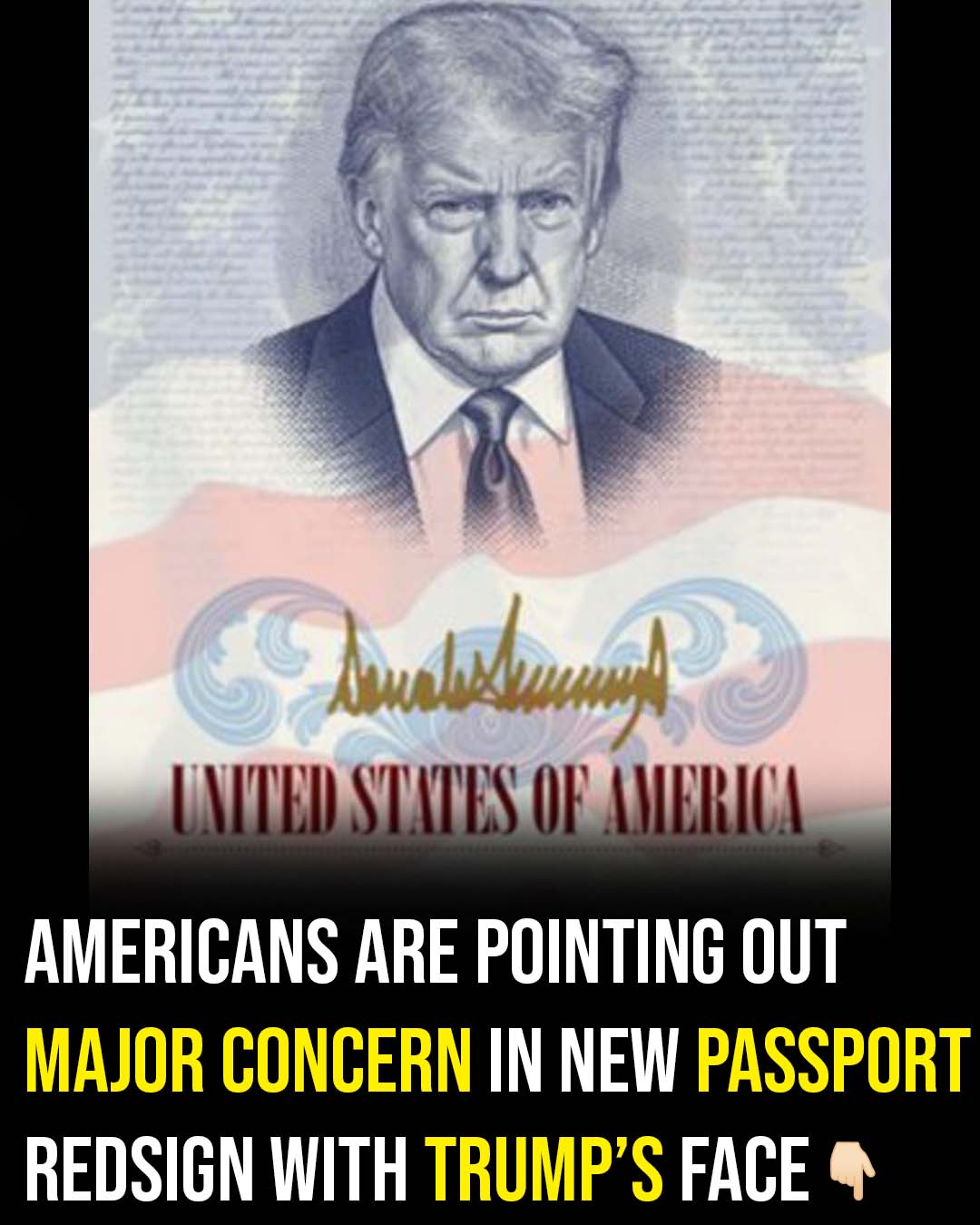
The unveiling of a limited-edition United States passport informally dubbed by critics and supporters alike as the “Trump passport” has turned a simple piece of travel documentation into a lightning rod for debate, drawing reactions that range from pride to alarm.
At first glance, the redesigned passport is striking. Its pages feature bold, patriotic imagery tied to the nation’s upcoming semiquincentennial celebration, blending historical references with modern design. Flags ripple across the paper in stylized patterns, and iconic American symbols appear more prominently than in previous editions. But what truly set this version apart was its perceived association with President Donald Trump, whose influence critics say is reflected not only in the timing of the rollout but in the tone and symbolism embedded within the design.
For supporters, the reaction has been straightforward: this is a moment of national pride. They see the passport as a celebration of America at a milestone moment in its history, a way of connecting everyday citizens to a broader narrative of independence, resilience, and global presence. In their view, tying the document’s redesign to a strong, recognizable presidency is not controversial it is symbolic. They argue that leaders have always shaped the tone of their era, and that commemorating a presidency alongside a historic anniversary is simply an extension of that tradition.
Others take it a step further, suggesting that the outrage says more about political bias than about the document itself. To them, critics are overreacting, projecting fears onto what is ultimately just ink and paper. They point out that passports already contain national emblems and historical references, and that highlighting a contemporary moment in leadership is hardly unprecedented. In their eyes, the backlash reflects a deeper discomfort with the current political climate rather than any genuine issue with the design.
But for critics, the concern runs much deeper than aesthetics. They see the new passport as a troubling departure from a long-standing principle: that official government documents should remain politically neutral. A passport is not a campaign poster or a commemorative souvenir; it is a functional tool used by citizens of all beliefs, backgrounds, and affiliations. Embedding what they interpret as political branding into such a document feels, to them, like a subtle but significant shift in how power is expressed.
That unease is not just theoretical. Many have raised practical concerns about how the passport might be received abroad. In a world where international travel often involves scrutiny at borders and airports, even small details can carry weight. Critics worry that a passport perceived as politically charged could create awkward or even uncomfortable situations in countries where Trump remains a controversial figure. The idea that a traveler’s identity document could provoke assumptions or reactions unrelated to their own views is, for some, deeply unsettling.
Beyond logistics, there is a broader philosophical debate unfolding. Opponents of the design argue that it risks normalizing a form of politics centered on personality rather than institutions. They see it as part of a larger trend in which the lines between state and individual leadership become blurred, where symbols of governance begin to reflect not just the nation, but the person at its helm. In that context, the passport becomes more than a document it becomes a statement.
Supporters reject that interpretation, insisting that patriotism and leadership are not mutually exclusive. They argue that honoring a president during a major national milestone is not the same as elevating them above the country itself. To them, the passport is a celebration of continuity, a reminder that the nation’s story is shaped by both its people and its leaders. They see the criticism as an attempt to strip away meaning from symbols that are meant to inspire unity.
As the debate spreads across social media and news platforms, the passport has taken on a life far beyond its intended purpose. Memes, commentary, and heated exchanges have transformed it into a cultural flashpoint, a small object carrying an outsized emotional charge. People who may never have given a second thought to the design of a passport now find themselves arguing about what it represents, what it should represent, and who gets to decide.
Interestingly, the rollout of the new design is limited, at least for now. Not every citizen will receive this version, and it may remain a niche edition tied specifically to the semiquincentennial celebration. Yet its impact has already been felt. The conversation it sparked shows no signs of fading, revealing just how sensitive the intersection of politics and everyday life has become.
In the end, the controversy is not really about paper, ink, or even passports. It is about perception. It is about how a nation sees itself and how it chooses to present that identity to the world. For some, the new design is a proud reflection of a country unafraid to celebrate its leadership and history. For others, it is a warning sign, a reminder of how easily symbols can shift from unifying to divisive.
What remains clear is that something as ordinary as a travel document can no longer be taken at face value. In a deeply polarized environment, even the smallest details become loaded with meaning. The passport, once a quiet companion in a traveler’s pocket, has become a mirror reflecting not just where Americans are going, but how they feel about the country they represent.