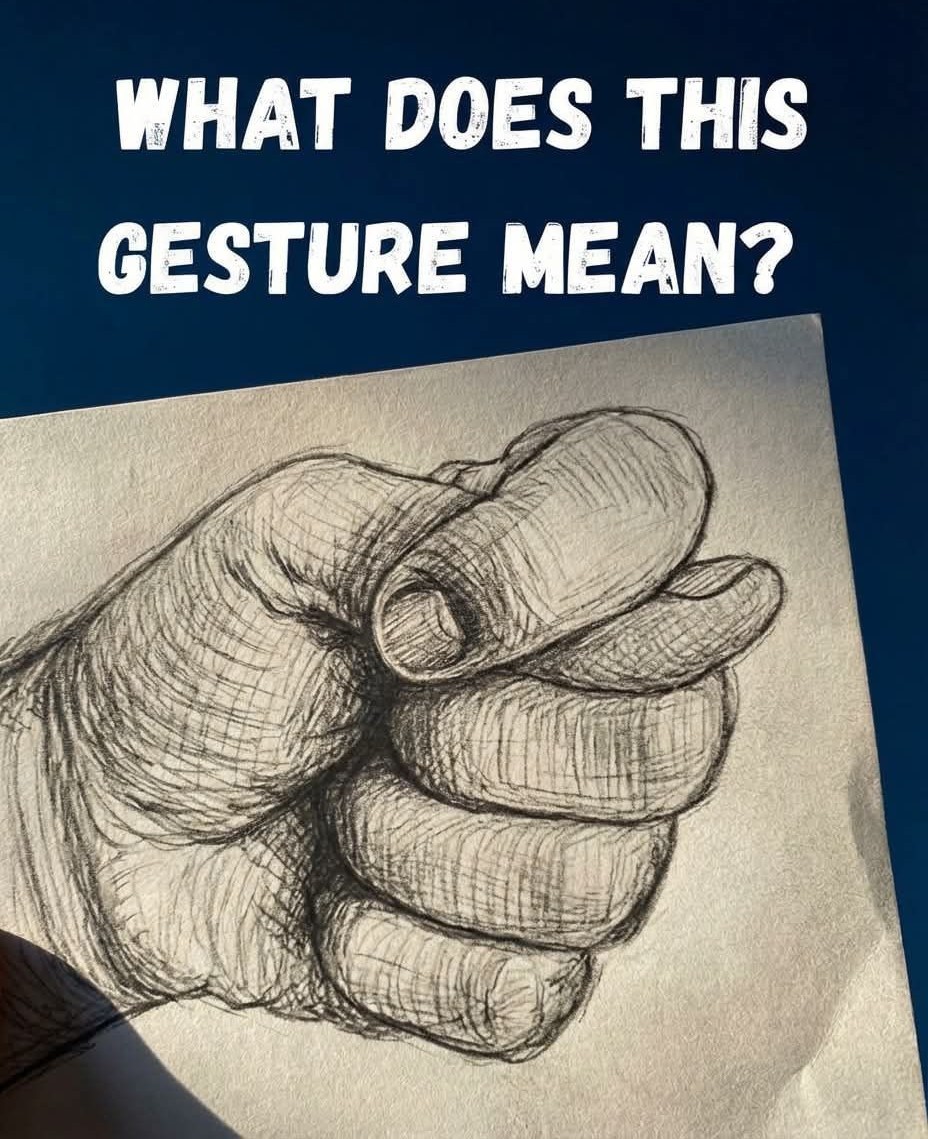
Tucked between two fingers, the hidden thumb once carried more weight than shouted arguments. The fig gesture, as it was known, allowed people to say no without humiliation, to resist without open conflict, and to protect themselves with nothing but a small, knowing movement.
In an age when reputation, honor, and social control ruled daily life, this tiny sign became a quiet shield. Polite on the surface. Powerful underneath. It was not a shout or a fist. It was something far more subtle. A gesture that could be made in a moment, hidden in plain sight, understood by those who needed to understand and invisible to everyone else.
The origins of this gesture stretch back thousands of years. Ancient Roman writings reference it. Medieval artwork depicts it. Travelers brought it across continents, and it adapted to every culture it touched. In some places, it was a ward against evil spirits. In others, it was a silent curse, a way to wish misfortune on an enemy without speaking a word. In still others, it was a gesture of refusal, a polite no that saved face for everyone involved. The beauty of the fig gesture was its flexibility. It could mean whatever the situation demanded, and it left no evidence behind.
In an era when social hierarchy was rigid and insulting a superior could mean ruin, the fig gesture offered a way to push back without risking everything. A peasant could make it behind a lord s back. A woman could use it to reject an unwanted suitor without causing a scene. A merchant could signal displeasure with a deal without breaking the terms of polite negotiation. The gesture was a pressure valve, a release for the frustrations that could not be spoken aloud. And because it was small and quick, it was rarely noticed by those in power, even when it was directed at them.
Over time, the fig gesture spread across Europe, the Mediterranean, and beyond. It appeared in religious art, often associated with the devil or with foolishness. It was carved into amulets and worn as protection against the evil eye. Sailors used it to ward off bad luck before setting sail. Parents taught it to children as a way to stand up to bullies without fighting. The gesture was everywhere, and yet it remained invisible to those who did not know what to look for. That was its genius. It was a secret language, spoken by the powerless, understood by the wary, ignored by the oblivious.
As generations passed, its sharp edges softened. What began as subtle defiance turned into a shared wink within families, a private language between grandparents and children, a comforting ritual at doorways and train platforms. The fig gesture lost much of its original meaning, but it gained something else. Warmth. Familiarity. A sense of belonging. It became a way to say I love you without embarrassment, to share a secret joke across a crowded room, to remind someone that they were not alone. The gesture that had once been a weapon became a bond.
Even if few recognize it now, the gesture s legacy lives in how we still try to set boundaries gently, protect what we love, and speak volumes without a single word. We may no longer tuck our thumbs between our fingers to ward off evil or refuse a request. But we still have our own small signals. A raised eyebrow. A slight shake of the head. A brief touch on the arm. These are the modern descendants of the fig gesture, the tiny movements that carry enormous meaning. They are the ways we protect ourselves and connect with others without the messiness of language.
The fig gesture is not used much anymore. It has been replaced by other signs, other symbols, other silent languages. But its spirit lives on. Every time we refuse a request with a polite smile, every time we defend someone without raising our voice, every time we find a way to say no without hurting feelings, we are channeling the energy of that ancient gesture. We are finding power in subtlety, strength in silence, and connection in the smallest of movements.
Its shape may fade, but the human need behind it never did. We still need ways to say no without conflict. We still need ways to protect ourselves without violence. We still need ways to connect without words. And so we invent new gestures, new signals, new silent languages. The fig gesture is gone, but what it represented is eternal. The desire for a quiet shield. The need for a secret weapon. The hope that we can navigate the world with grace, even when we are saying no.
The next time you find yourself in a difficult situation, remember the fig gesture. Not the shape itself, but what it stood for. A way to resist without fighting. A way to say no without humiliation. A way to protect what matters without drawing attention. You may not have a hidden thumb to offer, but you have something better. You have the knowledge that the need for such gestures is ancient, and that the solutions we create, whether ancient or modern, are part of a long human tradition of finding power in the smallest of movements. That is the legacy of the fig gesture. That is the meaning that still matters. And that is the truth that will never fade. No matter how many generations forget the shape, the feeling remains. The need remains. And as long as that need exists, so will the gestures that answer it. Quiet. Powerful. Unforgettable. Just like the fig gesture. Just like the people who used it. Just like the ones who still find ways to say no without speaking. That is the hidden meaning. That is the story. That is the gift. And it is ours to carry forward. One small gesture at a time. One silent no at a time. One quiet connection at a time. That is how we honor the past. That is how we shape the future. That is how we keep the fig gesture alive. Not in form, but in spirit. And that is enough. More than enough. It is everything.