The search for 18-year-old twins Carolina and Luiza ended the way no one dared to imagine. And in the days that followed, the city itself seemed to exhale slowly, painfully, as if every street, every alley, every park bench remembered the echo of their footsteps.
The twins had vanished without a trace, two identical smiles erased from the morning rush, two bright futures swallowed by silence. Now that silence had a name, a place, a date. But it still didn’t have a reason.
Investigators moved with the quiet precision of people who had seen too much. They retraced the final hours of Carolina and Luiza’s known lives every text message, every grainy security camera frame, every offhand comment to a friend. The autopsy results hung over the community like a storm that refused to break, a pressure in the chest that made it hard to breathe. Families locked doors they’d never bothered to lock before. Parents who had once lectured their teenagers about curfew now held them close at noon, whispering reassurances they weren’t sure they believed.
At the local coffee shop where the twins used to share a single pastry and argue over who got the bigger half, the owner left two cups on the counter, untouched. A small sign read “For Carolina and Luiza.” No one asked to take them down.
Friends gathered in living rooms, scrolling through old photos, replaying inside jokes that now sounded like goodbye letters. They searched their memories for a sign they might have missed a flicker of fear in a late-night text, a hesitation before a laugh, a moment when the twins might have reached out and no one reached back. But there was nothing. Only the unbearable lightness of ordinary days, now shattered.
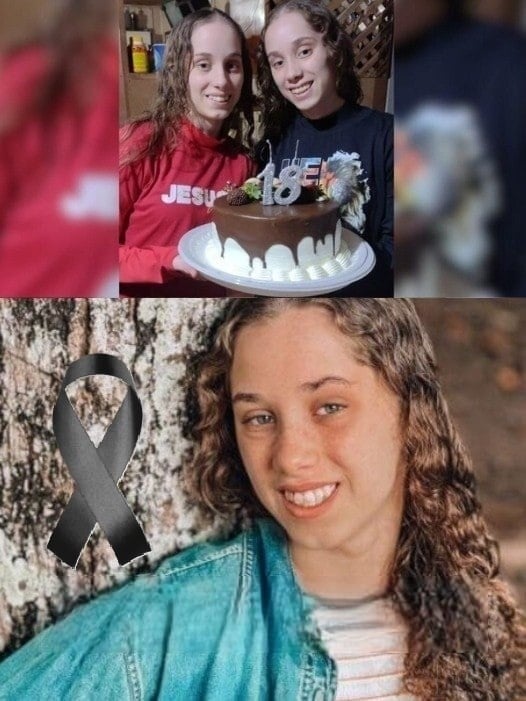
The candlelight vigil was held in the central plaza, the same plaza where the twins used to dance to buskers on summer evenings. Hundreds came not just family and close friends, but neighbors, teachers, strangers who had only seen their faces on missing posters. The wind refused to cooperate, snuffing out match after match. People cupped their flames with trembling hands, forming a human shield around the small fires that somehow stayed lit. In the flickering glow, enlarged photos of Carolina and Luiza showed them laughing, hugging, dreaming. One photo caught them mid-spin, arms linked, heads thrown back, hair wild and free. Another showed them at a birthday party, cake smeared on their cheeks, eyes bright with the kind of joy that seems invincible.
No one spoke for a long time. Then the mayor stepped forward, voice cracking, and read their names. After that, anyone who wanted to speak did. A classmate remembered how Carolina always shared her notes before tests, no questions asked. A neighbor recalled how Luiza had once organized a food drive after a fire displaced three families on their block. Their mother, wrapped in a blanket someone had draped over her shoulders, whispered into the microphone, “They were not one person in two bodies. They were two people who made every room warmer just by walking in.”
Tears fell onto candle wax. Strangers held hands. A young boy who lived next door to the twins placed a hand-drawn card at the foot of their photos stick figures with big smiles, a sun in the corner, the words “I miss playing tag with you.”
There were no answers big enough to heal a loss like this. No explanation that could turn grief into understanding, no confession that could bring back the sound of two voices laughing at the same time. But in that fragile circle of light, something else took root not closure, but resolve. The community made a quiet promise, sealed not with signatures but with silence and tears: the truth would be pursued. Not for revenge. Not for spectacle. But because Carolina and Luiza deserved to have their story told fully, honestly, without shortcuts.
They would not be remembered for how they were found. They would be remembered for how fiercely they lived for the way they defended each other in arguments, for the summer they taught neighborhood kids to ride bikes, for the matching tattoos they got on their 18th birthday, two small birds in flight. The investigation would continue, the autopsy results would eventually speak, and someone would answer for what happened. But in the plaza, under the indifferent stars, the city decided that the twins’ legacy would not be tragedy. It would be tenderness. It would be vigilance. It would be the way people now checked on one another, the way a stranger’s hand felt warm in the dark, the way love persisted even when everything else had been taken away.
When the last candle finally went out, no one wanted to leave. They stood together in the near-dark, breathing the same cold air, carrying the same heavy question. But they also carried the twins with them not as victims, but as girls who had once spun so fast the world blurred, who had believed in birthdays and bike rides and the kindness of neighbors. And that, the city swore, was the truth that would outlast everything else.