
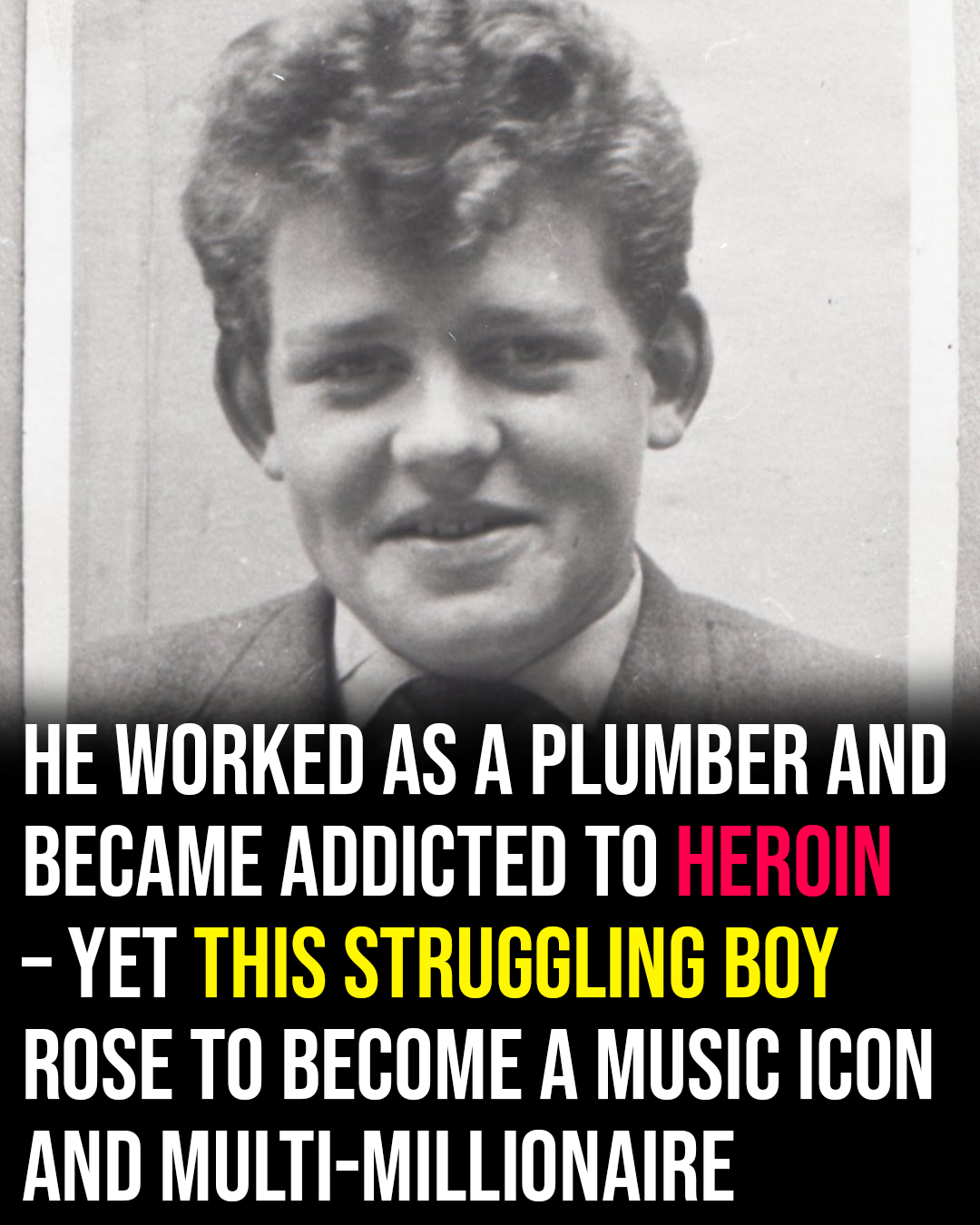
The story of Joe Cocker is one that feels almost impossible when viewed from the beginning. Born as John Robert Cocker in Sheffield during a time still shaped by the aftermath of war, his early life unfolded in a city defined by smoke, steel, and relentless labor.
The air was thick with industry, the streets lined with workers, and dreams of escape often felt distant. Nothing about his surroundings suggested that one day his voice would echo across the world, becoming one of the most distinctive sounds in modern music.
Growing up, he was not groomed for stardom. He was an ordinary boy navigating an ordinary life, eventually taking on work as a gas fitter. Music existed in the background, something to be enjoyed rather than pursued. Yet even in those early days, there was something unusual about his voice. It was raw, weathered, and deeply emotional, carrying a weight that seemed far beyond his years. It was not polished or traditionally beautiful, but it was real in a way that few voices could match.
When he began performing in small venues, that authenticity became his defining strength. Audiences did not just hear his music they felt it. Each note seemed to carry pieces of his experience, his struggles, and his identity. Over time, his performances gained attention, leading to opportunities that gradually pulled him away from the life he had always known.
His breakthrough came at a moment that would define an entire era. His performance of With a Little Help from My Friends at Woodstock Festival was not just a career milestone it was a cultural moment. Standing before a massive crowd, he delivered the song with a level of intensity that transformed it into something entirely his own. It was not merely a cover; it was a reinvention, a declaration that he had arrived and would not be ignored.
Fame followed quickly, and with it came a life that was as demanding as it was rewarding. Touring schedules were relentless, expectations were high, and the pressure to maintain success became constant. For many artists, this period represents the peak of achievement. For Cocker, it also marked the beginning of a struggle that would shadow much of his life.
The same intensity that fueled his performances also made him vulnerable to excess. The environment surrounding his rise was one where substances were readily available and often normalized. Over time, alcohol and drugs became part of his routine, initially as a way to cope with stress and exhaustion, but eventually as something far more consuming.
There were moments when his struggles became visible to the public. Performances were affected, appearances became unpredictable, and his health began to suffer. Stories circulated about difficult nights, missed opportunities, and encounters with the law. At times, it seemed as though the very qualities that made him unique were being overshadowed by the challenges he faced.
Yet even during these periods, his talent never disappeared. When he stepped onto a stage and found his voice, there were glimpses of the artist who had once captivated audiences so completely. These moments served as reminders that beneath the chaos, there was still something powerful and enduring.
The turning point in his life did not come suddenly, but gradually, shaped by a desire for stability and a recognition that change was necessary. A significant part of this shift was his relationship with Pam Baker, who became a steady presence in his life. Together, they built a quieter existence, one that allowed him to step away from the constant turbulence of fame and focus on what truly mattered.
This period of stability did not diminish his artistry; instead, it gave it new depth. He continued to perform and record, connecting with both longtime fans and new audiences. One of his most notable later achievements came with the song Up Where We Belong, which introduced his voice to a new generation and reaffirmed his place in the music world.
Despite the challenges he had faced, his ability to endure became one of the most compelling aspects of his story. He was not a figure defined solely by success or failure, but by persistence. Each setback was met with an attempt to move forward, each difficulty with a determination to continue.
In his later years, he embraced a more grounded lifestyle, finding balance in ways that had once seemed out of reach. The contrast between his early struggles and his later stability added a sense of completeness to his journey, showing that change, while difficult, was possible.
His life came to an end in 2014 after a battle with lung cancer, a condition influenced in part by years of heavy smoking. The news marked the loss of a voice that had become deeply embedded in the fabric of music history. Yet even in his passing, the impact of his work remained undeniable.
What makes Joe Cocker’s story so powerful is not just the success he achieved, but the path he took to get there. It is a story of transformation, of resilience, and of the enduring power of authenticity. His voice, with all its imperfections and intensity, became a symbol of something real in a world often defined by appearances.
Each time his music is played, there is a sense of connection to that journey. The emotion in his performances continues to resonate, carrying with it the experiences that shaped him. It is a reminder that art does not need to be flawless to be meaningful it needs to be honest.
The boy from Sheffield, surrounded by smoke and industry, found a way to turn his voice into a lifeline. Through struggle and triumph, he created something that continues to move people long after he is gone. His legacy is not just in the songs he sang, but in the way he sang them with everything he had, leaving nothing behind.
And in that sense, his story is far from over. It lives on in every note, every lyric, and every moment when his voice rises once again, carrying the weight of a life that was as complicated as it was unforgettable.