A recent discussion on social media has sparked widespread debate about workplace appearance standards after a young woman shared her experience of being denied a retail job.
What began as a routine job application quickly turned into a viral firestorm, forcing viewers to confront uncomfortable questions about tattoos, professionalism, and whether old-fashioned hiring rules still make sense.
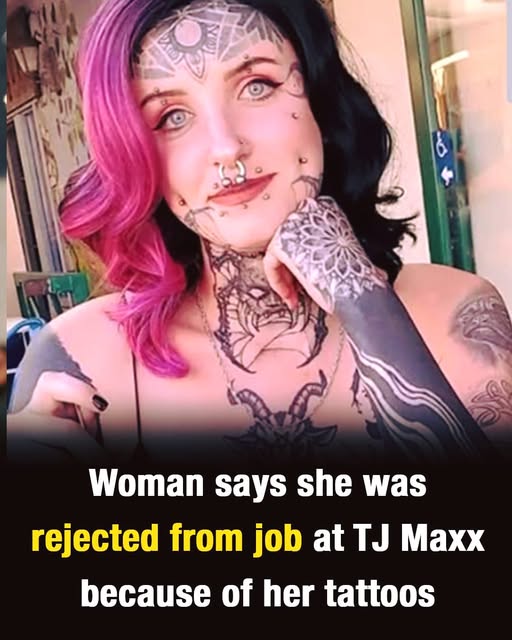
The woman at the center of the conversation is known online as Ash Putnam. She posted a TikTok video explaining her experience applying for a position at a major retail company. After submitting her application, she received a rejection through an automated email system. No phone call. No interview. No feedback. Just a standard form letter telling her she had not been selected.
Frustrated by the lack of explanation, Putnam decided to visit the store in person. She wanted clarification about her application status and, more importantly, the reason she had been dismissed so quickly. According to her account, she spoke with a store representative who told her that other applicants may have had more relevant retail experience. That, she was told, was the main factor behind the hiring decision.
But Putnam had her doubts. She asked directly whether her visible tattoos and facial piercings had played any role in the process. The representative reportedly said no and again pointed to experience as the deciding factor. Still, the question lingered. Putnam has extensive tattoos on her face and body, along with multiple facial piercings. Her appearance is striking and unconventional, and she could not shake the feeling that it might have counted against her.
The TikTok video she posted quickly went viral, racking up millions of views. The comment section became a battleground of opinions, with users sharing their own experiences and debating workplace appearance standards from every angle. Some commenters argued that visible facial tattoos and piercings can make it significantly harder to secure certain types of employment, especially in traditional retail environments where customer-facing roles often come with strict grooming policies. They pointed out that hiring decisions are rarely based on a single factor and that companies routinely consider customer expectations, brand image, and professional presentation.
Other viewers strongly disagreed. They argued that personal appearance should have no bearing on a person’s ability to perform a job effectively or professionally. A cashier with face tattoos, they said, can be just as polite, efficient, and hardworking as one without. The conversation quickly expanded beyond Putnam’s individual case and turned into a broader debate about workplace inclusivity and how modern hiring standards are evolving.
Over the past decade, tattoos and piercings have become far more socially accepted in many industries. Creative fields, tech startups, and even some corporate offices have relaxed their dress codes to accommodate self-expression. But experts note that acceptance levels still vary wildly depending on the industry, job role, and company branding requirements. Retail positions that involve direct interaction with customers often maintain stricter appearance guidelines because businesses want to align their staff with a certain brand image. A store that markets itself as family-friendly or traditional may hesitate to hire someone with visible facial tattoos, regardless of their qualifications.
Some commenters who claimed to have worked in hiring or retail management weighed in with practical perspectives. They explained that customer-facing roles often consider presentation as part of the selection process, not out of malice but out of a perceived need to appeal to a broad customer base. Others shared their own stories of being rejected from jobs because of visible piercings, unnatural hair colors, or tattoos. A few described removing piercings or covering ink just to get through an interview, only to feel like they were hiding who they really were.
It is important to note that none of these comments represent official company policy. TJ Maxx, the retailer mentioned in Putnam’s video, has general hiring practices that evaluate candidates based on experience, availability, and suitability for specific roles. Like many large retailers, hiring decisions can vary by location, management team, and local market conditions. What is true for one store may not be true for another. That makes it difficult to draw sweeping conclusions from a single application outcome.
The viral nature of the video also contributed to the spread of strong opinions. Social media platforms tend to amplify emotionally charged content, and few topics are as personal as being told you are not the right fit for a job. The conversation touched on broader challenges faced by younger job seekers who may lack prior work experience and struggle to enter the workforce at all. Entry-level positions often receive hundreds of applications, making competition intense and increasing the importance of every factor—including appearance.
Career experts generally recommend that first-time job seekers focus on building foundational experience through internships, part-time work, or volunteer opportunities. These steps can help improve employability while also providing practical skills that employers look for in entry-level candidates. But for people with visible tattoos and piercings, the advice is often more complicated. Some experts suggest researching company policies before applying. Others encourage job seekers to be upfront about their appearance and seek out employers with inclusive reputations.
The discussion surrounding Putnam’s video reflects a larger societal conversation about individuality, professionalism, and evolving workplace norms. As attitudes toward self-expression continue to change, many industries are gradually becoming more accepting of diverse appearances among employees. But differences still exist between sectors, and some roles maintain more traditional expectations regarding appearance and customer interaction. The situation shared online ultimately highlights the complexity of modern hiring processes and the many factors that can influence employment decisions. While social media reactions were deeply divided, the broader conversation continues to focus on balancing personal expression with professional standards in different work environments. In the end, the viral discussion illustrates how one person’s rejection email can become a national debate about fairness, identity, and what it really means to look professional.