As images of bombed out neighborhoods and terrified families from Iran circulate worldwide, Pope Leo XIV has chosen the language of moral urgency rather than diplomatic caution.
He has framed the conflict not as a matter of strategy, but of conscience. A choice between the idolatry of power and the defense of human life. His plea to remember children, the elderly, and the sick is a direct attempt to shift public focus from military rhetoric to human suffering, and to push ordinary citizens to pressure their leaders toward peace. The Pope s words were measured, deliberate, and rooted in the centuries old tradition of the Church speaking truth to power. He did not name any world leader directly. He did not need to. His message was clear. War is not an abstraction. It is not a video game or a negotiating tactic. It is real. It is bloody. And it is always the vulnerable who pay the highest price.
Pope Leo, the first American to hold the papacy, has not shied away from controversy since assuming the throne of Saint Peter. He has criticized mass deportations, questioned the morality of drone warfare, and called for a global ceasefire in conflicts that the powerful would rather ignore. His critics accuse him of naivety, of failing to understand the hard realities of geopolitics. His supporters see a man willing to say what others will not. This latest intervention, coming as the death toll in Iran climbs and fears of a wider regional war grow, is consistent with his papacy. He is not afraid to make enemies. He is afraid of silence in the face of suffering.
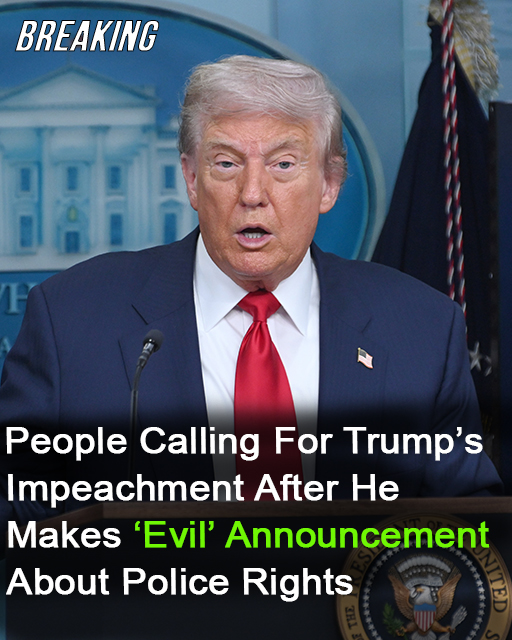
Donald Trump s response, however, recasts the confrontation as a personal and political feud. By portraying the Pope as weak, unqualified, and even indebted to him for his position, Trump moves the debate away from international law and civilian casualties, and into the realm of loyalty, image, and dominance. His two word attack was designed not to engage with the substance of the Pope s remarks, but to dismiss them entirely. The words themselves were simple, almost childish in their construction. But their impact was immediate. Supporters cheered. Critics cringed. And the substantive discussion of the war in Iran was once again drowned out by the noise of personality conflict.
This is a familiar pattern. Trump has long understood that in the attention economy, outrage is currency. A substantive debate about the ethics of war, the laws of armed conflict, or the role of religious leaders in international affairs would not dominate headlines. A feud with the Pope will. By framing the Pope s intervention as an attack on him personally, Trump shifts the terms of the debate. It is no longer about the children of Iran. It is about who is stronger, who is tougher, who will blink first. The actual war, with its actual dead and its actual refugees, becomes background noise.
Between the two men lies a stark divide. Whether leadership is measured by force and defiance, or by restraint and responsibility in the face of war. Trump represents a school of thought that views strength as projection. The willingness to threaten, to escalate, to never back down. His supporters see this as refreshing, a break from what they view as the weakness of previous administrations. Pope Leo represents a different tradition. One that views strength as the ability to restrain oneself, to choose peace when war is easier, to protect the innocent even when it is politically inconvenient. These two visions cannot easily be reconciled.
The Pope s allies point out that he is not anti American. He is an American. He grew up in the United States, attended its schools, and understands its politics better than any previous pope. His criticism of American foreign policy is not born of anti Americanism, but of a belief that his country can do better. That the nation founded on the principle that all men are created equal should hold itself to a higher standard. Trump s response, by contrast, seems designed to appeal to those who view any criticism of American power as treason. It is a closed loop. Criticism is framed as attack. Attack is met with counterattack. And the cycle continues.
What is lost in this exchange is the human cost of the war that prompted the Pope s intervention. The children in Iranian hospitals. The families huddled in bomb shelters. The elderly who cannot flee. These are not abstractions. They are people. And they are the ones the Pope was speaking for when he chose moral urgency over diplomatic caution. Trump s two word dismissal did not address their suffering. It did not offer a solution. It did not even acknowledge their existence. It simply changed the subject.
The question facing the world is not whether Trump or the Pope will win their public feud. The question is whether anyone is still paying attention to the war itself. The images from Iran are horrific. The stories emerging from the region are heartbreaking. But they are competing for attention with a papal feud, a presidential campaign, and a thousand other distractions. The Pope s intervention was an attempt to cut through that noise. To remind the world that some things are more important than politics. Trump s response was an attempt to re assert that politics is the only game in town. That everything, even human suffering, is subordinate to the struggle for power.
Between them lies a stark divide. And the world watches, unsure which vision will prevail. The children of Iran cannot vote. They cannot tweet. They cannot hire lobbyists. They depend on the conscience of the powerful. And that conscience, as this exchange demonstrates, is a fragile thing. Easily drowned out. Easily dismissed. Easily replaced by the next outrage, the next feud, the next distraction. Whether the Pope s words will have any lasting impact remains to be seen. But he has at least asked the question that Trump would rather ignore. What are we fighting for. And who is paying the price.