
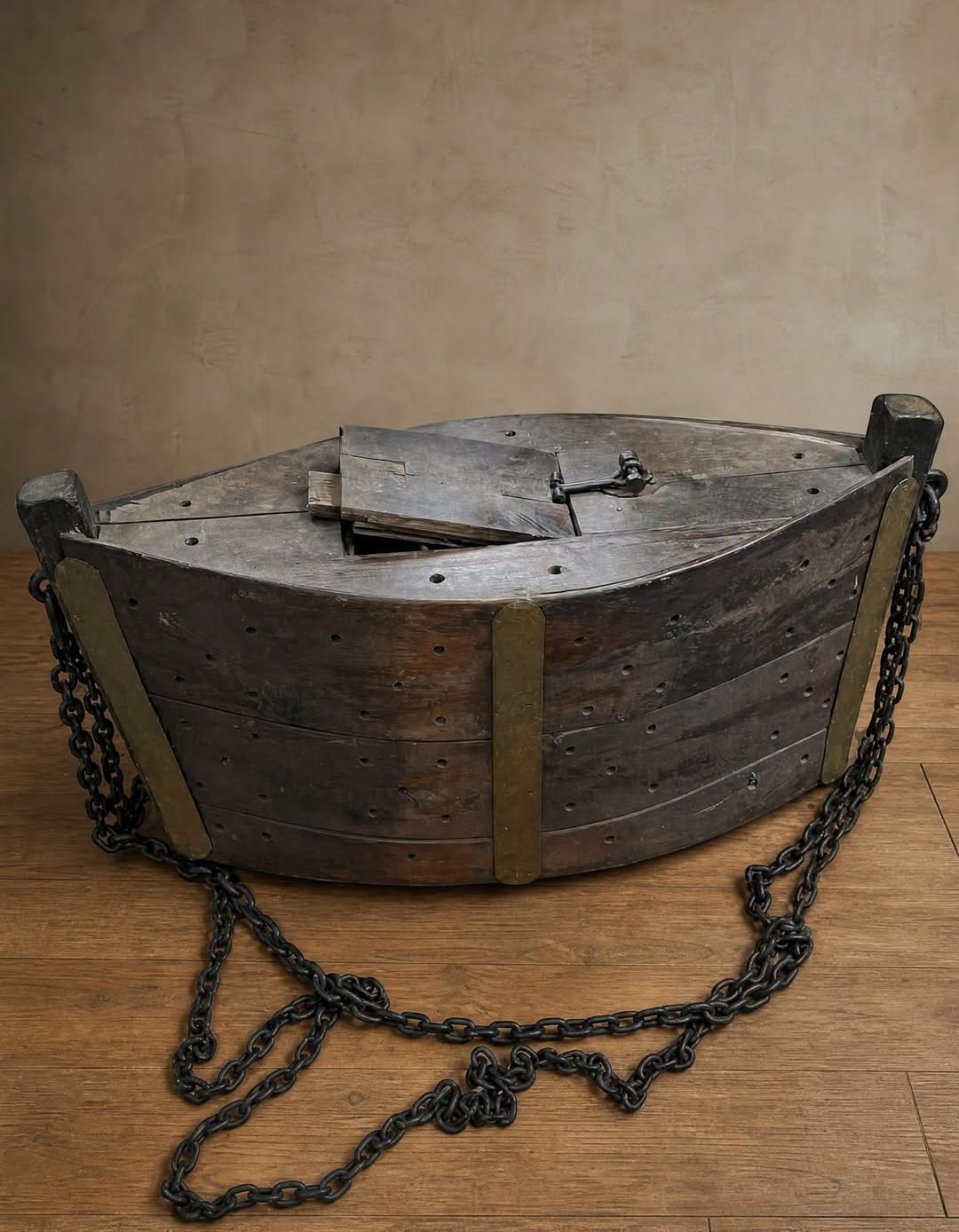
At first glance, this strange wooden object looks like something from another world. Its curved shape, heavy chains, and weathered boards make it difficult to understand what purpose it could have served. It appears too simple to be important, yet too carefully built to be just an ordinary piece of old equipment.
But this unusual device was once a brilliant solution to a problem that every riverside family understood: how to keep freshly caught fish alive and safe before it was time to cook.
Long before modern refrigerators, freezers, and advanced storage systems existed, people had to work with what nature provided. Rivers were not only sources of food; they were also tools for preservation. With a combination of wood, metal, and practical knowledge, fishermen created a clever invention that allowed moving water to do the work of cooling and protecting their catch.
This forgotten device was a type of live fish keeper, sometimes called a fish basket, fish car, or floating fish storage box depending on the region and design.
Its purpose was surprisingly simple.
Instead of bringing every fish home immediately after catching it, fishermen could place their catch inside the wooden container and keep the fish alive in the river until they were needed.
The design was based on one important idea: let the water flow through while keeping the fish safely contained.
The wooden slats that made up the sides were spaced carefully apart, allowing fresh river water to constantly move through the container. This provided oxygen and helped maintain a cooler environment compared with leaving fish exposed on land.
The river itself became a natural refrigeration system.
There were no electrical motors.
No ice machines.
No temperature controls.
Just the steady movement of clean water and a carefully designed container that worked with the environment instead of against it.
The curved shape was not just for appearance.
It helped the device move with the current while reducing damage from rocks, branches, and changing water levels. The shape also allowed enough space for fish to remain inside without being crushed or injured.
Every part had a purpose.
The wooden boards needed to be strong enough to survive constant contact with water but open enough to allow circulation. Metal bands reinforced the structure, protecting it from years of pressure and movement. Chains secured the container so it would not disappear during strong currents, storms, or sudden changes in the river.
For many fishing communities, that security mattered.
A good catch represented more than a meal.
It represented income.
It represented survival.
It represented a family’s ability to make it through another season.
Losing a container full of fish because of a flood, an animal, or theft could mean a serious hardship. That is why many designs included strong attachments and even locking mechanisms.
The hinged lid was another important feature.
It allowed fishermen to easily access their catch while also protecting it from outside threats. Depending on the location and design, the lid could help keep unwanted animals away and prevent others from taking the fish.
What seems like a simple wooden box today was actually a carefully considered piece of technology created by people who understood their surroundings deeply.
Modern society often associates innovation with computers, machines, and advanced engineering. But inventions like this reveal another type of intelligence one built from observation, experience, and necessity.
The people who created these devices understood water movement, seasonal changes, fish behavior, and the challenges of preserving food without electricity.
They knew that the river was not just something to harvest from.
It was something to work with.
Their knowledge came from generations of experience.
They understood where currents were strongest, where water remained cooler, and how different conditions affected the survival of their catch. A fisherman using one of these containers needed no digital equipment to understand the environment. The river itself provided the information.
Today, these antique fish keepers are often seen as historical curiosities.
Many sit in museums, old fishing collections, or forgotten barns. To modern eyes, they may look mysterious or even primitive.
But their simplicity hides their brilliance.
They represent a time when people solved problems by studying the world around them rather than trying to overpower it.
A wooden container suspended in a river may not seem impressive compared with modern technology, but in its time, it was an essential tool. It allowed families to store food, manage their resources, and make the most of what nature provided.
There is also something fascinating about the connection between these objects and the people who used them.
Every scratch on the wood tells a story.
Every worn chain suggests countless trips into the water.
Every repaired section reveals care and continued use.
These were not disposable items.
They were tools that families depended on for years, sometimes passing them down through generations.
The device was a quiet example of human creativity.
It did not rely on electricity or complicated mechanisms. It used gravity, water flow, and thoughtful construction. It transformed a natural environment into a practical solution for everyday life.
In a world where convenience is often measured by speed and technology, objects like this remind us that clever ideas do not always need to be complicated.
Sometimes the greatest inventions are the ones that perfectly match the needs of the people who create them.
The mysterious wooden keeper may look like a forgotten relic from another era, but it represents something much bigger.
It represents survival.
It represents knowledge.
It represents the ability of earlier generations to solve difficult problems with limited resources and remarkable imagination.
Before refrigerators changed the way humans stored food, rivers themselves served that purpose.
And all it took was a little wood, some metal, a few chains, and the wisdom of people who understood that nature already held many of the answers.