
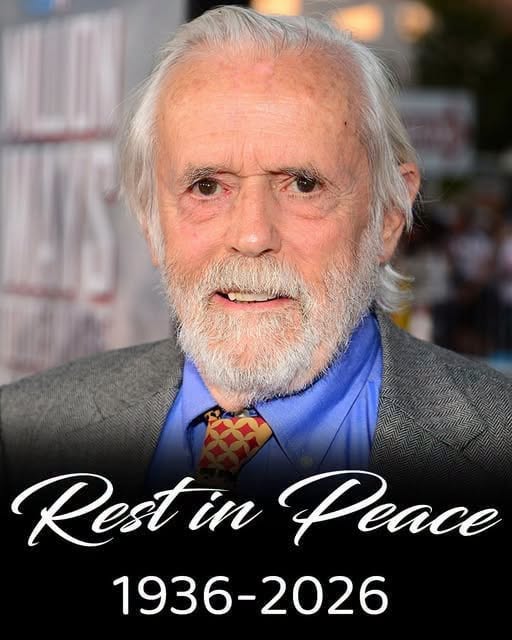
The entertainment world is mourning the loss of Matt Clark, a veteran character actor whose steady, understated presence helped shape more than half a century of film and television storytelling.
Though his name was not always front and center on marquees, his face was instantly recognizable to audiences who grew up watching Westerns, dramas, and classic Hollywood productions. Clark passed away at the age of 89 at his home in Austin, Texas, marking the end of a long life devoted to craft rather than celebrity.
His death followed complications from a recent back surgery, according to reports, bringing a quiet close to a career that never chased headlines yet consistently earned respect within the industry. For colleagues, Clark represented a disappearing kind of actor, one defined not by fame but by reliability, discipline, and an unwavering commitment to every role, no matter how small.
Born in 1936, Clark grew up with an early fascination for storytelling and performance. Acting was never, for him, a pursuit of glamour or stardom. Instead, it was a practical and creative outlet, a way to explore human behavior through different characters and narratives. That mindset would define his entire professional life, guiding him through decades of evolving Hollywood trends.
He entered the industry during a transitional period in American filmmaking, when the old studio system was fading and new opportunities were emerging for versatile performers. Rather than waiting for leading-man roles, Clark embraced the kind of work that many others overlooked. He built a reputation as someone who could step into a scene, deliver exactly what was needed, and elevate the material without overshadowing the story.
Over time, casting directors came to rely on him as a dependable presence. His ability to adapt across genres made him a valuable asset on set, whether he was appearing in a brief scene or a recurring television role. This adaptability led to an impressive filmography that eventually surpassed 120 credited appearances, a milestone that reflected both longevity and trust within the industry.
Among his most widely recognized work was his brief but memorable appearance in Back to the Future Part III, where he played a bartender in the film’s Western setting. Though the role was small, it contributed to the authenticity of the world the film was building, a quality that defined much of Clark’s career.
Television audiences also came to know him through Grace Under Fire, where his recurring role added depth and familiarity to the series. His performances often had a grounding effect, bringing a sense of realism and steadiness to scenes that might otherwise have felt chaotic or exaggerated.
Clark’s career became closely tied to the Western genre, a space where his natural style of acting felt especially at home. He appeared in several notable productions, including The Outlaw Josey Wales, Pat Garrett and Billy the Kid, and The Life and Times of Judge Roy Bean. Each of these films explored different dimensions of the American frontier myth, and Clark’s contributions helped reinforce their sense of place and authenticity.
Working alongside legendary figures such as Clint Eastwood, Robert Redford, and productions associated with John Wayne, Clark became part of a cinematic lineage that defined an entire era of filmmaking. While he was rarely the focal point, his presence enriched ensemble casts and supported the larger narratives unfolding on screen.
Directors often praised his instinctive understanding of storytelling. Gary Rosen once noted that Clark had an ability to make even the smallest role feel essential, a quality that set him apart from many of his peers. Brian Helgeland, who worked with him on the film 42, described him as an actor who fully understood both character and context, someone who remained engaged in every moment and brought subtle intelligence to his performances.
Despite his extensive career, Clark never pursued fame as an end goal. He avoided the trappings of celebrity culture, preferring instead to focus on the work itself. Those who knew him frequently described him as an “actor’s actor,” someone who valued preparation, collaboration, and consistency over attention or recognition.
On set, he was known for his professionalism. He arrived prepared, understood his place within the story, and delivered performances that required little adjustment. Directors appreciated his efficiency, but also his quiet ability to enhance a scene without drawing focus away from the central narrative.
Outside of acting, Clark lived a life grounded in simplicity and personal integrity. He was known for his practical nature and hands-on approach to challenges, including the decision to build his own home. This reflected a broader personality trait: independence combined with patience and attention to detail.
His personal relationships were equally enduring. Some of his friendships lasted more than six decades, a testament to his loyalty and consistency. Friends and family often described him as steady and dependable, someone whose presence brought reassurance and calm.
While he could be reserved in public, those close to him knew a different side of Clark, one marked by humor, warmth, and deep emotional awareness. He maintained strong family ties throughout his life, prioritizing his role as a husband, father, and grandfather even during the busiest periods of his career.
He is survived by his wife, children, grandchildren, and a great-grandchild. For them, his legacy extends far beyond the screen, rooted in personal memories, shared experiences, and the values he lived by every day.
In a statement shared by his family, they reflected on his life with simple but powerful words, expressing that his presence continues through the people he loved and the work he left behind. It was a reminder that influence is not always measured in awards or headlines, but in the lasting impact a person has on those around them.
Matt Clark’s passing also highlights the often overlooked importance of character actors in Hollywood. While leading stars may carry the spotlight, it is performers like Clark who build the worlds those stories inhabit. They provide texture, realism, and continuity, helping audiences believe in the universes unfolding before them.
His legacy is not defined by fame, but by consistency and craft. Across more than 120 roles, he brought authenticity to every project he joined, contributing quietly but meaningfully to decades of storytelling.
As audiences continue to revisit the films and shows he appeared in, his performances remain intact, preserved within the history of cinema and television. Each role stands as a small but important piece of a much larger narrative, one shaped by dedication rather than recognition.
Matt Clark’s life serves as a reminder that greatness in Hollywood does not always come from center stage. Sometimes it comes from the steady hands working quietly in the background, ensuring every story feels real. His work endures as part of that foundation, securing his place in the enduring fabric of film and television history.