
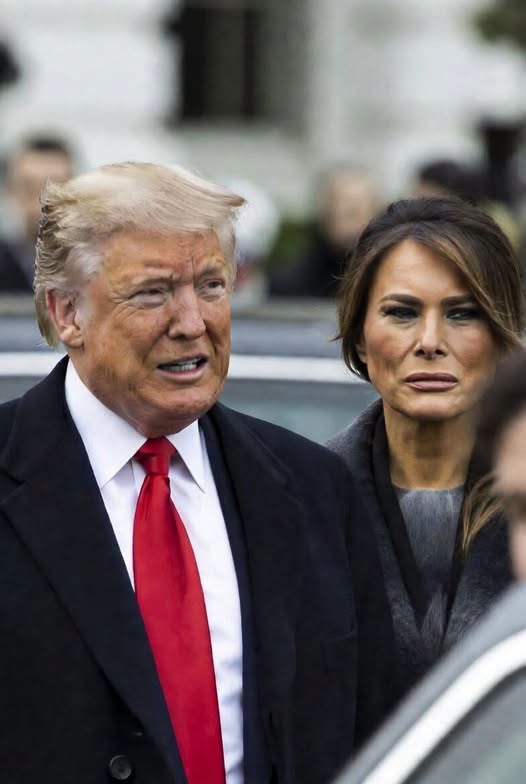
From the outside, they seemed impossible to break.
Every public appearance reinforced the same carefully polished image. They smiled beside one another at charity galas, stood shoulder to shoulder during campaign speeches, and exchanged reassuring glances whenever cameras pointed their way. Their marriage became a symbol of stability in a city where alliances often lasted only as long as the next election cycle.
Commentators praised their chemistry.
Supporters admired their discipline.
Their photographs appeared everywhere, creating the impression of a partnership built on complete trust and unwavering devotion.
Few questioned whether the picture reflected reality.
Behind closed doors, however, another story had been unfolding for years.
It was not a tale of explosive confrontations or dramatic betrayals. There were no spectacular scandals erupting in the middle of the night, no screaming matches caught by photographers hiding outside the gates, and no sensational moments designed for tabloid headlines.
Instead, the relationship slowly unraveled in almost invisible ways.
The first signs were easy to overlook.
Conversations became shorter.
Dinner tables grew quieter.
Shared victories gradually became individual accomplishments celebrated in separate rooms.
What once felt like teamwork slowly transformed into careful coordination.
Both remained deeply committed to their public responsibilities.
They attended meetings.
Hosted fundraisers.
Delivered speeches.
Shook thousands of hands.
Yet each new obligation quietly consumed another piece of the life they had once shared together.
Washington has a unique way of reshaping relationships.
In a city where influence is constantly measured, appearances often become almost as valuable as achievements themselves.
For ambitious couples, marriage can evolve into something larger than a personal commitment.
It becomes a public institution.
A campaign asset.
A recognizable brand.
The pressure to appear united never truly disappears.
Every photograph carries meaning.
Every gesture invites interpretation.
Every public interaction becomes another opportunity for praise or criticism.
Over time, maintaining that image can become exhausting.
Friends later described the couple as endlessly busy.
Their calendars rarely aligned.
When one traveled across the country, the other remained behind attending committee meetings, fundraising dinners, or diplomatic events.
Phone calls became logistical updates.
Messages revolved around schedules rather than feelings.
The conversations that once lasted late into the night gradually disappeared altogether.
Neither person intentionally abandoned the relationship.
Life simply became crowded with responsibilities that always seemed more urgent.
Children often notice these changes long before adults admit them.
Although protected from much of the political spotlight, they still sensed the growing distance inside their home.
Family dinners became increasingly rare.
Vacations were shortened.
Special occasions often competed with campaign stops or official appearances.
Like many children of high-profile parents, they grew accustomed to sharing their family with the public.
What they struggled to understand was why two people who looked so connected on television often seemed so emotionally distant at home.
As they grew older, social media only complicated those emotions.
Every public photograph attracted thousands of comments.
Strangers debated their parents’ expressions, analyzed body language, and invented stories about a family they had never truly known.
The children found themselves reading opinions about their own lives written by people who had never stepped inside their house.
Some praised the marriage as inspirational.
Others insisted it was nothing more than political theater.
Living beneath that constant microscope created a burden few teenagers are ever asked to carry.
Eventually, rumors began circulating throughout political circles.
Reporters noticed fewer joint appearances.
Public schedules increasingly separated.
Photographs once filled with relaxed smiles appeared noticeably more formal.
Speculation spread quickly.
Political insiders searched for dramatic explanations.
Commentators predicted scandals.
Others imagined secret betrayals or bitter rivalries hidden beneath carefully rehearsed smiles.
The truth proved both simpler and more painful.
Relationships rarely collapse because of one single moment.
More often, they weaken through countless small choices.
A postponed conversation.
An apology never spoken.
Another evening sacrificed to work.
Another opportunity to reconnect quietly postponed until tomorrow.
Those tomorrows eventually become years.
The distance grows almost imperceptibly until one day it feels impossible to cross.
When the official announcement finally arrived, it surprised almost no one inside political circles.
Its language reflected years of experience navigating public communication.
It expressed gratitude.
It emphasized mutual respect.
It requested privacy.
It reassured supporters that professional responsibilities would continue unchanged.
Every sentence had clearly been reviewed countless times.
Every word carefully balanced compassion with political caution.
What the statement never captured was the emotional exhaustion behind it.
It could not describe the quiet loneliness that develops when two people become partners in responsibility rather than companions in life.
Nor could it explain how difficult it becomes to separate genuine affection from years of shared obligation.
Inside Washington, reactions varied dramatically.
Supporters worried about political consequences.
Strategists recalculated future campaigns.
Opponents quietly wondered whether shifting public perception might create unexpected opportunities.
News programs debated what the separation might mean for influence, fundraising, and future ambitions.
Yet outside the world of politics, many people saw something different.
They recognized a familiar human story hidden beneath extraordinary circumstances.
Anyone who has watched a relationship slowly fade understands that heartbreak rarely arrives all at once.
Sometimes it appears through silence.
Sometimes through routine.
Sometimes through two people trying so hard to meet everyone else’s expectations that they slowly forget how to meet each other’s.
As weeks passed, practical realities replaced headlines.
Shared homes required decisions.
Financial arrangements demanded attention.
Family traditions had to be reconsidered.
Holidays would never feel quite the same.
Even ordinary routines became unexpectedly emotional because every familiar habit reminded them of the years they had built together.
None of those moments attracted television cameras.
None generated viral headlines.
Yet they represented the hardest part of beginning separate lives.
Friends described seeing two people who still respected one another deeply but no longer knew how to rebuild what time had quietly dismantled.
There remained kindness.
There remained gratitude.
There remained history.
What had disappeared was the effortless connection that once held everything together.
Perhaps that is why this story resonates beyond politics.
It reminds us that success offers no immunity from ordinary human struggles.
Power cannot manufacture intimacy.
Recognition cannot replace conversation.
Public admiration cannot repair private distance.
The strongest-looking partnerships may still carry invisible fractures beneath their polished surface.
In a culture increasingly obsessed with appearances, it becomes tempting to measure relationships through carefully edited photographs, public celebrations, and perfectly timed displays of affection.
Yet genuine connection exists far beyond what cameras can capture.
It grows in quiet conversations.
Shared disappointments.
Ordinary evenings.
Small acts of patience repeated across countless years.
When those moments slowly disappear, even the brightest public image eventually begins to fade.
Perhaps the greatest lesson hidden inside this story has nothing to do with politics at all.
It is simply this.
No amount of influence, wealth, recognition, or carefully managed reputation can substitute for the daily work required to sustain love.
Public identities may inspire admiration.
Professional achievements may shape history.
But behind every headline are ordinary people searching for the same things everyone else hopes to find understanding, companionship, trust, and someone willing to remain present long after the applause has ended.
Sometimes the strongest relationships are not the ones that appear flawless to the world.
They are the ones that make time to protect what matters most before success quietly asks them to sacrifice it.