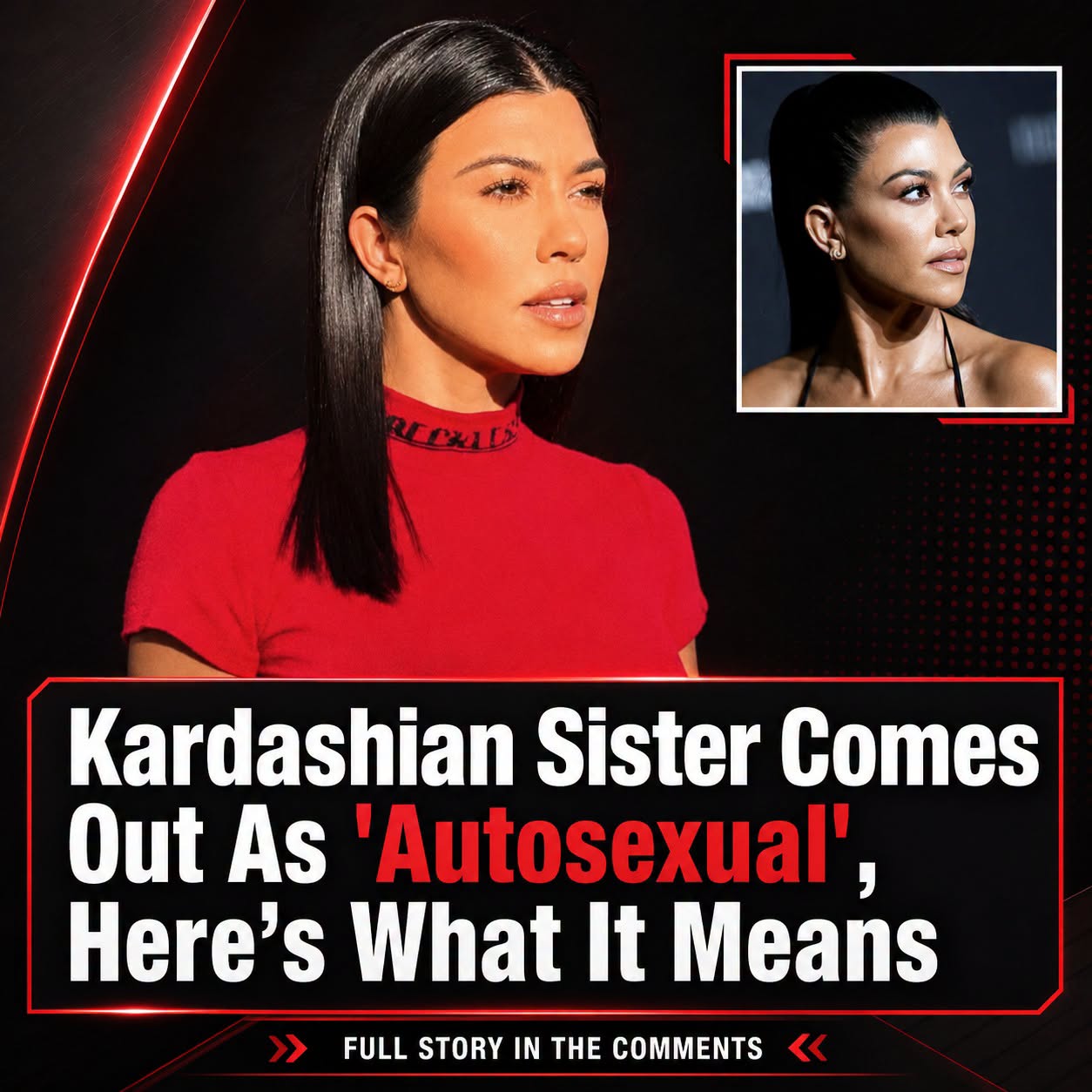
When Poosh published a discussion about “autosexuality,” it didn’t take long for the internet to turn a niche psychological concept into a full-scale celebrity debate. The term, often misunderstood and already controversial in academic and therapy circles, suddenly found itself linked in headlines to Kourtney Kardashian Barker, sparking confusion, curiosity, and a wave of commentary about what it actually means.
At its core, autosexuality refers to experiencing attraction toward oneself. It is not a clinical diagnosis, nor a rigid identity category, but rather a descriptive idea used by some therapists to explain forms of self-directed desire, confidence, and arousal. As therapist Casey Tanner has explained in various discussions, it can include feeling turned on by one’s own image, enjoying self-styling as an intimate experience, or deriving erotic or emotional satisfaction from one’s own presence and expression.
In simpler terms, it is less about replacing relationships with others and more about recognizing that self-perception can play a role in desire and confidence. For some people, it resonates as a language for self-love and embodiment. For others, it feels unnecessary or overly intellectualized, packaging familiar behaviors into a new and provocative label.
The connection to Kourtney Kardashian Barker comes largely from the way the Poosh platform presents wellness, identity, and sensuality as interconnected themes. Over the years, Kourtney has built a public image centered on self-confidence, bodily awareness, and openness about personal boundaries. Her lifestyle brand often highlights topics related to intimacy, health, and emotional well-being, which naturally places it at the center of conversations that blur the line between education and controversy.
When the discussion around autosexuality surfaced, many readers quickly interpreted it through the lens of celebrity culture. Some believed it reflected a personal admission, while others argued it was simply another example of the Kardashian family engaging in broader cultural discourse around identity and self-expression. The ambiguity is part of what made the topic spread so rapidly online.
Critics of the framing argued that attaching such a concept to a celebrity figure risks oversimplifying or misrepresenting both psychology and sexuality. They suggested that complex emotional or therapeutic ideas can become distorted when filtered through entertainment media, especially when linked to high-profile personalities who already generate strong public opinions.
Supporters, however, saw the conversation differently. For them, the discussion represented a growing openness around topics that were once considered private or taboo. In this view, bringing language like “autosexuality” into mainstream awareness allows people to better understand their own experiences without shame or confusion. Whether or not someone identifies with the term becomes less important than the broader normalization of self-awareness and body confidence.
Kourtney Kardashian Barker herself has not made any formal declaration framed in the way headlines suggest. Instead, the conversation appears to stem from how her public persona aligns with themes of self-focus, self-care, and sensual expression. From curated fashion moments to candid discussions about relationships and motherhood, she often occupies a space where personal identity and public performance overlap.
This is not new territory for the Kardashian brand. For years, the family has been at the center of debates about how femininity, sexuality, and self-presentation are represented in modern media. Whether through fashion choices, social media posts, or reality television moments, their influence often extends beyond entertainment into cultural discussion, where interpretations multiply and narratives evolve far beyond the original context.
In Kourtney’s case, that means even abstract or educational discussions can quickly become linked to her name in public discourse. What begins as a psychological explanation can transform into a headline about personality, lifestyle, or private behavior, regardless of intent.
The reaction online has been predictably divided. Some audiences view the topic as empowering, arguing that it encourages people especially women to embrace confidence and self-possession without apology. Others see it as another example of celebrity culture overanalyzing or repackaging normal human behavior in ways that invite unnecessary scrutiny.
What remains consistent is the fascination with how personal identity is framed in the public eye. In an era where self-expression is constantly documented, shared, and dissected, even concepts rooted in therapy or psychology can become part of viral conversation when tied to recognizable names.
Ultimately, the discussion around autosexuality and Kourtney Kardashian Barker reveals less about any single individual and more about the cultural moment itself. It highlights how quickly ideas travel, how easily meaning shifts, and how blurred the boundaries have become between education, entertainment, and identity.
Whether seen as empowerment, misunderstanding, or media exaggeration, the conversation continues to grow precisely because it touches on something larger than celebrity: the modern obsession with understanding the self, and the many different ways people try to define it.