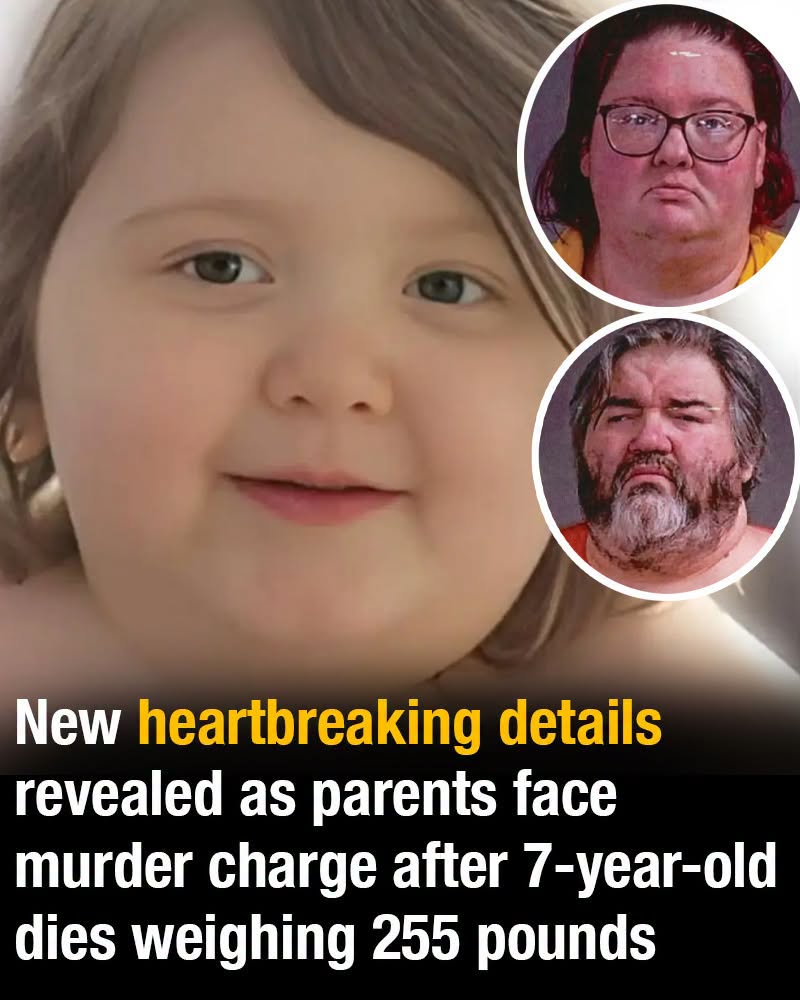
The case surrounding 7-year-old Casper O’Brien has shocked investigators and the wider public, not only because of the severity of the charges now brought against his parents, but because of how a child with such visible needs could allegedly suffer for so long without intervention.
Authorities have charged the parents with second-degree murder, child abuse, and torture following the boy’s death, with prosecutors describing a prolonged pattern of severe neglect that unfolded behind closed doors. According to official accounts, Casper lived in conditions that raised serious concerns about his care, health, and overall wellbeing.
At the time of his death, the child reportedly weighed around 255 pounds and was nonverbal and bedridden. Medical and investigative reports indicate he was suffering from multiple complications consistent with long-term immobility and inadequate care, including severe skin breakdown and untreated medical issues.
Perhaps most disturbing for investigators is the suggestion that Casper’s situation existed largely unnoticed by formal systems meant to protect vulnerable children. Despite the presence of health insurance in the household and other children living in the same environment, there were reportedly no school attendance records linked to Casper, no regular medical check-ups, and no documented visits from child protective services.
Officials have described this absence of oversight as a critical factor in the unfolding tragedy. In their view, the lack of external contact allowed conditions inside the home to deteriorate without detection or intervention.
Investigators allege that Casper was effectively isolated from the structures that typically bring a child into contact with teachers, doctors, and mandated reporters. Without those touchpoints, warning signs that might otherwise have triggered concern were never formally escalated.
Inside the home itself, authorities have referenced reports of hoarding conditions, describing an environment filled with accumulated belongings that made movement and basic care difficult. Prosecutors argue that such surroundings can severely complicate hygiene, medical access, and daily supervision, particularly for a child with significant physical needs.
As details of the case emerge, officials have stressed that the investigation is still ongoing and that all findings will be carefully examined in court. They have emphasized that the charges reflect allegations, and that legal proceedings will determine the full scope of responsibility.
Beyond the courtroom, those who knew Casper have painted a very different picture of the child than the conditions described in official reports. Friends and extended family members remember him as a “bright, loving young boy” with a strong attachment to familiar characters and shows. He reportedly found joy in watching children’s programs such as Super Monsters, and had a particular fondness for the character Frankie Mash.
Those memories stand in stark contrast to the clinical and devastating details outlined by investigators, creating a painful dual image of a child who was both deeply loved in memory and profoundly vulnerable in reality.
Family members have also spoken about earlier tragedy in Casper’s life, including the loss of his younger brother, Phoenix. Relatives say this loss had a significant emotional impact on the household, adding another layer of grief to an already complex and fragile family dynamic.
As prosecutors continue building their case, attention has turned toward the broader systemic questions raised by Casper’s death. How could a child with such visible needs remain outside consistent medical, educational, or protective oversight? And how many warning signs, if any, went unrecognized or unreported over time?
Child welfare experts note that cases involving severe neglect often involve a combination of isolation, lack of reporting, and missed opportunities for intervention. They emphasize that while systems exist to protect children, they rely heavily on visibility teachers, doctors, neighbors, and others who can recognize and report concerns.
In Casper’s case, that visibility appears to have been absent or insufficient, allowing a dangerous situation to persist until it reached a fatal conclusion.
The charges now facing his parents mark the beginning of what is expected to be a lengthy legal process, one that will attempt to reconstruct not only what happened in the final moments of Casper’s life, but also the years leading up to it.
For many observers, however, the case has already become something larger than a single prosecution. It has become a painful reminder of how easily children can be overlooked when warning systems fail or when silence surrounds a home in crisis.
As the community grapples with the details, investigators continue to gather evidence, review records, and interview those connected to the family. Court proceedings will ultimately determine responsibility and legal outcome.
For now, what remains is the image of a child who, according to those closest to him in memory, loved cartoons, enjoyed simple joys, and deserved far more protection than he received.
His story now stands as a devastating call for vigilance, accountability, and awareness centered on a question that continues to echo far beyond the courtroom: how many children are still living unseen, waiting for someone to notice before it is too late.