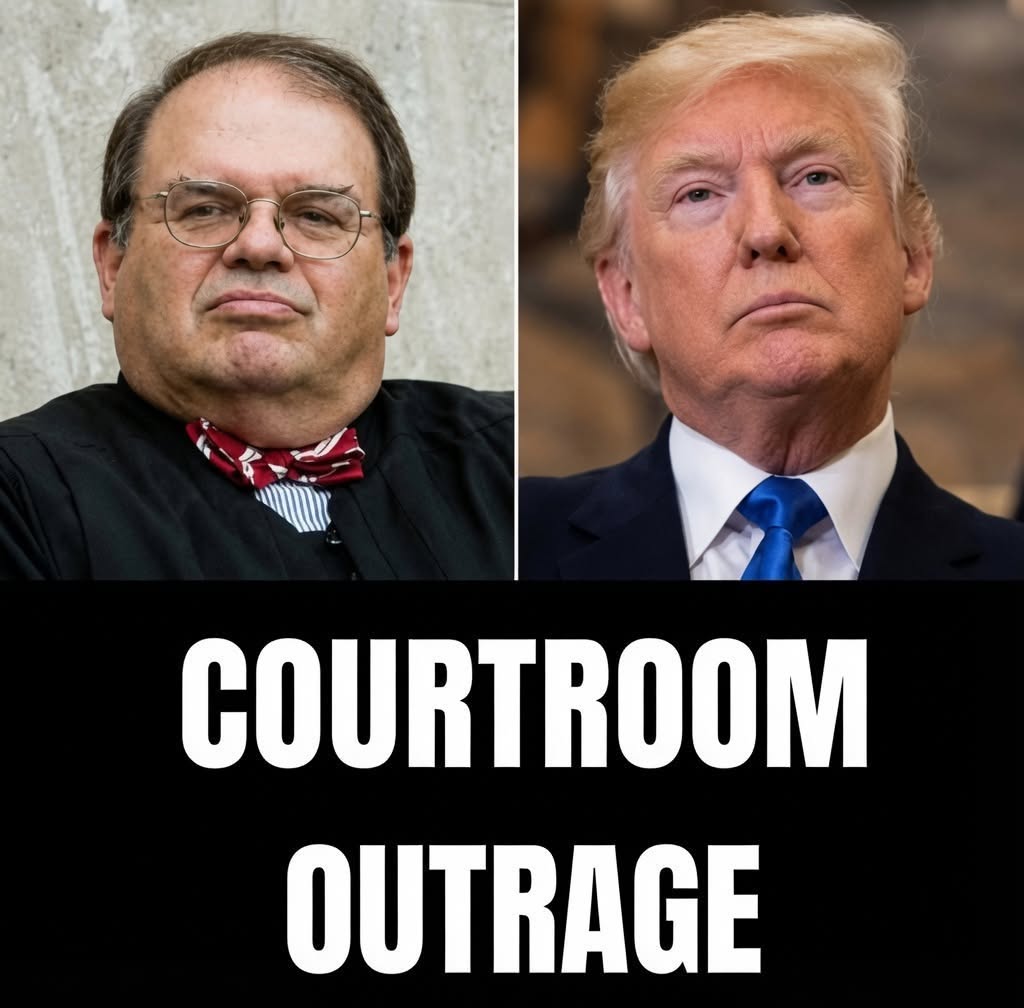
A federal court ruling on military policy has reignited one of the most contentious debates in American public life, raising fundamental questions about presidential authority, judicial oversight, military readiness, and the limits of executive power.
At the center of the controversy is a legal challenge involving restrictions on transgender military service, a policy issue that has generated years of political, legal, and cultural conflict. What might appear on the surface to be a dispute over military regulations has evolved into something much larger: a national argument over who ultimately has the authority to decide the standards for serving in the armed forces.
Supporters of the ruling argue that courts have an obligation to ensure that government policies comply with constitutional protections and principles of equal treatment under the law. Critics, however, view the decision as another example of judges stepping beyond their traditional role and inserting themselves into matters that have historically been handled by elected leaders and military officials.
The disagreement reflects a deeper divide that extends far beyond a single court case.
For generations, the military has maintained strict eligibility requirements governing who can serve. Recruits must meet age requirements, pass physical fitness standards, satisfy medical qualifications, and demonstrate the ability to perform demanding duties under challenging conditions. Every year, countless individuals are denied military service because they fail to meet one or more of these requirements.
Those standards have long been justified on the grounds that military service is unique. Unlike most professions, military personnel may be required to deploy to dangerous environments, operate under extreme stress, and place themselves in harm’s way in defense of the nation.
As a result, military leaders have traditionally been granted substantial discretion in determining which qualifications are necessary to maintain readiness and effectiveness.
The recent legal battle emerged from challenges to policies affecting transgender service members and prospective recruits. Opponents of the restrictions argued that the policies unfairly targeted a specific group of Americans and lacked sufficient justification.
Supporters of the policies countered that the measures were based on military considerations rather than personal hostility. They argued that decisions involving deployability, medical readiness, unit cohesion, and resource allocation fall within the responsibility of military leadership and civilian officials charged with overseeing national defense.
The court’s ruling added a new dimension to the debate.
In its analysis, the court questioned not only the practical effects of the policy but also the motivations behind it. By characterizing aspects of the policy as potentially driven by animus rather than legitimate military concerns, the ruling transformed the discussion from a disagreement about military management into a broader dispute about constitutional principles and equal protection.
For many observers, that distinction carries enormous significance.
If a policy is viewed primarily as a military judgment, courts often grant substantial deference to military leaders and elected officials. However, if a policy is viewed as discriminatory or motivated by hostility toward a particular group, courts may subject it to far greater scrutiny.
This difference lies at the heart of the ongoing controversy.
Supporters of the restrictions argue that military policy has always involved difficult judgments about eligibility. They point out that many Americans are excluded from service due to age limitations, chronic health conditions, physical impairments, psychological concerns, or other factors that military leaders believe could affect performance.
From this perspective, eligibility requirements are not necessarily statements about personal worth or dignity. Instead, they are practical decisions intended to maintain an effective fighting force.
Advocates of this view contend that courts should be cautious when evaluating military decisions because judges generally lack the expertise and operational experience possessed by military commanders.
They argue that elected leaders, advised by defense officials and military experts, are better positioned to determine what standards are necessary for national security.
Those who support the court’s ruling see the issue differently.
They maintain that constitutional protections do not disappear simply because a policy involves the military. In their view, courts play a vital role in ensuring that government actions remain consistent with legal and constitutional principles.
Supporters of the ruling argue that military necessity should not be used as a blanket justification for policies that may unfairly target specific groups without sufficient evidence.
As the debate continues, legal experts note that the controversy reflects a longstanding tension within American government.
The Constitution establishes separate branches of government, each with distinct responsibilities. Presidents oversee the executive branch and serve as commander-in-chief. Congress possesses authority over military funding and legislation. Courts interpret laws and evaluate whether government actions comply with constitutional requirements.
Conflicts among these branches are not unusual.
Throughout American history, courts have reviewed presidential actions involving immigration, national security, military policy, and executive authority. Some rulings have upheld executive decisions. Others have limited them.
The current dispute fits within that broader tradition.
What makes the issue particularly contentious is the deeply emotional nature of the underlying questions.
Military service occupies a unique place in American society. For many citizens, serving in uniform represents sacrifice, patriotism, and commitment to the nation. Debates about who may serve often touch on broader conversations about identity, equality, fairness, and national values.
As a result, legal decisions in this area rarely remain confined to courtrooms.
They quickly become political flashpoints.
Public officials, advocacy organizations, veterans’ groups, military experts, and commentators frequently interpret these rulings through very different lenses, leading to sharply contrasting reactions.
Some view the decision as a victory for civil rights and constitutional protections.
Others see it as an example of judicial overreach into areas traditionally reserved for military and executive decision-making.
The ruling has also intensified discussions about the balance between individual rights and institutional needs.
Every military organization must determine how to reconcile the rights of individual service members with the broader requirements of readiness, discipline, and operational effectiveness. Striking that balance has been a challenge throughout history, particularly as social norms and legal standards evolve.
For now, portions of existing restrictions remain in place while legal proceedings continue.
The broader implications, however, may extend far beyond the immediate policy dispute.
Legal scholars suggest that future administrations, regardless of political affiliation, will closely watch how courts approach questions involving military discretion and executive authority. The reasoning used in this case could influence future disputes involving recruitment standards, medical qualifications, personnel policies, and other aspects of military administration.
In that sense, the controversy is about more than one policy or one administration.
It is about defining the boundaries between presidential power, military judgment, and judicial review.
As appeals and additional legal challenges move forward, the debate is unlikely to fade anytime soon. Supporters and critics alike recognize that the outcome may shape how future governments approach some of the most sensitive questions surrounding military service and constitutional authority.
What began as a dispute over eligibility standards has evolved into a much larger conversation about governance itself. The courts, the military, elected officials, and the public now find themselves engaged in a debate that reaches beyond policy details and into the fundamental structure of American democracy.
The final resolution may determine not only who is eligible to serve in uniform, but also how far each branch of government can go in shaping the rules that govern those who volunteer to defend the nation.