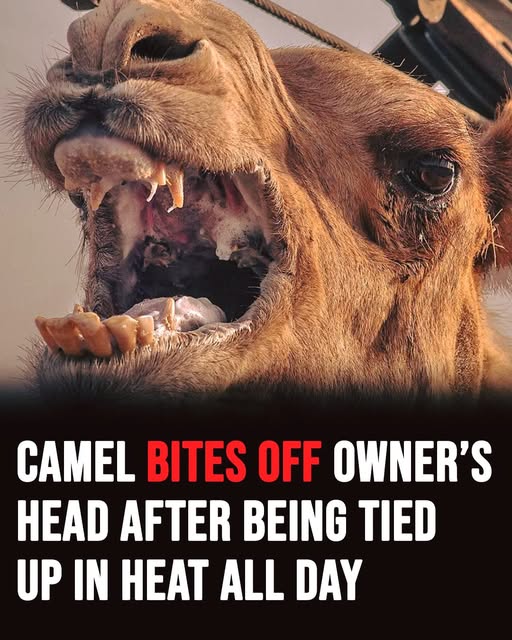
Reports circulating across social media and lesser-known news sites describe a disturbing incident involving a camel in the Barmer region of Rajasthan, India, where extreme summer temperatures regularly rise beyond 45°C and place immense strain on both humans and animals.
The story, which has spread rapidly online in multiple conflicting versions, claims that a tragic situation unfolded after a camel was left restrained outdoors during peak heat conditions without adequate shade or water.
According to these viral accounts, the animal had been tied outside a property while its owner attended to guests indoors. In the intense desert climate, even short periods of exposure can become dangerous, and the camel was reportedly left tethered for several hours during the hottest part of the day. Some versions of the story suggest that the animal began showing visible signs of distress, including agitation, restlessness, and attempts to break free from its restraint.
Barmer, located in the Thar Desert, is widely recognized for its harsh environment, where seasonal heatwaves can push conditions to extremes that challenge both survival and basic daily activity. In rural areas, camels are often used as working animals for transportation, agriculture, and tourism-related purposes. Their endurance is well known, but experts consistently stress that endurance does not make them immune to heat stress, dehydration, or environmental strain.
In the most widely shared versions of the incident, the situation reportedly escalated when the camel, already weakened and distressed by prolonged exposure to heat, reacted aggressively upon human approach. Some accounts describe a sudden and violent response, while others present a more restrained interpretation, suggesting a defensive reaction triggered by fear and physical discomfort. However, these details vary significantly depending on the source, with no single verified account consistently confirmed by major international news organizations.
As the story spread, it was quickly amplified by social media platforms, where dramatic retellings often replaced factual reporting. Some posts included graphic descriptions and emotionally charged language, contributing to confusion and fear among readers unfamiliar with camel behavior or desert animal handling practices. Fact-checkers and journalists have noted that versions of the story differ not only in detail but also in location specifics, timing, and outcome, raising questions about its accuracy.
What remains consistent across most reports is the broader context surrounding camel behavior and environmental stress. Camels, despite their reputation as resilient desert animals, are highly sensitive to prolonged dehydration and overheating. When subjected to extreme temperatures without access to water, shade, or rest, they can experience severe physiological stress that affects both behavior and health.
Animal behavior specialists explain that large working animals, including camels, do not typically display aggression without cause. Instead, what is often perceived as aggression may be defensive behavior triggered by pain, fear, or environmental pressure. In situations where animals are restrained while experiencing heat stress, their natural instinct may be to struggle or react unpredictably in an attempt to escape discomfort.
Experts also highlight that camels are physically powerful animals, capable of weighing between 600 and 1,000 kilograms in adulthood. Their size alone means that any sudden movement or defensive reaction can have serious consequences for nearby humans. This is why handlers in regions where camels are commonly used are typically trained to recognize early warning signs of distress, such as pacing, vocalization, excessive movement, or changes in posture.
In rural desert communities, camels are considered essential to daily life, and their welfare is closely tied to the livelihoods of those who depend on them. However, animal welfare organizations consistently emphasize that proper care is critical, especially during extreme heat conditions. Hydration, shade, and regulated rest periods are essential to prevent heat exhaustion and reduce the risk of stress-induced behavior.
The viral nature of the Rajasthan camel story has also drawn attention to a growing problem in digital media: the rapid spread of emotionally shocking but unverified content. In many cases, such stories circulate widely before any official confirmation is available, leading to public misunderstanding and unnecessary alarm. Online platforms often prioritize engagement, which can result in sensationalized narratives gaining traction faster than factual corrections.
In this case, some versions of the story appear to have originated from unverified posts or secondary websites that do not provide clear sourcing or eyewitness confirmation. As the narrative was shared and reshared, details shifted, with some accounts exaggerating the severity of the incident while others softened or altered key elements entirely. This inconsistency has made it difficult to determine what, if anything, occurred exactly as described in viral posts.
Despite the uncertainty surrounding the specific event, experts agree on the underlying message highlighted by the discussion: the importance of responsible animal handling in extreme environments. Heatwaves in desert regions can become life-threatening not only for humans but also for working animals that lack proper care or monitoring during peak conditions.
Veterinary specialists point out that heat stress in camels can develop gradually, often beginning with subtle signs that may be missed by inexperienced handlers. Without intervention, this can progress into severe dehydration, exhaustion, and in extreme cases, collapse or sudden behavioral changes. Preventive care is therefore considered essential in reducing risks in hot climates.
While stories involving animal attacks tend to capture public attention due to their shocking nature, documented research shows that such incidents are rare and typically linked to specific stressors rather than unprovoked aggression. In most cases, when camels do injure humans, contributing factors include improper restraint, overcrowding, physical mistreatment, or environmental extremes.
The Rajasthan incident, whether fully accurate in its viral form or not, has sparked broader conversations about how working animals are treated in rural economies and how quickly online narratives can distort reality. It also highlights the need for careful verification before sharing emotionally charged content that involves both human and animal welfare.
Ultimately, the central takeaway emphasized by experts is not fear of camels or desert animals, but awareness of their needs and limitations. Camels are deeply adapted to harsh environments, yet they still require basic conditions such as water, shade, and humane handling to remain safe and stable in extreme heat.
As discussions continue online, the story serves as a reminder of two important truths: animals respond to the environments they are placed in, and information shared without verification can change dramatically as it spreads. In both cases, context, care, and accuracy matter far more than shock value.
Whether in Rajasthan or other desert regions of the world, responsible treatment of working animals remains essential to preventing suffering and avoiding preventable incidents.