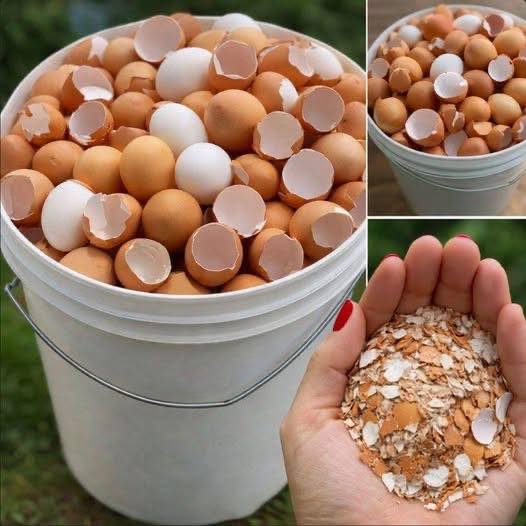
Eggshells are one of the most commonly discarded kitchen byproducts, yet they contain valuable natural minerals that can be reused in practical and environmentally friendly ways.
Most households simply throw them away after cooking, but doing so overlooks their potential benefits. Eggshells are primarily made of calcium carbonate, a compound also found in natural limestone and widely used in agriculture and soil management. Because of this composition, they can be repurposed in several safe and sustainable ways instead of becoming waste. Reusing them also contributes to reducing household trash and supports more eco conscious living habits.
One of the most well known uses for eggshells is in gardening. When properly cleaned, dried, and crushed into small pieces, they can be added directly to soil or planting beds. Over time, the calcium they contain slowly breaks down and becomes available to plants. This helps improve soil structure and supports healthy plant development. Gardeners often use eggshells as a natural soil amendment, especially for plants that benefit from calcium rich conditions. While they are not an instant fertilizer, their slow release nature makes them a long term soil enhancer.
Eggshells are also commonly used in compost systems. When added to compost bins, they gradually decompose and contribute essential minerals to the final compost mixture. Although they break down more slowly than organic kitchen scraps like vegetable peels, they still play an important role in enriching compost quality. Crushing them before adding them to compost helps speed up the breakdown process. Over time, this creates a more balanced compost that can be used to nourish gardens, flower beds, and even potted plants.
Another practical gardening use of eggshells is as a natural barrier against certain garden pests. When crushed into small, sharp fragments and spread around the base of plants, they can discourage soft bodied insects such as slugs and snails from crossing. This method is often used by gardeners who prefer non chemical pest control techniques. While it may not eliminate pests entirely, it can help reduce their movement in targeted areas. This makes eggshells a simple and environmentally friendly addition to garden maintenance routines.
In addition to gardening, eggshells can also be reused for seed starting. Their natural hollow shape makes them suitable as small biodegradable containers for seedlings. After rinsing and carefully breaking the top of the shell, soil and seeds can be placed inside. Once the seedlings grow strong enough, the entire shell can be planted directly into the ground. As it decomposes, it continues to provide nutrients to the young plant. This method is especially popular among home gardeners looking for low cost and sustainable planting solutions.
Eggshells can also be incorporated into household cleaning tasks in a limited and careful way. When finely crushed, they can act as a mild abrasive in certain cleaning applications, particularly for scrubbing stubborn residues from non delicate surfaces. However, they should be used cautiously to avoid scratching sensitive materials. In many cases, they are combined with other natural cleaning agents such as vinegar or baking soda for improved effectiveness. Even so, they remain a niche but useful addition to eco friendly cleaning methods.
Beyond practical household uses, eggshells also play a role in educational and craft activities. They are often used in school science experiments to demonstrate decomposition, calcium content, or natural recycling processes. In arts and crafts, cleaned and dried shells can be crushed and used for decorative textures or mosaic style projects. Their fragile structure makes them easy to manipulate, which is why they are commonly used in creative DIY activities. These uses help promote awareness about recycling and sustainability in an engaging and hands on way.
From an environmental perspective, reusing eggshells contributes to reducing kitchen waste and encouraging sustainable habits. Instead of sending organic materials to landfills, where they contribute to waste buildup, repurposing them helps extend their lifecycle. Even though eggshells are biodegradable, making use of them before disposal maximizes their value. This small change in daily habits can collectively make a meaningful difference when adopted by many households. It also encourages a more mindful approach to consumption and waste management.
Eggshells can also be used to make a calcium rich supplement for birds. Many bird enthusiasts crush dried eggshells and mix them with birdseed to provide extra calcium during nesting season. This supports healthy egg production in wild birds and is a wonderful way to give back to local wildlife. Similarly, eggshell powder can be added to homemade toothpaste or used as a gentle exfoliant in skin care routines, though caution should be taken to ensure it is ground very finely to avoid scratching.
Another surprising use is in coffee. Adding crushed eggshells to ground coffee before brewing can help reduce bitterness. The calcium in the shells neutralizes some of the acids, resulting in a smoother cup. This old fashioned trick has been used by campers and coffee lovers for generations. It is a simple, effective way to improve your morning brew using something that would otherwise be trash.
In the garden, crushed eggshells can also be mixed into the soil around tomato plants to help prevent blossom end rot, a common condition caused by calcium deficiency. This is one of the most practical uses for home vegetable gardeners. By the time the growing season ends, the shells will have broken down and contributed to healthier soil for the following year.
The versatility of eggshells is truly remarkable. What many see as waste is actually a resource. By saving and reusing them, households can save money, reduce their environmental footprint, and even improve their gardens and homes. It is a small habit that takes almost no effort but offers multiple benefits. In a world increasingly focused on sustainability, rediscovering the value of everyday items like eggshells is a step in the right direction. Not every solution to environmental problems needs to be high tech. Sometimes, the answers have been sitting in our kitchen trash bins all along. All it takes is a little knowledge and a willingness to change old habits. Once you start, you will never look at eggshells the same way again. They are not garbage. They are an opportunity. And that opportunity is too good to waste. So the next time you crack an egg, think twice before tossing the shell. Your garden, your wallet, and your planet will thank you.