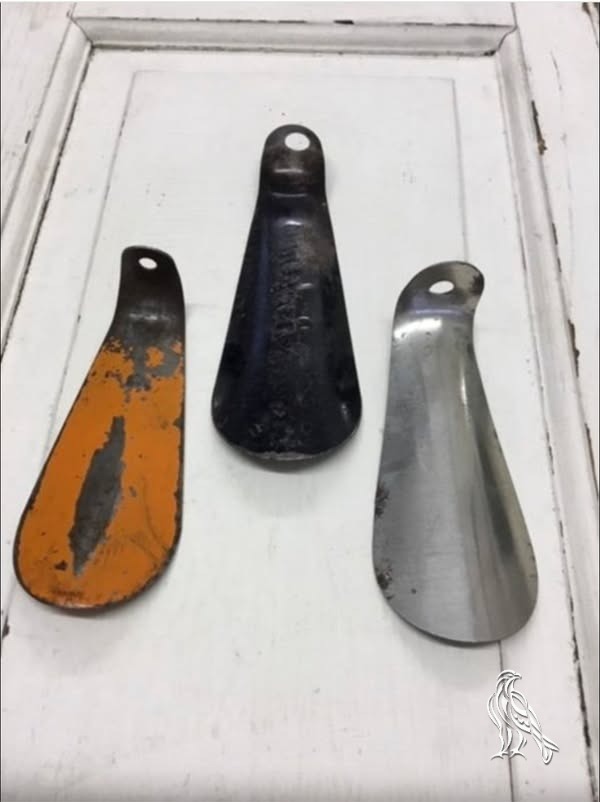
At first glance, it hardly looks revolutionary.
Small, curved, lightweight, and often forgotten in the corner of a hallway or beside a closet door, the shoe horn seems almost too ordinary to deserve attention. Many younger people have even mistaken it for strange kitchen equipment, a back scratcher, or some mysterious antique object from another era. Yet for centuries, this deceptively simple invention has quietly improved daily life in ways most people never stop to consider.
Long before smart devices, ergonomic furniture, or high-tech convenience products promised to simplify human routines, the shoe horn was already doing exactly that.
And it did so without noise, batteries, advertisements, or updates.
Its purpose has always been beautifully straightforward: helping people slide their feet into shoes more easily while protecting both the shoe and the body in the process. But behind that simple function lies a surprisingly rich story about craftsmanship, aging, dignity, comfort, and humanity’s endless search for small improvements that make ordinary life gentler.
For generations, the shoe horn stood patiently at the doorway between effort and ease.
Every morning, countless people reached for it almost automatically. Workers preparing for long days. Children dressing for school. Elderly grandparents struggling with stiff joints. Busy parents rushing out the door. Wealthy aristocrats protecting expensive leather footwear. Soldiers dressing quickly. Travelers packing efficiently.
The tool never demanded attention.
It simply helped.
And that quiet usefulness may be exactly why so many people overlook its importance today.
The origins of the shoe horn stretch back centuries. Early versions were often handcrafted from animal horn, bone, wood, ivory, or metal, shaped carefully by artisans who understood the frustrations of tight shoes and delicate materials. In wealthier households, ornate shoe horns sometimes became status symbols, engraved with decorative designs or crafted from polished silver and brass.
But the object itself was never truly about luxury.
It was about practicality.
Before modern stretchy materials and flexible sneakers became common, shoes were often rigid, narrow, and difficult to put on comfortably. Leather footwear especially could crease, crack, or collapse at the heel if forced carelessly. The shoe horn solved this elegantly by creating a smooth surface that guided the foot into place without damaging the structure of the shoe.
That single design decision extended the life of expensive footwear dramatically.
In many ways, the shoe horn represented an early form of ergonomic thinking long before the word “ergonomic” even existed. It reduced unnecessary strain, preserved materials, and minimized repetitive physical discomfort using almost no complexity at all.
That simplicity is part of its genius.
Modern society often associates innovation with advanced technology, glowing screens, artificial intelligence, or constant reinvention. Products become outdated within years or even months, replaced endlessly by newer versions promising greater efficiency or excitement.
The shoe horn escaped that cycle almost entirely.
Because its design was already close to perfect.
A curved surface guiding the heel into a shoe requires almost nothing more. Over centuries, materials changed from bone to polished metal to lightweight plastic, but the core concept remained nearly identical because there was very little left to improve fundamentally.
That durability of design says something powerful about human invention.
Not every meaningful innovation needs complexity.
Some of the greatest tools ever created survive precisely because they solve a problem so directly and effectively that radical redesign becomes unnecessary.
The shoe horn belongs to that rare category of objects that quietly integrate themselves into human life until people barely notice them anymore.
Yet its impact becomes especially meaningful with age.
For older adults, the simple act of putting on shoes can gradually transform from a mindless routine into a painful physical challenge. Bending becomes harder. Balance becomes less stable. Arthritis stiffens joints. Back pain limits flexibility. Movements once performed effortlessly suddenly require planning and caution.
The shoe horn restores a small measure of independence in those moments.
A long-handled shoe horn, in particular, allows individuals to put on footwear without excessive bending or strain. For many seniors, that means preserving dignity and self-sufficiency longer than they otherwise might. Something so modest can quietly reduce pain, prevent falls, and make daily routines less exhausting.
That emotional dimension matters more than most people realize.
Independence often disappears gradually, not dramatically. Small struggles accumulate silently until ordinary tasks become emotionally discouraging. A tool that reduces even one daily frustration can therefore carry enormous psychological value.
And unlike many modern products marketed aggressively as “life-changing,” the shoe horn asks for no recognition at all.
It performs its task silently and disappears again.
There is something strangely beautiful about that humility.
The internet occasionally rediscovers this object in moments of collective confusion or amusement. Younger users unfamiliar with traditional household tools post photos asking others to identify the strange curved item they discovered in a drawer or inherited from grandparents. The answers usually trigger waves of nostalgia, jokes, and sudden appreciation.
People laugh at first.
Then many realize how useful the tool actually is.
That rediscovery reveals an interesting truth about modern culture: people often overlook simple solutions because they appear too ordinary to feel innovative. Attention gravitates toward complexity and novelty, even when older designs continue solving problems more reliably than newer alternatives.
The shoe horn quietly resists that obsession with constant reinvention.
It reminds people that usefulness does not require spectacle.
Some objects earn their value not through excitement, but through consistency.
Every morning it protects shoes from crushed heels.
Every morning it spares backs from unnecessary strain.
Every morning it makes one small part of life slightly easier.
Over decades, those tiny acts accumulate into something surprisingly meaningful.
Even the physical form of the shoe horn carries a kind of understated elegance. Its smooth curve follows the natural movement of the human body with intuitive simplicity. It does not confuse users with instructions or settings. Anyone holding one instantly understands its purpose almost instinctively.
That intuitive design is far rarer than people think.
Many modern products sacrifice clarity for unnecessary features, but the shoe horn remains understandable across generations, languages, and cultures. A child can learn to use it immediately. An elderly person can rely on it comfortably. It belongs to no specific era because human bodies and daily routines still require the same basic forms of assistance they always have.
Perhaps that is why the object feels oddly timeless.
It exists outside trends.
Outside politics.
Outside technological hype.
It simply continues serving people faithfully in quiet corners of homes around the world.
And maybe that constancy explains why the shoe horn still inspires affection once people stop overlooking it. It represents a kind of thoughtful practicality that modern life sometimes forgets to value the idea that improving daily existence does not always require massive disruption or dramatic invention.
Sometimes the best innovations are the ones that fit so naturally into life people eventually stop noticing them altogether.
The shoe horn never became glamorous.
It never needed to.
Its success lives in preserved shoes, protected backs, easier mornings, and small moments of comfort repeated across centuries. While newer gadgets flash brightly before disappearing into obsolescence, this humble curved tool continues performing the exact same task it mastered generations ago.
One careful step at a time.