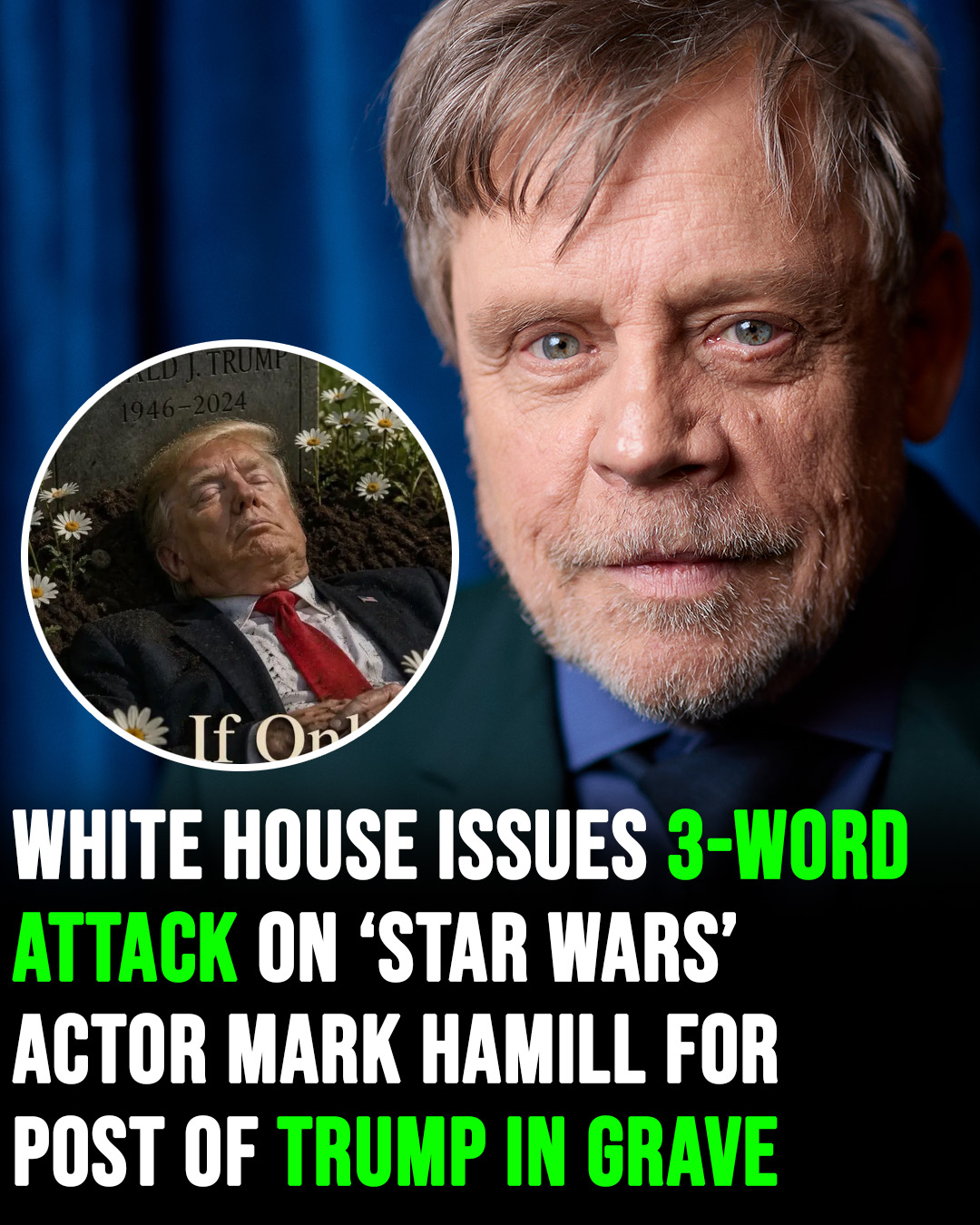
What may once have been dismissed as provocative celebrity commentary quickly exploded into a full-scale political controversy after Mark Hamill shared a post involving Donald Trump that many critics viewed as crossing a dangerous line.
The backlash was immediate.
Social media erupted within minutes as screenshots of the post spread across multiple platforms, triggering fierce reactions from both supporters and opponents of the former president. What intensified the outrage even further was the timing. The controversy arrived during an already tense political climate, only days after reports of what officials described as an attempted assassination scare connected to events surrounding the White House Correspondents’ Dinner.
In that atmosphere, emotions were already running high.
Fear, anger, and political hostility had been simmering for months, fueled by nonstop online conflict and increasingly aggressive public rhetoric. Against that backdrop, Hamill’s post which reportedly included an AI-generated image depicting Trump in a grave did not land as satire for many viewers. Instead, critics interpreted it as inflammatory, reckless, and deeply inappropriate during a period when concerns about political violence were dominating headlines.
The White House reacted swiftly.
Officials condemned the post publicly, arguing that influential public figures should understand the consequences of inflammatory political messaging during moments of national tension. Some administration allies accused Hamill of contributing to a broader culture of hostility that they claimed risks encouraging real-world violence.
Several outspoken critics went even further, labeling the actor irresponsible and accusing Hollywood figures of escalating political division through increasingly extreme rhetoric online. Conservative commentators seized on the controversy almost immediately, framing the situation as evidence of what they described as growing intolerance and dehumanization within political discourse.
For Hamill, the reaction quickly spiraled beyond what many initially expected.
Known worldwide for portraying Luke Skywalker in the Star Wars universe, Hamill has spent years cultivating a reputation as one of Hollywood’s most vocal critics of Trump. His social media accounts frequently feature sharp political commentary, sarcasm, and criticism aimed at conservative figures and policies. While supporters praise him for speaking openly about his beliefs, critics argue that his online presence often fuels division rather than meaningful discussion.
This latest incident intensified that debate dramatically.
As outrage continued spreading online, Hamill eventually deleted the post and issued a statement attempting to clarify his intentions. In his response, he insisted that he did not wish physical harm upon Trump and even stated that he wished him “the opposite of dead.” At the same time, he acknowledged that the image may have been inappropriate given the political climate.
But by then, the damage had already been done.
The deletion did little to slow public reaction. Supporters defended Hamill, arguing that political satire has long played a role in American culture and insisting that outrage over controversial imagery often depends heavily on political affiliation. Many pointed out that comedians, artists, and commentators from across the political spectrum have historically used provocative humor to criticize powerful public figures.
Critics, however, viewed the situation differently.
To them, the issue was not merely about satire or free expression, but about the normalization of increasingly hostile rhetoric in public discourse. They argued that when influential celebrities with massive audiences share violent or graphic imagery involving political figures, even jokingly, it contributes to a dangerous cultural atmosphere already saturated with anger and mistrust.
The controversy highlighted a growing national tension over where the line between political expression and incitement should exist.
That line has become increasingly difficult to define in the social media era, where jokes, memes, outrage, and political commentary all merge together in real time. What one group sees as satire, another may interpret as endorsement of harm. Context matters, timing matters, and public perception often shifts rapidly depending on broader events unfolding in the country.
For Hamill, this was not the first time his political activism attracted major attention.
Over the years, he has repeatedly criticized Trump publicly and openly discussed concerns about the direction of American politics. Following the 2024 election cycle, he even hinted in interviews and online posts that he had considered leaving the United States due to political frustration and disillusionment. Those statements made him a particularly visible target for critics already eager to portray Hollywood celebrities as disconnected from ordinary Americans.
The latest backlash only reinforced that perception among his opponents.
Meanwhile, supporters argued that Hamill was being singled out because of his fame and political views rather than the actual severity of the post itself. They accused critics of selectively policing speech while ignoring similarly inflammatory rhetoric from figures on the other side of the political divide.
As debate intensified, the controversy evolved into something larger than one image or one actor.
It became another example of how deeply intertwined entertainment, politics, and online outrage have become in modern America. Celebrity statements no longer remain confined to entertainment news. A single social media post can instantly become part of national political warfare, amplified by television networks, podcasts, influencers, and millions of users eager to react before context fully emerges.
That environment leaves little room for nuance.
Public figures are now expected to navigate audiences that interpret every statement through political identity first. Humor becomes suspect. Satire becomes dangerous. Silence becomes political. Even apologies are often viewed less as genuine reflection and more as strategic damage control.
In many ways, the reaction surrounding Hamill reflected broader anxieties consuming the country itself.
Political exhaustion has collided with digital culture in ways that make outrage nearly constant. Americans increasingly experience politics not only through elections or policy debates, but through viral clips, celebrity posts, memes, and emotionally charged online battles that unfold every hour of every day. The boundaries between entertainment and political activism have largely disappeared.
Actors become political commentators.
Politicians become media personalities.
And social media transforms every controversy into a national spectacle within minutes.
For some observers, the Hamill controversy symbolized how fragile public discourse has become. The speed with which anger escalates online leaves little opportunity for reflection or context. Every incident instantly divides audiences into opposing camps, each convinced the other represents a greater threat to democracy, morality, or public safety.
That atmosphere creates enormous pressure on public figures navigating political expression.
Speak too aggressively, and accusations of incitement emerge.
Remain silent, and critics accuse you of indifference.
Attempt humor, and context disappears beneath outrage cycles moving too quickly for thoughtful discussion.
In the end, the controversy surrounding Mark Hamill was never only about one deleted post.
It reflected something much larger about the current state of American culture a country where politics has become inseparable from identity, where celebrities and elected officials battle for influence on the same digital stage, and where even fictional heroes from beloved movie franchises can suddenly become central figures in real-world political warfare.
And perhaps most unsettling of all, it revealed how quickly one image can ignite a national argument in a society already struggling to separate anger from entertainment.