The fear aboard the MV Hondius did not arrive all at once. It spread slowly, quietly, almost invisibly, much like the illness passengers feared might already be moving among them.
At first, there were only whispers in hallways and nervous glances exchanged during meals. Then came the announcements from the captain. Health officials began monitoring the situation more closely. Rumors traveled faster than facts, and every cough suddenly sounded dangerous. The ship, surrounded by endless ocean and icy winds, no longer felt like an adventure vessel. For many passengers, it began to feel like a floating quarantine suspended between uncertainty and panic.
Some travelers stayed inside their cabins for hours, staring at updates on their phones while waiting for answers no one seemed able to provide. Others gathered quietly near windows, watching the dark water outside while discussing reports about a rare but terrifying virus few had heard much about before. Experts insisted the risk remained low, but reassurance becomes difficult to accept when medical teams begin moving stretchers through narrow ship corridors.
Every announcement carried emotional weight.
Every delay deepened anxiety.
And hanging over everything was one haunting question: what if exposure had already happened?
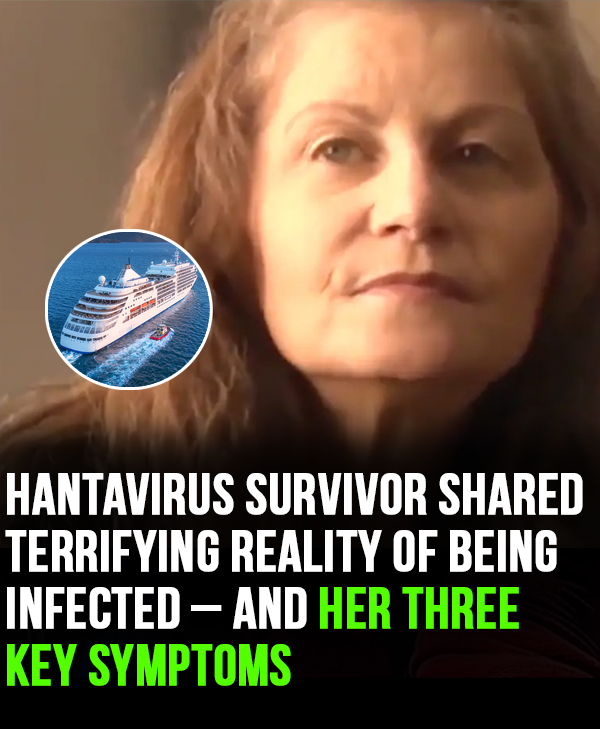
For most passengers, the fear remained hypothetical. But for one woman, the nightmare they imagined had already become reality years earlier. Her name was Debbie Zipperian, and her experience with hantavirus transformed an ordinary afternoon into a medical catastrophe that nearly ended her life.
Today, her story is being revisited not because it is dramatic, but because it reveals how quickly a seemingly harmless moment can spiral into something devastating.
Debbie never expected danger that day.
She was not exploring a remote jungle or working in a laboratory. She was simply cleaning out a dusty chicken coop, doing routine work around her property. The task seemed ordinary enough that she barely thought about it. Like countless other people performing chores in barns, sheds, or storage areas, she brushed aside dust and debris without imagining what might be hidden inside the air around her.
At the time, she had never even heard of hantavirus.
The exposure itself lasted only minutes.
But those minutes changed everything.
Days later, Debbie began feeling exhausted in ways she could not explain. At first, the symptoms seemed deceptively mild. Fatigue settled into her body like a heavy weight. Then came fever, muscle aches, and headaches severe enough to make basic movement difficult. She assumed it might be a seasonal illness or an especially bad flu. Nothing about those early symptoms suggested she was entering a life-threatening medical emergency.
That is one of the most frightening things about hantavirus.
It often begins quietly.
According to survivors and medical experts, the illness can initially resemble many common viral infections. Patients frequently dismiss the warning signs until the condition suddenly escalates into something far more dangerous.
For Debbie, the turning point came fast.
Breathing became difficult. Her body weakened rapidly. The exhaustion she initially ignored turned into complete physical collapse. Soon, her organs began struggling under the pressure of the infection. Doctors later explained that hantavirus can trigger severe respiratory distress and cause fluid to build dangerously inside the lungs.
By the time Debbie reached the hospital, her condition had deteriorated dramatically.
She later described the experience as entering a nightmare she could barely comprehend. Machines surrounded her. Doctors moved urgently around her bed. Her family prepared for the possibility that she might not survive.
At one point, she came dangerously close to death not once, but twice.
The illness attacked her body with shocking intensity. She experienced hallucinations, confusion, and periods where reality itself seemed to blur. Recovery was far from guaranteed. Medical teams fought to stabilize her while loved ones waited helplessly beside hospital equipment that monitored every fragile heartbeat and breath.
For many patients, hantavirus progresses with terrifying speed.
One day they are functioning normally.
Days later, they are fighting to stay alive.
Debbie eventually survived, but survival did not mean returning immediately to the life she once knew. When she finally woke fully aware of her surroundings again, she discovered how deeply the illness had altered her body. Weakness consumed her muscles. Simple movements became exhausting. She struggled with memory, concentration, and physical coordination.
Tasks she once completed automatically now required enormous effort.
She had to relearn basic parts of daily life step by step.
Walking across a room became a challenge. Thinking clearly required energy she no longer possessed naturally. Even after leaving intensive care, recovery stretched across months filled with frustration, exhaustion, and emotional trauma. While people around her celebrated her survival, Debbie quietly confronted the reality that survival and healing are not always the same thing.
The psychological effects lingered too.
Serious illness changes the way people view ordinary life. Debbie later explained that after facing death so closely, nothing felt entirely secure anymore. Everyday environments suddenly seemed filled with hidden risks most people never notice. Dusty corners, abandoned sheds, old storage spaces places once ignored now carried frightening associations.
Her story resonates so strongly because it forces people to confront an uncomfortable truth: danger does not always announce itself dramatically.
Sometimes it arrives through ordinary routines.
A quick cleanup.
A forgotten building.
A few minutes of exposure.
That is exactly why fear aboard the MV Hondius intensified so quickly. Passengers understood that invisible threats feel far more terrifying than visible ones. People can prepare themselves for storms, accidents, or emergencies they can see approaching. But illnesses carried silently through the air create a different kind of psychological fear one rooted in uncertainty and lack of control.
Every passenger aboard the ship began imagining possibilities.
Was that cough harmless?
Was that headache stress or something worse?
Had exposure already happened without anyone realizing it?
Inside confined spaces, fear multiplies rapidly. Cabins start feeling smaller. Hallways feel tense. People begin interpreting ordinary sensations as warning signs. And when news reports repeatedly describe rare viruses with severe consequences, anxiety can become nearly impossible to contain.
Yet experts continue emphasizing that hantavirus remains relatively uncommon compared to many other infectious illnesses. Most people will never encounter it directly. However, Debbie’s experience demonstrates why awareness still matters. Early symptoms can easily be overlooked, and delayed medical attention can prove dangerous if severe respiratory complications develop.
The three symptoms survivors most frequently describe in the early stages are intense fatigue, fever, and muscle pain symptoms ordinary enough to be mistaken for dozens of less serious illnesses. That overlap is precisely what makes the condition so unsettling.
By the time breathing problems emerge, patients may already be critically ill.
For Debbie, the memory of those early symptoms now feels haunting in hindsight. She remembers dismissing the exhaustion. She remembers assuming the pain would pass. She remembers not understanding how quickly her body was losing its ability to fight back.
Today, she shares her experience not to spread panic, but to remind people how fragile health can be. Life can change unexpectedly from moments most individuals barely notice at the time.
A dusty coop.
A deep breath.
An ordinary afternoon.
And suddenly, everything after it belongs to a different version of your life.