
For someone whose life is usually defined by cameras, headlines, and political pressure, the image that captured the public’s attention this week felt surprisingly quiet.
There were no podiums, no flashing microphones, no tense exchanges with reporters. Instead, the photograph showed a softer side of Karoline Leavitt that many people had never seen before.
Standing inside a softly decorated nursery filled with warm cream colors and delicate blush accents, Leavitt held her newborn daughter close against her chest. Wrapped in a pale blanket, baby Viviana affectionately called “Vivi” by family and supporters online slept peacefully in her mother’s arms while sunlight filtered gently through the room. The scene looked calm, intimate, and deeply personal, a sharp contrast to the fast-moving world that usually surrounds her public image.
Within minutes of the photo appearing online, thousands of comments flooded social media. Admirers called the baby beautiful, praised the nursery’s comforting atmosphere, and marveled at how composed Leavitt appeared only days after giving birth. Some described the image as “graceful,” while others focused on the emotion behind it, saying it revealed a version of her far removed from political debate.
What seemed to fascinate people most was not celebrity or status, but the vulnerability of the moment itself.
In recent years, public figures have become increasingly scrutinized not only for their careers, but also for how they balance their private lives behind the scenes. Supporters and critics alike now follow family milestones with the same intensity once reserved for political speeches or campaign announcements. For Leavitt, that attention has only intensified as her profile has continued to grow.
At just 28 years old, she made history as the youngest White House press secretary ever appointed, stepping into one of the most demanding and visible roles in American politics. The position placed her at the center of national controversies, relentless media cycles, and constant public evaluation. Every statement she delivered was dissected online within seconds. Every appearance became part of a larger conversation about leadership, image, and influence.
Yet despite the intensity of that world, Leavitt gradually began sharing glimpses of her personal life with supporters.
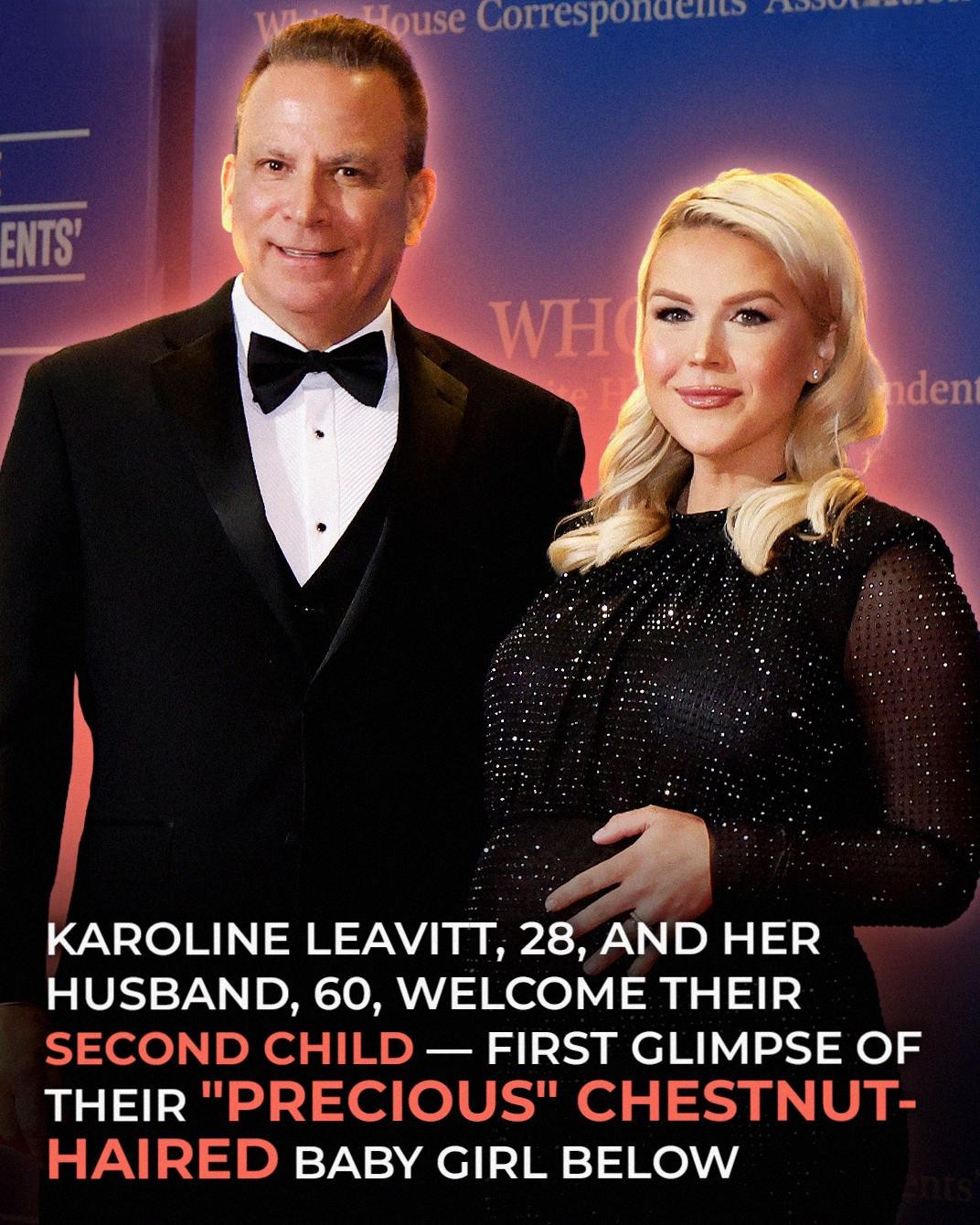
Followers watched her relationship with husband Nicholas Riccio unfold publicly, a romance that sparked widespread attention because of their 32-year age difference. While critics questioned the relationship online, supporters defended the couple fiercely, insisting that genuine connection mattered more than public opinion. Over time, the pair appeared increasingly comfortable allowing pieces of their private lives into public view.
Photos of vacations, family dinners, and quiet moments together began appearing more frequently. Instead of carefully curated political branding, people saw ordinary scenes: laughter in the kitchen, long drives, casual outings, and moments of affection that made the couple appear more relatable to followers who had previously known Leavitt only from television briefings.
Then came motherhood.
Throughout her pregnancy, Leavitt continued working at a pace that many found astonishing. She remained active during campaign events, media appearances, and political travel schedules, rarely slowing down despite visible exhaustion. Supporters often commented on her determination, while others questioned how sustainable such a demanding schedule could truly be for a first-time mother.
Still, she pressed forward.
As her pregnancy progressed, followers noticed more personal posts appearing online. There were photos of baby clothes folded neatly in drawers, nursery preparations, and moments where her husband gently kissed her growing baby bump while smiling at the camera. Those small glimpses transformed her public image in unexpected ways. She was no longer seen only as a sharp political communicator; she became a young woman preparing for motherhood while carrying the weight of national attention.
Her family also quietly stepped in to support her during the transition.
Leavitt later revealed that her mother chose to leave her own job temporarily in order to help care for the baby and assist the family during those first overwhelming weeks. Many followers connected deeply with that detail, seeing it as a reminder that even highly visible public figures still rely on family support, sacrifice, and love behind closed doors.
But the emotional weight of the past year extended far beyond pregnancy alone.
The political climate surrounding her work had already been intense, but things became even more emotionally charged after the assassination attempt involving Donald Trump during the presidential campaign. Like many figures closely tied to the administration, Leavitt suddenly found herself navigating fear, uncertainty, and enormous professional pressure while simultaneously preparing to become a mother.
According to people close to her, the experience profoundly affected her perspective on life and family. The tension of political work collided with the emotional vulnerability of pregnancy, creating a balancing act that few could fully understand from the outside.
Even after giving birth, Leavitt reportedly returned to work far sooner than many expected. That decision sparked intense discussion online. Some praised her dedication and resilience, while others argued that modern expectations often pressure women to “bounce back” immediately after childbirth rather than allowing themselves adequate recovery and privacy.
Yet the nursery photograph seemed to cut through much of that debate.
Instead of appearing polished or performative, the image felt sincere. There was no sense of political strategy behind it, no carefully staged campaign message. What people responded to was the humanity of the moment: a tired but proud mother holding her child in complete stillness while the noise of the outside world briefly disappeared.
For many women watching online, the image represented something larger than politics.
It reflected the impossible balancing act modern mothers often face the pressure to succeed professionally while remaining emotionally present at home. It captured the contradiction of strength and exhaustion existing at the same time. Leavitt’s supporters described her as ambitious yet nurturing, disciplined yet vulnerable. Even some critics admitted the photo revealed a deeply personal side rarely visible in public life.
The reaction also revealed something about today’s culture.
In an era dominated by constant visibility, audiences crave moments that feel authentic. Carefully managed celebrity branding no longer resonates the way raw human experiences do. A quiet nursery photograph can generate more emotional connection than a polished interview or viral speech because it reminds people of something universal: family, love, and the fragile beauty of new beginnings.
For Leavitt, the image marked more than the announcement of a newborn daughter.
It represented another chapter in a life unfolding under extraordinary public attention. A young woman balancing national expectations, political warfare, marriage, motherhood, and personal identity all at once. A mother learning how to comfort two small children while continuing to carry the responsibilities of a demanding public career.
And perhaps that is why the photograph resonated so strongly.
Not because of politics.
Not because of fame.
But because beneath the headlines, titles, and public arguments, people recognized something timeless in the image of a mother holding her newborn child close, trying to protect a small moment of peace in a world that rarely stops watching.