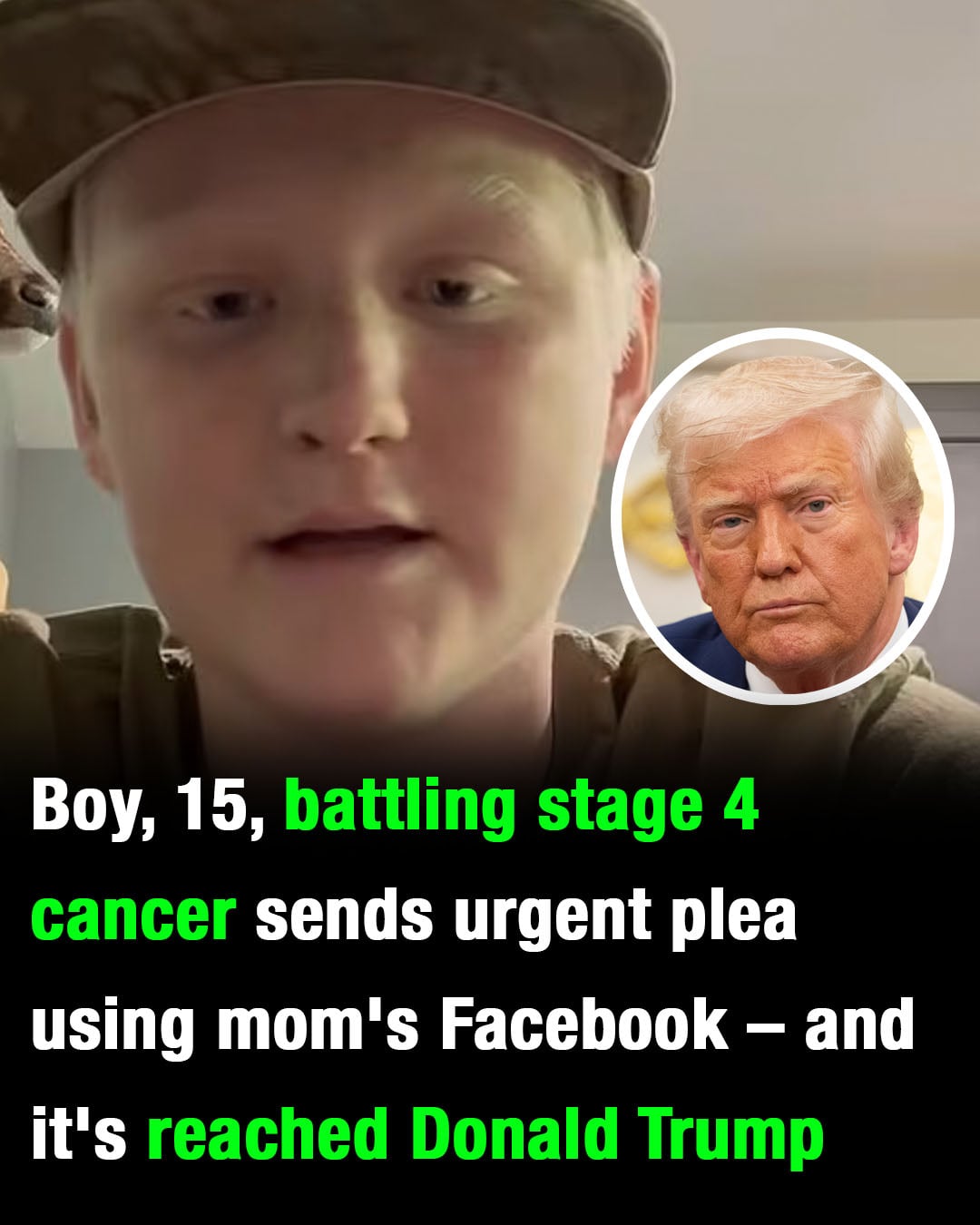
When fifteen-year-old Will Roberts pressed “post” on his mother’s Facebook account, it was not an act of impulse or attention-seeking.
It was a decision shaped by months of uncertainty, exhaustion, and the quiet understanding that time was no longer something his family could take for granted. After more than a year of aggressive treatment for stage 4 cancer, the options that once seemed possible had narrowed to a fragile few. Chemotherapy had taken its toll, and with each passing cycle, the results grew less promising. In that moment, alone with a phone and a fading sense of control, Will chose to speak not just to friends or family, but to anyone willing to listen.
His message was simple, direct, and impossible to ignore. He asked for help, not in abstract terms, but in the most tangible way possible. He asked people to share his story, to pass it along until it reached someone with the power to open doors that had remained closed. It was a request rooted in hope, but also in urgency. There was no guarantee anyone would respond. There was no certainty the video would travel beyond his immediate circle. But it did.
Within hours, the post began to spread. One share became dozens, then hundreds, then thousands. Strangers who had never met Will felt compelled to amplify his voice, turning a single message into a movement that crossed timelines, communities, and eventually, national attention. The digital momentum carried his plea far beyond what he or his family could have imagined. Millions of people watched, listened, and reacted, drawn not only by the gravity of his situation but by the sincerity of his words.
Among those who eventually saw the video were high-profile figures, including Donald Trump and Melania Trump, as well as policymakers and individuals with the influence to make things happen behind the scenes. The reach of the message transformed what had been a personal plea into something larger a call that resonated across different levels of society, from ordinary citizens to those in positions of authority.
What followed was a rapid shift from visibility to action. Conversations began. Calls were made. Networks that often operate quietly and out of public view were activated. For families facing serious illness, access to experimental treatments or specialized care can depend on a combination of timing, resources, and connections. In Will’s case, the sudden surge of attention created an opportunity that had previously seemed out of reach.
A place opened at a clinic in California offering access to DeltaRex-G, an experimental therapy that has been explored as a potential option for certain advanced cancers. For Will and his family, it represented something more than a medical intervention it represented a chance. Not a guarantee, not a cure, but a possibility where few had remained.
The timeline shifted from waiting to urgency. Arrangements had to be made quickly. Travel, logistics, and financial considerations all became immediate concerns. The cost of such treatment is significant, often placing it beyond the reach of most families without external support. Yet as Will’s story continued to circulate, something remarkable happened. People who had never met him, who knew him only through a short video and a shared sense of empathy, began to contribute.
Donations started to come in, small and large, each one representing a decision by someone to become part of his fight. Messages of support accompanied the contributions, creating a network of encouragement that extended far beyond financial assistance. It was a reminder of how collective action, even among strangers, can create tangible change in moments of crisis.
Throughout it all, Will remained grounded in a perspective that set him apart. While the focus of the story centered on his own struggle, he consistently spoke about others about children facing similar battles, about families navigating the same uncertainty. His words reflected an awareness that his situation, while deeply personal, was also part of a broader reality experienced by many.
He did not frame his plea as a singular case, but as an example of a system where access to life-saving or life-extending treatment can depend on visibility, resources, and chance. In doing so, he shifted the conversation from individual need to collective reflection. Why should families have to rely on viral moments to access care? Why should hope depend on whether a message reaches the right audience at the right time?
These questions linger beneath the surface of his story, adding depth to what might otherwise be seen as a straightforward narrative of help arriving in time. They highlight the gaps that exist within healthcare systems, particularly when it comes to advanced or experimental treatments. They also underscore the role that public attention can play in bridging those gaps, even if only temporarily.
For Will, however, the focus remains on the present. The opportunity to pursue treatment, to take another step forward, is something he approaches with a mix of realism and determination. He understands the challenges ahead, the uncertainties that come with any experimental therapy. Yet he continues to hold onto the possibility that this path could lead to more time time to experience life, to be with his family, to continue dreaming.
That sense of hope is perhaps the most powerful element of his story. It is not loud or dramatic, but steady and persistent. It exists alongside the reality of his condition, not in denial of it. It is expressed in the way he speaks about the future, not only for himself but for others who may one day face similar circumstances.
The impact of his message extends beyond the immediate outcome. It has brought attention to the experiences of families dealing with serious illness, to the challenges of accessing treatment, and to the ways in which communities can come together in response. It has shown how a single voice, amplified by many, can create opportunities that might otherwise remain out of reach.
In the end, Will’s decision to press “post” was an act of courage, but also of connection. It invited others into his story, allowing them to play a role in shaping what comes next. Whether through sharing, supporting, or simply paying attention, each person who engaged with his message became part of a larger narrative one defined not only by struggle, but by the possibility of change.
As he moves forward, that collective effort remains with him, a reminder that even in the most uncertain moments, there is strength in being seen and heard. And while the outcome of his journey is still unfolding, the impact of his voice has already reached far beyond what he could have imagined, leaving a mark that will continue long after the initial post fades from view.