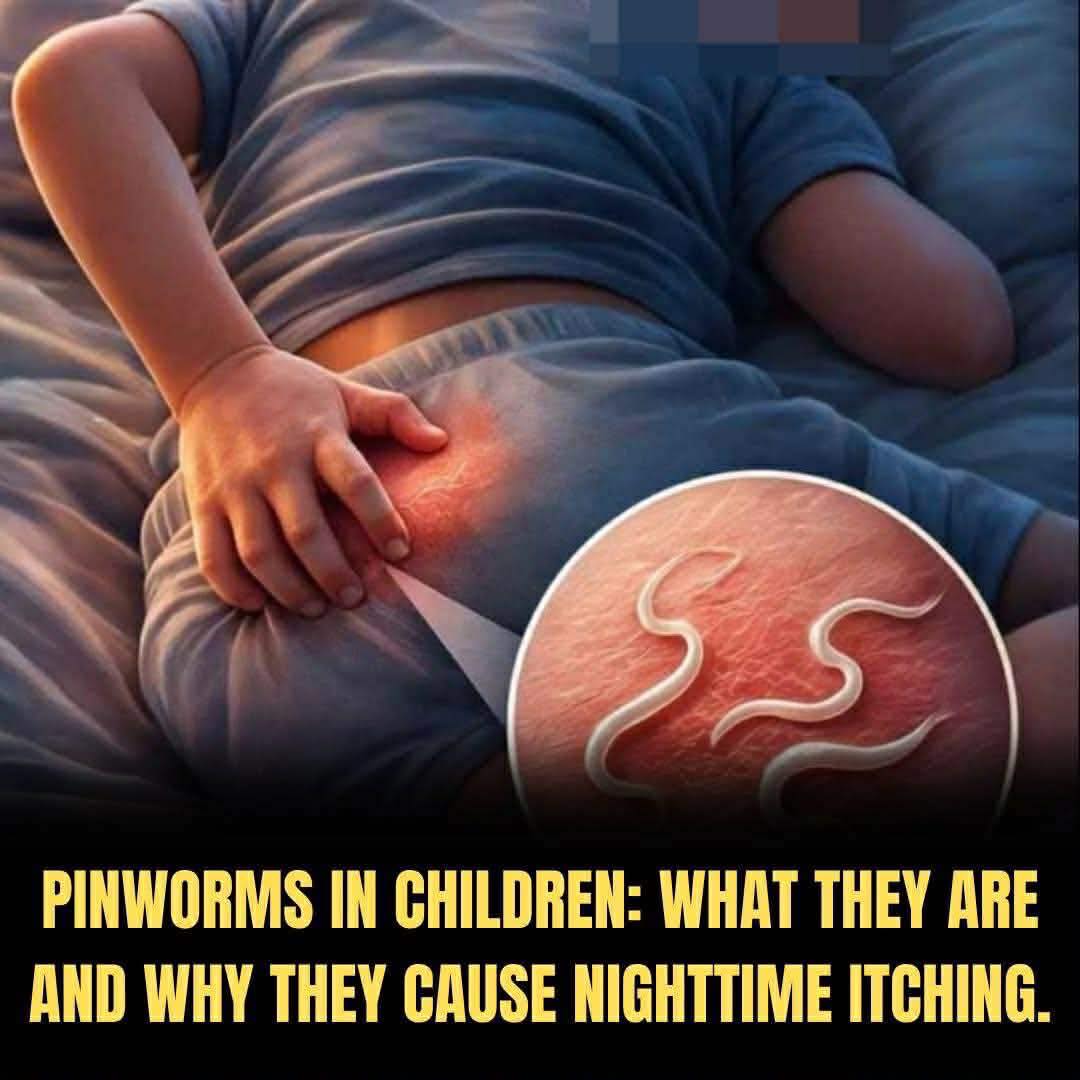
There are few things more unsettling than being jolted awake in the middle of the night by relentless itching, especially when it’s your child who can’t seem to find relief.
For many families, that moment quickly turns into concern, confusion, and a rush of questions. The discovery of tiny intestinal parasites may sound alarming, but the truth is far less dramatic than it feels in the moment. Infections caused by Enterobius vermicularis commonly known as pinworms are incredibly common, particularly among children, and they are both manageable and treatable.
Despite the discomfort they cause, pinworms are not a reflection of poor hygiene or neglect. They are simply part of the invisible ecosystem we all move through every day. From classrooms to playgrounds, shared surfaces to everyday objects, these microscopic eggs travel easily and quietly. Even the most careful households can encounter them. Understanding how they work, how they spread, and how to eliminate them is the key to regaining control and peace of mind.
Pinworms are small, white, thread-like parasites, usually no longer than a staple. They live in the large intestine and rectum, where they coexist with their host without causing serious internal damage. Unlike more aggressive parasites, they do not invade organs or deprive the body of nutrients. Their impact is far more irritating than dangerous. What makes them memorable is not what they do during the day, but what happens at night.
The hallmark symptom of a pinworm infection is intense itching around the anal area, and it almost always becomes worse after bedtime. This is not random. It is part of the parasite’s lifecycle. When the body is at rest, female pinworms migrate out of the intestine to the skin around the anus. There, they lay thousands of microscopic eggs, securing them with a sticky, glue-like substance. This combination of movement and secretion triggers the unmistakable itching sensation that wakes people from sleep.
That itch sets off a chain reaction. Scratching is almost impossible to resist, especially for children. When fingers come into contact with the eggs, they can easily become trapped under fingernails or transferred to bedding, clothing, and nearby surfaces. From there, the eggs can find their way back into the mouth either directly or indirectly starting the cycle all over again. This process, known as the fecal-oral route, is the primary way pinworms spread.
What makes these parasites particularly persistent is how resilient their eggs are. They can survive on surfaces for up to two or three weeks, lingering on items like towels, toys, doorknobs, and even dust particles in the air. Something as simple as shaking out a bedsheet can send them drifting into the environment, where they may be inhaled or swallowed without notice. This durability explains why infections can quickly move through entire households, even when only one person initially shows symptoms.
Not everyone with pinworms experiences noticeable signs. Some individuals carry a small number of worms without any symptoms at all. For others, the effects can be more disruptive. In addition to nighttime itching, children may become irritable, restless, or unusually tired due to disrupted sleep. In some cases, the worms may migrate to nearby areas, causing additional discomfort, particularly in girls. Occasionally, the tiny white worms can even be seen near the anal area a few hours after falling asleep, offering a clear visual confirmation of what is happening.
Diagnosing pinworms is straightforward but requires timing. Doctors often rely on a method known as the “tape test.” Early in the morning, before bathing or using the bathroom, a piece of transparent tape is pressed against the skin around the anus to collect any eggs deposited overnight. This sample can then be examined under a microscope. Repeating the test over several mornings increases the likelihood of detecting the infection accurately.
The good news is that treatment is simple and highly effective. Medications such as Mebendazole, Albendazole, or Pyrantel Pamoate are commonly used to eliminate adult worms. However, because these medications do not kill the eggs, a second dose is essential about two weeks after the first. This ensures that any newly hatched worms are also eradicated, preventing the cycle from continuing.
One of the most important steps in treatment is addressing the entire household. Even if only one person shows symptoms, others may carry the infection without realizing it. Treating everyone at the same time reduces the risk of reinfection and breaks the cycle more effectively. Without this approach, the infection can bounce back and forth between family members in what is often described as a “ping-pong” effect.
Medication alone, however, is not enough. Environmental control plays a crucial role in eliminating pinworms completely. Daily morning showers help wash away eggs deposited overnight, while frequent handwashing reduces the chance of transferring them. Bedding, towels, and clothing should be washed in hot water and dried on high heat to destroy any lingering eggs. Keeping fingernails short and clean minimizes hiding places, and regularly disinfecting commonly touched surfaces helps reduce contamination.
There are also persistent myths that deserve to be cleared up. Pinworms do not come from pets. Cats, dogs, and other animals can carry different types of worms, but they do not transmit pinworms to humans. Likewise, an infection is not a sign of a dirty home. The eggs are microscopic and nearly impossible to eliminate completely from shared environments. Their spread is a matter of exposure, not neglect.
Perhaps the most reassuring fact is that pinworms are considered a nuisance rather than a serious health threat. Complications are rare, and most cases resolve completely with proper treatment and hygiene measures. The greatest challenge is often the discomfort and disruption they cause, particularly when sleep is affected.
For many families, dealing with pinworms becomes an unexpected but manageable chapter. Understanding their lifecycle roughly two weeks for the worms and up to three weeks for the eggs provides a clear timeline for action. With consistent treatment, careful cleaning, and a bit of patience, the infection can be eliminated and normal routines restored.
While the experience may feel overwhelming in the moment, it is far from uncommon and entirely within your control. With the right steps, the “midnight itch” can quickly become a thing of the past, replaced once again by quiet, uninterrupted nights.