It often starts as something easy to dismiss. A child comes in from playing outside, cheeks flushed from the cold, boots damp from snow or wet ground, energy still buzzing from hours of fun.
But then comes the complaint at first casual, then more urgent. Her toes feel strange. Not just cold, but burning. Itchy. Uncomfortable in a way that doesn’t quite match what you’d expect from a normal winter chill.
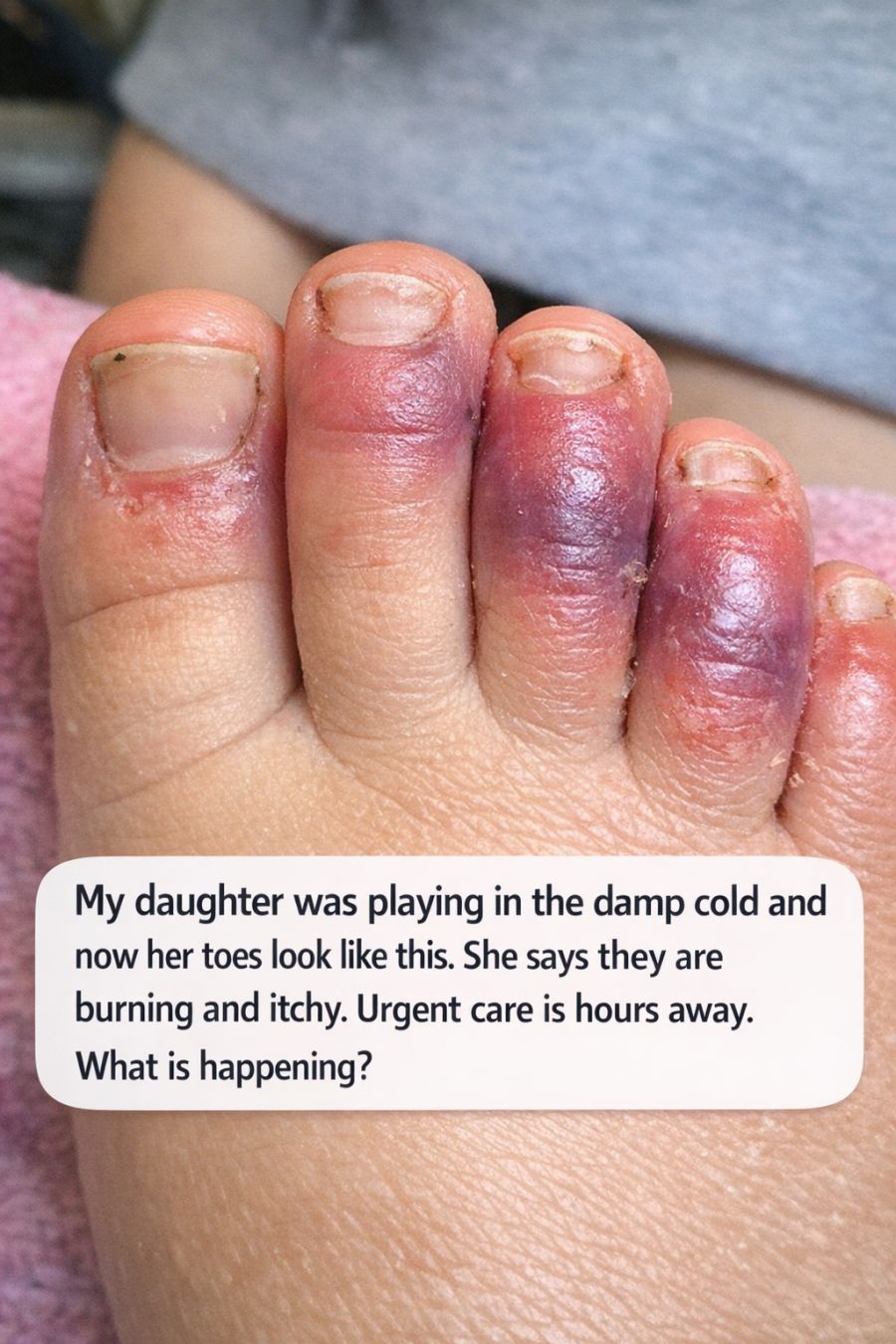
You take off her socks and look closer, and suddenly the worry sets in. The skin isn’t pale or numb the way frostbite is often imagined. Instead, it’s red, maybe slightly swollen, sometimes even a bit blotchy or purplish. The toes look irritated, almost inflamed. And she keeps insisting that they burn, that they itch, that something just doesn’t feel right.
In moments like this, the mind jumps quickly to worst-case scenarios. Frostbite is usually the first fear, especially when cold and skin changes appear together. But what you’re seeing is often something different, something less dangerous but still uncomfortable and important to understand. This condition is known as Chilblains, and it’s a reaction that can happen when skin is exposed to cold, damp conditions and then warms up too quickly.
Unlike frostbite, which involves actual freezing of tissue, chilblains are caused by how the body’s tiny blood vessels respond to cold. When the skin gets cold, those vessels tighten to conserve heat. But in some people, especially children, they don’t return to normal smoothly when warmth returns. Instead, they overreact. Blood rushes back too quickly, vessels expand unevenly, and inflammation follows. The result is exactly what you’re seeing redness, swelling, itching, and a burning sensation that can feel surprisingly intense.
What makes this confusing is how quickly it can appear. Sometimes it develops within hours of coming inside. A child who seemed completely fine outdoors may suddenly become uncomfortable once they’re warm again. The transition from cold to warm is often the trigger, especially if it happens too fast—like placing cold feet near a heater or soaking them in hot water.
Children and teenagers are particularly prone to this kind of reaction. Their circulation systems are still developing, and they often push through discomfort while playing, ignoring early signs of cold exposure. Wet socks, tight shoes, or long periods in damp conditions only increase the likelihood. By the time they come inside, the stage is already set for that overreaction in the skin.
The good news is that, while uncomfortable, chilblains are usually not dangerous and often resolve on their own with proper care. What matters most in the moment is how you respond. The instinct to warm the feet quickly using hot water, direct heat, or vigorous rubbing can actually make things worse. The skin is already irritated and sensitive, and sudden or intense heat can increase inflammation.
Instead, the goal is gentle, gradual warming. Dry the feet carefully if they’re damp, and wrap them in soft, warm socks or blankets. Let the body return to its normal temperature slowly, in a comfortably warm room. Avoid placing the feet directly against heaters or radiators, and skip hot baths or heating pads. Slow and steady is far more effective than fast and intense.
Keeping the area dry is also important. Moisture can prolong irritation and make symptoms feel worse. If your child has been playing in wet conditions, changing into clean, dry socks as soon as possible can help prevent further discomfort. Encouraging light movement like wiggling toes or walking gently can also support circulation without stressing the skin.
The itching can be one of the most frustrating parts, especially for a child. It’s important to discourage scratching, even though it’s tempting. Scratching can break the skin, increasing the risk of infection and making healing take longer. In some cases, soothing creams or mild over-the-counter treatments may help, but even simple measures like keeping the area clean and protected can go a long way.
As you monitor the situation, it’s important to watch for signs that suggest something more serious. While chilblains are generally harmless, certain changes shouldn’t be ignored. If the pain becomes severe, if blisters form, if the redness spreads significantly, or if you notice any signs of infection such as pus or increasing warmth in the area, those are signals that medical attention is needed. Fever or a general feeling of illness alongside the skin changes should also be taken seriously.
If you’re hours away from urgent care, staying observant and calm is your best approach. Take note of how the toes look and feel over time. If possible, document changes with photos so you can show a healthcare provider later. Most cases improve within a few days to a couple of weeks, especially when the skin is protected from further cold exposure.
Looking ahead, prevention becomes key. Proper winter gear makes a significant difference warm, well-fitting boots, thick socks that stay dry, and regular breaks from the cold can all reduce the risk. Teaching children to recognize early signs of discomfort and come inside before their feet become too cold can also help. It’s not always easy, especially when they’re having fun, but those small habits can prevent larger problems.
What feels alarming in the moment often becomes clearer with understanding. The redness, the burning, the itching it’s the body reacting, not breaking down. It’s a sign that circulation is struggling to adjust, not that the tissue is permanently damaged. With gentle care and attention, most children recover fully, and the skin returns to normal without lasting effects.
In the end, this experience is as much about awareness as it is about treatment. It’s a reminder that the body responds in complex ways to simple conditions like cold and warmth. And while those responses can look dramatic, they’re often manageable with patience, knowledge, and a steady approach.
Your child may have come in from the cold expecting nothing more than a warm break, but what you’re seeing now is your chance to step in, slow things down, and guide her back to comfort. With the right care, those irritated toes will heal, and the next outdoor adventure will come with a little more understanding and a little more protection.