Self-awareness is often described as a skill, but in reality it feels more like an ongoing negotiation with yourself. Some people seem naturally equipped to step back, examine their reactions, and understand the hidden motives behind their choices.
Others have to work at it, slowly peeling back layers of habit, emotion, and instinct to figure out what’s really going on inside. Either way, self-awareness shapes nearly everything: how we react under pressure, how we communicate with others, and how we interpret the world around us.
It also plays a quiet but powerful role in personal growth. The more aware you are of your own patterns, the easier it becomes to recognize what’s helping you and what’s holding you back. You begin to notice when you’re stuck in unhealthy cycles, when your assumptions are off, or when your emotions are steering you in ways you didn’t intend. That awareness creates space for change. It turns automatic reactions into conscious choices.
But self-reflection doesn’t always have to be serious or heavy. Sometimes, it can begin with something simple something visual, even playful. That’s where optical illusions come in. These fascinating images tap into the way your brain processes information, forcing it to make quick decisions about what it’s seeing. And those decisions, while not scientific diagnoses, can offer small glimpses into how you think, what you prioritize, and how you interpret ambiguity.
Each illusion presents a choice, often without you realizing it. What you notice first, what you focus on, and how you interpret the image can hint at underlying tendencies in your personality or mindset. Here are eight illusions that invite you to look a little closer not just at the image, but at yourself.
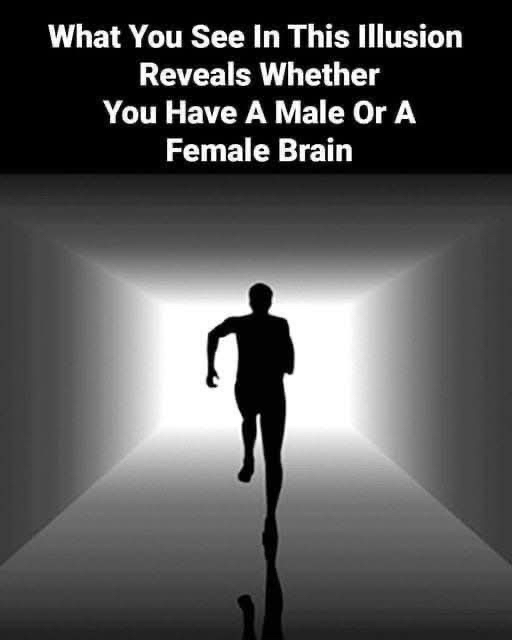
The first illusion is deceptively simple: a figure that appears to be either walking toward you or away from you. The image itself doesn’t change, yet your perception does. If you see the figure moving away, it may suggest a more reflective, analytical mindset. You tend to think things through, weighing possibilities before acting. If, instead, you see the figure approaching, it can point to a highly focused, detail-oriented personality, someone who engages directly and methodically with challenges. Neither perspective is better than the other it simply shows how the same information can be processed in different ways.
Another illusion hides both a cat and a mouse within the same image. Your eyes will likely lock onto one before the other. If you notice the cat first, it may indicate caution and strategic thinking. You prefer to assess situations carefully, ensuring stability before taking action. If the mouse stands out to you, it could reflect a more adventurous, instinct-driven approach. You may be more willing to take risks, trusting your gut rather than overanalyzing every possibility.
A third image offers a choice between seeing a pair of lips or a sunset. At first glance, it seems like a simple visual trick, but it can hint at how you view the world. Seeing lips first might suggest a more pragmatic, straightforward mindset. You value honesty and clarity, even if it means being critical at times. On the other hand, noticing the sunset may reflect optimism and emotional openness. You might naturally focus on beauty, possibility, and connection with others.
In another illusion, some people see clouds drifting across a landscape, while others immediately recognize the shape of a fish. Those who see clouds may be more adaptable, comfortable with change and uncertainty, willing to go where life takes them. Those who see the fish might place greater importance on connection and loyalty, forming strong bonds but sometimes finding it harder to let go, even when necessary.
One particularly clever illusion presents either a wine glass or two forks, depending on how you look at it. If your attention goes to the wine glass, it may suggest a goal-oriented mindset. You focus on the bigger picture, driven by ambition and clarity about what you want. If the forks stand out instead, it could indicate a more emotionally attuned personality, someone who prioritizes relationships and empathy, often putting others before themselves.
Another illusion doesn’t rely on a single object but rather on how you scan a busy scene. Do your eyes gravitate toward small, subtle details, or do you immediately focus on the larger, more obvious elements? Those who notice the finer details may lean toward introversion, preferring depth over noise and meaningful connections over large social settings. Those who focus on the broader scene might be more outgoing, energized by interaction and comfortable navigating dynamic environments.
One image goes deeper, asking whether you tend to focus on imperfections or the overall composition. If your attention is drawn to flaws, it may reflect a tendency toward self-criticism. You hold yourself to high standards, which can drive success but also create internal pressure. If you focus more on the whole image, it might suggest that you’re more critical of others, holding them to similarly high expectations. This isn’t inherently negative it simply highlights where your attention naturally goes.
The final illusion is more complex, often interpreted in different ways depending on what emotional elements you notice first. Some people see connection, closeness, or acts of care. Others notice distance or longing. These interpretations can hint at how you experience relationships and what you value most in them whether it’s affection, support, independence, or shared experience.
It’s important to remember that these illusions are not formal psychological tests. They don’t define who you are or provide definitive answers. Instead, they act as small mirrors, reflecting how your brain organizes and prioritizes information in the moment. Your mood, your past experiences, and even your current environment can influence what you see.
This idea connects closely to Cognitive psychology, which explores how perception, memory, and thought patterns shape our understanding of the world. According to this field, what we perceive is never purely objective. It is filtered through layers of experience and interpretation, meaning that two people can look at the same image and see entirely different things.
That’s what makes optical illusions so compelling. They remind us that perception is not fixed. It shifts, adapts, and sometimes deceives us. By paying attention to these shifts, we can learn a little more about how we think, what we prioritize, and how we respond to uncertainty.
In the end, self-awareness isn’t about reaching a final conclusion about who you are. It’s about staying curious. It’s about noticing patterns, questioning assumptions, and remaining open to change. Optical illusions offer a lighthearted way to begin that process, turning a simple visual experience into an opportunity for reflection.
Because sometimes, the way you see a picture says less about the image itself and more about the quiet, complex workings of your own mind.