What began as a polished evening of speeches, satire, and political theater at the White House Correspondents’ Dinner quickly unraveled into confusion and fear, leaving behind not only shaken guests but also a moment that would ignite intense debate across the internet.
Inside the grand ballroom of the Washington Hilton, where journalists, officials, and high-profile guests had gathered in formal attire, the atmosphere shifted in seconds from controlled elegance to raw survival.
Reports of gunfire sent a ripple of panic through the room. Conversations were cut short mid-sentence, glasses were abandoned on tables, and the carefully orchestrated rhythm of the evening collapsed into chaos. Secret Service agents moved swiftly, ushering President Donald Trump, First Lady Melania Trump, and other protected officials out of the ballroom. Guests dropped to the floor, crouched behind tables, or rushed toward exits, trying to make sense of what was happening around them.
Authorities later confirmed that the situation had been brought under control and that those under federal protection were unharmed. The suspect, identified as Cole Tomas Allen, was reportedly armed with multiple weapons, including a shotgun, a handgun, and knives. According to officials, he engaged in a confrontation with law enforcement before being subdued and taken into custody. The seriousness of the incident, combined with the high-profile nature of the event, ensured that the night would not be remembered for its speeches or jokes, but for the fear that overtook it.
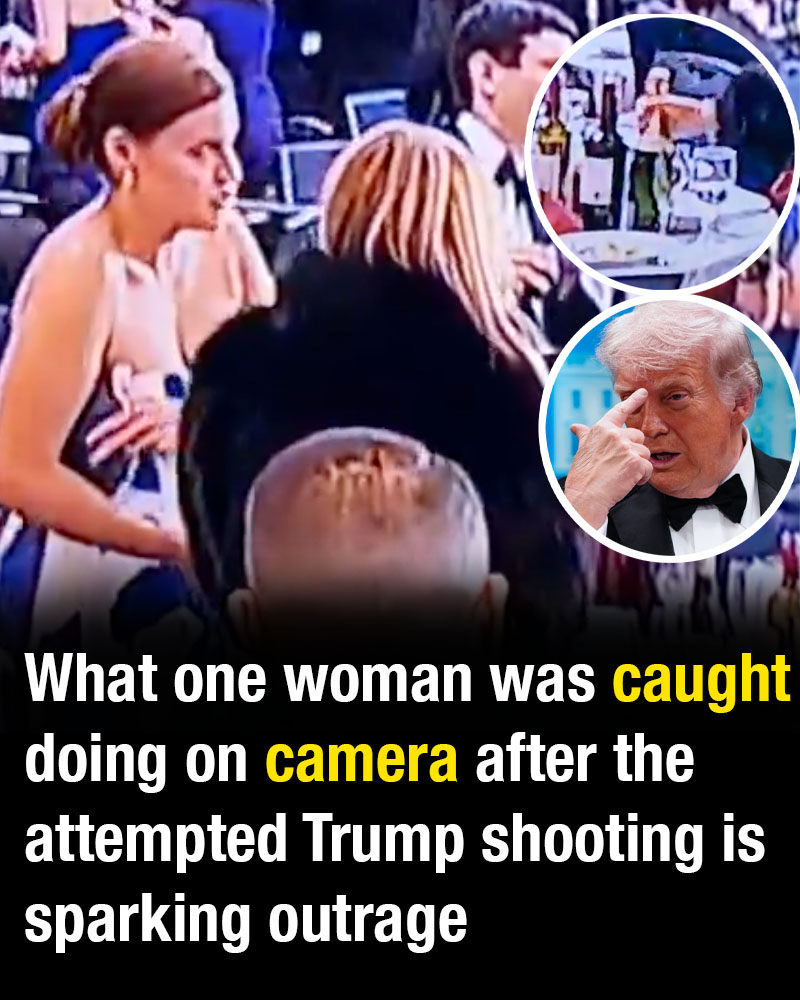
Yet amid the confusion, one unexpected detail began to circulate online, quickly becoming a focal point of public attention. As guests were evacuating the ballroom and the reality of the situation was still unfolding, footage captured a woman calmly approaching a table and gathering several bottles of wine. While others hurried away or stood in shock, she appeared composed, focused, and deliberate in her actions.
The clip spread rapidly across social media platforms, drawing millions of views within hours. For many viewers, the image felt jarring. Against a backdrop of fear and uncertainty, her behavior stood out in stark contrast. Critics were quick to condemn what they interpreted as inappropriate, even opportunistic conduct during a moment of crisis. Comments poured in, questioning her judgment and character, with some framing the act as emblematic of broader concerns about priorities and decorum.
To those observers, the symbolism of the moment mattered as much as the action itself. In a setting where people had just experienced a potentially life-threatening situation, the idea of someone focusing on collecting wine bottles felt, to them, disconnected from the gravity of the moment. The criticism was often sharp, reflecting not just disapproval of one individual, but a wider frustration with how people respond under pressure.
However, not everyone saw the situation in the same light. A significant number of voices emerged to defend the woman, offering alternative interpretations of what the footage showed. Some pointed out that the bottles had already been provided as part of the event, included in the cost of attendance, and effectively abandoned when the dinner was disrupted. From this perspective, her actions were not theft but simply taking items that had already been paid for and left behind.
Others suggested that the moment might reflect something more complex than it appeared at first glance. In high-stress situations, human behavior can become unpredictable. What looks like calm decision-making from the outside may, in reality, be a form of shock or a coping mechanism. The act of focusing on something tangible like gathering items from a table can sometimes provide a sense of control when everything else feels uncertain.
There was also speculation about context that the video could not capture. Without audio or a full view of the surroundings, viewers were left to fill in the gaps with their own assumptions. Was the danger already contained at that point? Did she believe it was safe? Was she reacting instinctively rather than thoughtfully? These unanswered questions added layers of ambiguity to a moment that many were quick to judge.
As more footage and accounts from the evening emerged, it became clear that the woman was not alone in leaving with bottles. Other attendees were also seen carrying items as they exited the ballroom. This detail complicated the narrative, suggesting that what initially appeared to be an isolated action might have been more widespread than first believed.
Still, the viral nature of the clip ensured that she became the central figure in the story. Online discussions often gravitate toward a single image or moment that can be easily shared, interpreted, and debated. In this case, her actions became a kind of symbol, reflecting broader conversations about human behavior, ethics, and perception during moments of crisis.
Meanwhile, the investigation into the shooting itself continued. Authorities confirmed that the suspect faced serious federal charges, including discharging a firearm during a violent act and assaulting a federal officer. Law enforcement officials emphasized the rapid response that prevented further harm, highlighting the role of trained personnel in containing a situation that could have escalated far beyond what occurred.
For those who were present that night, the experience left a lasting impression. What had been intended as an evening of tradition and political commentary instead became a reminder of how quickly normalcy can be disrupted. The sense of safety that accompanies such high-profile events was shaken, replaced by a heightened awareness of vulnerability.
In the aftermath, the viral clip of the woman collecting wine bottles became more than just a fleeting curiosity. It served as a lens through which people processed the event, projecting their own values, expectations, and interpretations onto a single moment. Some saw carelessness, others saw practicality, and still others saw a human reaction shaped by stress and uncertainty.
Ultimately, the incident underscores how, in the age of instant sharing and constant connectivity, even the smallest actions can take on outsized significance. A few seconds of footage, captured in the middle of a much larger and more serious event, can spark debates that extend far beyond the original context. And while the facts of the night continue to be examined and understood, the image of that moment unexpected, controversial, and endlessly discussed remains one of the most talked-about echoes of an evening that no one will soon forget.