What was meant to be one of the most polished and predictable evenings in American public life unraveled in a matter of seconds, leaving behind a lingering sense that something fundamental had shifted.
The White House Correspondents’ Dinner, long defined by satire, spectacle, and carefully managed tension between power and press, became the setting for something far more unsettling a moment where illusion gave way to raw vulnerability.
Inside the ballroom at the Washington Hilton, the atmosphere had been exactly what attendees expected. Conversations overlapped with polite laughter, cameras flashed as journalists and officials documented the evening, and the familiar rhythm of political humor filled the room. President Donald Trump and First Lady Melania Trump were seated among senior officials, lawmakers, and prominent media figures, all gathered for a night that traditionally blends criticism with celebration.
For a while, everything followed the script. Glasses clinked, speeches were anticipated, and the energy of the room carried that peculiar mix of rivalry and camaraderie that defines the event. It is one of the rare occasions where those who shape the narrative and those who live within it share the same space, if only briefly.
Then, without warning, the rhythm broke.
At first, the sound was almost dismissible something that could have been mistaken for a dropped tray or a piece of equipment falling in a service corridor. But within moments, confusion sharpened into alarm. The noise repeated, louder, more distinct, cutting through the room’s carefully maintained composure. Those closest to the exits reacted first, their body language shifting from curiosity to urgency.
What followed was not immediate chaos, but something more disorienting: a split-second hesitation where people tried to reconcile what they were hearing with where they were. This was a controlled environment, layered with security, rehearsed protocols, and the presence of some of the most protected individuals in the country. The idea that danger could breach that perimeter felt, at first, impossible.
Then the agents moved.
Secret Service personnel, trained for precisely this kind of moment, responded with speed that erased any doubt. Chairs scraped across the floor as people began to stand or duck. Conversations stopped mid-sentence. The President and First Lady were quickly surrounded and ushered away, their departure so rapid that many guests only realized what was happening after they had already disappeared from view.
In that instant, the tone of the evening shifted completely. What had been a stage-managed event became something unpredictable and deeply human. Guests dropped to the floor, some crawling under tables, others frozen in place, gripping their phones or reaching for companions. The room filled with overlapping instructions, urgent whispers, and the unmistakable sound of fear.
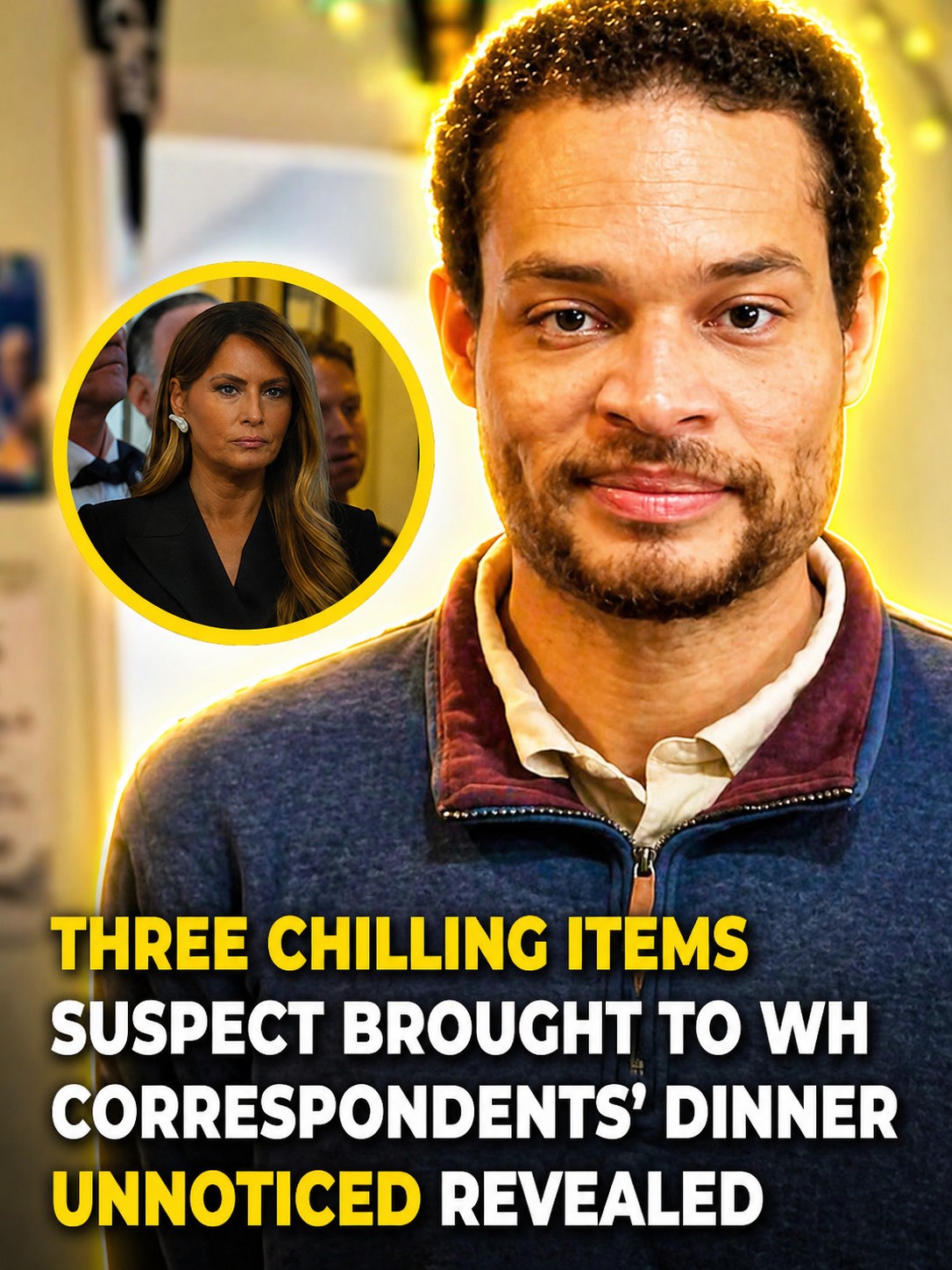
Outside the ballroom, the situation was already unfolding at a pace few inside could fully grasp. The individual later identified as Cole Tomas Allen had allegedly moved through the area with alarming intent, carrying weapons and advancing toward one of the most heavily guarded spaces in the city. Witnesses described a scene that felt both chaotic and surreal, as security forces closed in within seconds.
The response was swift. Law enforcement and Secret Service agents intercepted and subdued the suspect before he could reach the ballroom itself. In the process, at least one agent was struck, his protective gear likely preventing what could have been a far more tragic outcome. Within minutes, the immediate threat was contained, but the psychological impact had already spread.
Back inside, time seemed to stretch. Guests remained in place, unsure whether the danger had fully passed. Some sent hurried messages to family members, trying to explain a situation they barely understood themselves. Others sat in silence, processing how quickly the night had transformed.
Eventually, word began to circulate that the suspect was in custody and that those under protection were safe. Slowly, cautiously, people began to rise. The room, once filled with energy and performance, now felt subdued, almost fragile. Half-finished drinks sat untouched on tables. Programs lay scattered on the floor. The remnants of the evening told a story of interruption rather than conclusion.
In the hours that followed, attention shifted from immediate survival to a deeper, more unsettling question: how had this happened at all?
Early reports about the suspect only added to the unease. Rather than fitting a widely expected profile, he appeared to have lived a life that, from the outside, seemed stable and even successful. Described as a tutor, a graduate of a prestigious institution, and someone with no significant criminal record, he represented a type of unpredictability that is difficult to anticipate and even harder to prevent.
Investigators began the painstaking process of reconstructing his actions, examining digital footprints, personal history, and any possible motives that could explain the sudden shift from ordinary life to violent intent. Yet as those efforts continued, the absence of immediate answers only deepened the sense of vulnerability felt by those who had been present.
For President Trump, the aftermath became both a moment of reassurance and defiance. He publicly praised the speed and effectiveness of law enforcement, emphasizing that the situation had been contained before it could escalate further. At the same time, he made it clear that such incidents would not be allowed to dictate the rhythm of public life, signaling an intention to continue forward despite the disruption.
But for many attendees, the experience lingered in a different way.
The White House Correspondents’ Dinner has always existed as a kind of performance a carefully balanced exchange where criticism is softened by humor and power is momentarily humanized. That balance depends on a shared understanding that, beneath the tension, there is safety. That night fractured that understanding.
In the days that followed, conversations about the event extended far beyond the immediate details. People spoke not only about what had happened, but about what it revealed. The presence of heavy security had always been a reassurance; now, it also served as a reminder of how close danger can come, even in the most controlled environments.
The image of agents rushing toward the sound of gunfire, rather than away from it, became one of the defining memories of the night. It underscored a reality that often exists just beneath the surface of public life: that safety is not a permanent state, but a constant effort.
As investigations continue and more information emerges, the event will likely be analyzed through many different lenses security, psychology, politics. Yet for those who were there, the most lasting impact may be far simpler.
It was the moment when a room full of powerful voices fell silent. When carefully prepared remarks were replaced by instinct. When the distance between spectacle and reality collapsed without warning.
And long after the headlines fade, that feeling the sudden, unmistakable shift from normalcy to uncertainty will remain.