What was supposed to be one of the most polished and predictable nights in Washington’s social and political calendar turned, in a matter of seconds, into something no one in that ballroom will ever forget.
The White House Correspondents’ Dinner, an event built on tradition, carefully scripted humor, and the rare blending of media and power, became the setting for sudden chaos when gunfire shattered the illusion of safety.
As details continue to emerge, authorities have identified the suspect at the center of the incident as 31-year-old Cole Allen of Torrance, California. His name, now circulating across headlines, has only deepened the sense of disbelief surrounding what unfolded that night. For many, the shock lies not just in the act itself, but in the contrast between the man described in early reports and the violence he is accused of bringing into one of the most secure environments in the country.
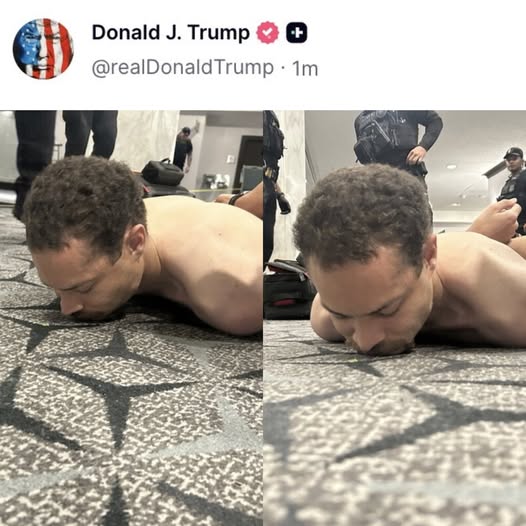
According to law enforcement sources, Allen was taken into custody shortly after the incident, following a rapid response from security personnel on site. The speed of that response is widely believed to have prevented an even more devastating outcome. Still, the presence of gunfire inside or near a venue filled with the president, cabinet members, and prominent journalists has raised immediate and serious questions about security vulnerabilities.
Inside the Washington Hilton ballroom, the evening had been unfolding as expected. Guests were seated, conversations flowed between courses, and the atmosphere carried the familiar mix of formal elegance and underlying tension that defines the event. It was a setting designed to feel controlled, even predictable. That sense of order collapsed the moment the first shots rang out.
Witnesses described a rapid shift from confusion to fear. At first, some guests struggled to understand what they were hearing. In a room filled with noise, the sounds did not immediately register as gunfire. But as the reality became clear, instinct took over. People ducked under tables, chairs were pushed aside, and the calm rhythm of the evening dissolved into urgency.
Security forces moved instantly. Secret Service agents, trained for precisely this kind of moment, acted with speed and coordination. Their priority was clear: secure the president and other high-level officials while neutralizing any potential threat. President Donald Trump, along with members of his administration, was swiftly evacuated from the room, surrounded by agents who created a moving shield through the chaos.
Video footage from inside the ballroom captured fragments of that moment guests crouched low, security personnel issuing commands, and the unmistakable tension of a situation no one had expected to face. What had begun as a ceremonial gathering transformed into a scene defined by uncertainty and survival.
Outside the immediate center of the event, Allen was apprehended. Authorities have not yet released full details about how he managed to access the area or what specifically led to the confrontation. Investigators are now working to reconstruct the sequence of events, examining every detail from entry points to security procedures.
What has emerged so far about Allen’s background has only added to the complexity of the story. Reports indicate that he had been recognized professionally, even earning the title of Teacher of the Month in December 2024. For many, this detail stands in stark contrast to the actions he is now accused of, creating a narrative that is difficult to reconcile.
Neighbors and acquaintances are being questioned, and investigators are combing through his digital footprint, searching for clues that might explain his motives. At this stage, authorities have not confirmed a clear reason behind the attack. The absence of an immediate explanation has left space for speculation, but officials continue to emphasize that the investigation is ongoing and that conclusions will be based on verified evidence.
The broader implications of the incident are already being felt. The White House Correspondents’ Dinner has long been viewed as a symbol of a functioning democratic culture a place where political leaders and journalists share a space, even if briefly, under a shared set of expectations. That image has now been disrupted, replaced by a reminder of how quickly even the most controlled environments can become vulnerable.
Security experts are likely to scrutinize every aspect of the event in the coming days. Questions about access, screening procedures, and coordination between agencies will shape the response moving forward. While no system can guarantee absolute safety, the expectation surrounding events of this magnitude is that risks are minimized to the greatest extent possible. This incident challenges that assumption.
For those who were present, however, the analysis comes second to the experience itself. The memory of those moments the sound of shots, the rush to find cover, the sight of security forces moving with urgency will linger long after official reports are completed. What was intended to be a night of speeches and symbolism became something far more personal.
The event was ultimately brought to an abrupt end, its purpose overshadowed entirely by what had taken place. Guests departed under heightened security, the usual closing moments replaced by a quiet, unsettled exit. Conversations that might have centered on politics or media instead turned to what they had just witnessed.
As the investigation continues, attention remains focused on understanding not just who Allen is, but how such an incident was able to occur. Each new detail adds to a story that is still unfolding, one that sits at the intersection of individual actions and systemic questions.
In the end, the night will not be remembered for its intended purpose. It will be remembered for the moment everything shifted for the instant when a room full of influence and ceremony was forced to confront something far more immediate. And at the center of it all is a name that, until now, meant little to anyone in that room, but has since become impossible to ignore.