
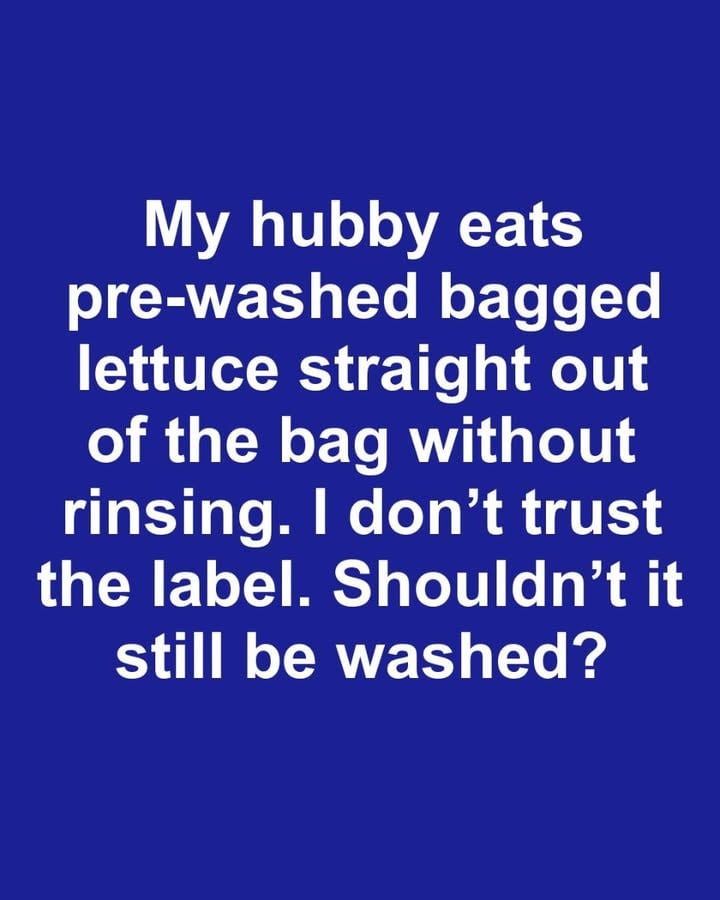
It’s one of those small, everyday decisions that most people never think twice about. You grab a bag of pre-washed lettuce from the store, open it at home, and toss it straight into your salad bowl.
After all, the label clearly says “triple washed” or “ready to eat.” It feels convenient, safe, and efficient exactly what modern food processing promises. But every now and then, a quiet question creeps in: should you really trust it as it is, or is there more to the story?
Pre-washed lettuce goes through a surprisingly complex journey before it ever reaches your kitchen. Inside large processing facilities, the leaves are not simply rinsed once and packaged. Instead, they are washed multiple times in carefully controlled conditions. The water used is monitored, filtered, and often treated with mild sanitizing agents designed to reduce bacteria and remove dirt. These aren’t random or casual processes they are part of strict food safety systems meant to meet regulatory standards and protect consumers.
Temperature control plays a major role as well. From the moment lettuce is harvested, it is kept cold to slow down bacterial growth. During processing, it moves through a sequence of washes, drains, and packaging systems that aim to preserve freshness while minimizing contamination. Workers follow hygiene protocols, equipment is sanitized regularly, and batches are tested to detect potential risks. In many ways, the lettuce you buy has been handled far more carefully than anything you could realistically replicate at home.
This is why labels like “ready to eat” exist. They are not just marketing phrases they reflect the intention that the product is safe to consume straight from the package. For many people, that reassurance is enough. It fits into a busy lifestyle where convenience matters, and it eliminates an extra step that might feel unnecessary.
However, the story doesn’t end there. While these systems are advanced, they are not perfect. Leafy greens have, on occasion, been linked to foodborne illness outbreaks. These incidents are rare compared to the volume of lettuce consumed every day, but they are enough to remind people that no process can guarantee absolute safety. Contamination can occur at different stages, sometimes even before the lettuce reaches the processing plant.
This uncertainty is what leads some people to take an extra step. Even when a product is labeled as pre-washed, they feel more comfortable rinsing it again at home. It’s not always about distrust in the system it’s often about personal peace of mind. For certain individuals, such as those with weakened immune systems or specific health concerns, that extra rinse can feel like a simple precaution worth taking.
But here’s where things become a bit more nuanced. Washing pre-washed lettuce at home does not always make it safer. In fact, if not done carefully, it can introduce new risks. Your kitchen environment is not sterile. A sink that hasn’t been properly cleaned, hands that carry unseen bacteria, or even nearby surfaces can all become sources of contamination. What started as an attempt to “clean” the lettuce can unintentionally expose it to new elements that weren’t present before.
If someone does choose to rinse their lettuce, the method matters. Cold running water is the safest approach. There is no need for soap, vinegar, or special cleaning solutions, which can leave residues or damage the leaves. Clean hands and a clean sink are essential, and the lettuce should be handled gently to avoid bruising. Even then, it’s important to understand that rinsing does not eliminate all potential risks it simply reduces certain surface contaminants.
This balance between trust and caution is what makes the question so interesting. On one hand, food processing systems are designed with safety in mind, and for most people, following the label instructions is entirely reasonable. On the other hand, personal comfort and individual circumstances can influence how someone chooses to handle their food.
There’s also a psychological aspect to consider. Food is deeply connected to our sense of control and well-being. Taking an extra step, even if it’s not strictly necessary, can provide reassurance. It creates a feeling that you are actively protecting yourself and your family. For some, that feeling is just as important as the actual level of risk involved.
At the same time, it’s worth recognizing how much trust we place in modern food systems every day. From packaged goods to fresh produce, much of what we consume has been handled, processed, and transported by people we will never meet. Pre-washed lettuce is just one example of how convenience and technology have reshaped our relationship with food. It saves time, reduces effort, and fits seamlessly into fast-paced routines but it also requires a certain level of confidence in processes we don’t directly see.
In the end, there isn’t a single answer that applies to everyone. For many people, eating pre-washed lettuce straight from the bag is perfectly fine and aligns with how the product is intended to be used. For others, an extra rinse provides comfort, even if it doesn’t dramatically change the level of safety. What matters most is understanding both sides the science behind the processing and the practical realities of handling food at home.
What this simple question really reveals is how even the smallest choices can carry layers of meaning. A bag of lettuce might seem insignificant, but it sits at the intersection of trust, habit, health, and personal preference. Whether you open it and use it immediately or take a moment to rinse it again, the decision reflects more than just a routine it reflects how you navigate risk, convenience, and peace of mind in everyday life.
And perhaps that’s why this topic continues to spark curiosity. It’s not just about lettuce. It’s about how we make choices in a world where convenience is everywhere, but certainty is never absolute.