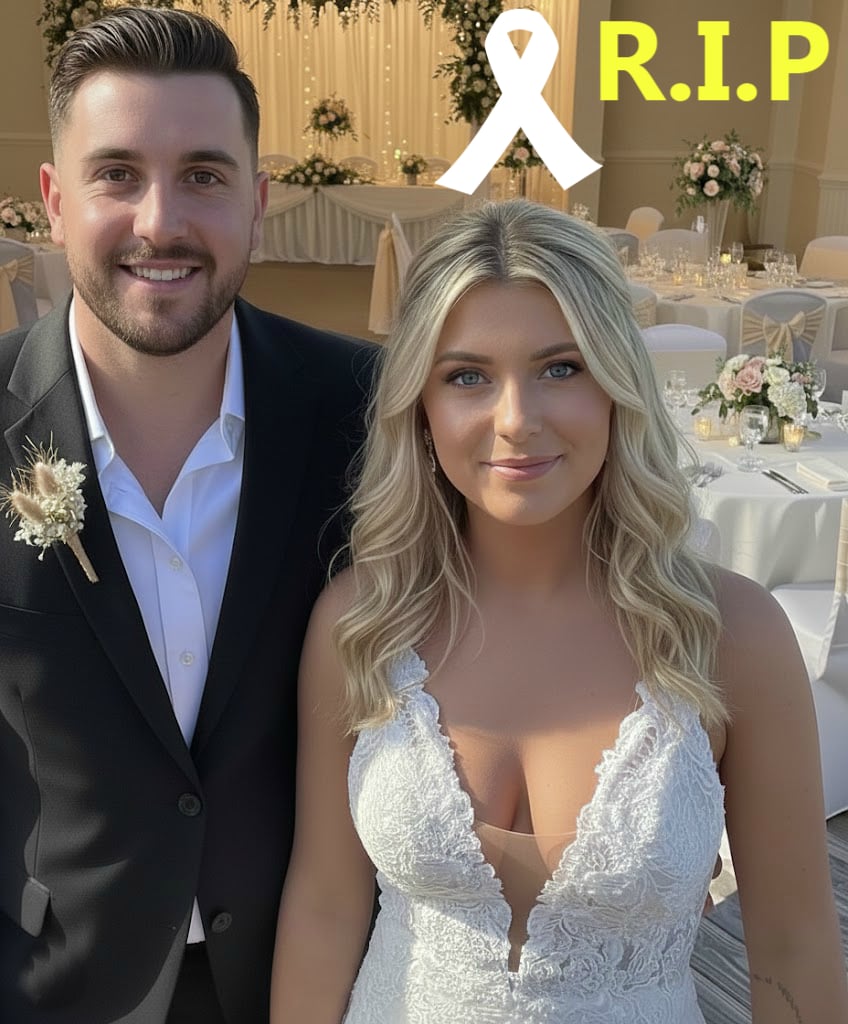
They had spent months planning every detail, from the flowers to the music, believing this day would mark the beginning of a long, shared future. The invitations had been mailed.
The dress had been fitted. The caterers had been confirmed. Everything was perfect. Or as close to perfect as a wedding day can be. There were the usual last minute nerves, a few logistical headaches, but nothing that could not be solved with a deep breath and a patient smile. The bride was radiant. The groom was beaming. The guests were settling into their seats, ready to witness a celebration of love.
Instead, her husband found himself kneeling beside her, begging her to wake up as guests froze in shock. The music stopped. The laughter died. The air itself seemed to hold its breath. No one knew what to do. Some people rushed forward. Others stepped back. A few covered their children’s eyes. The venue staff called emergency services. Relatives prayed aloud. Someone clutched her bouquet, refusing to let it drop to the floor. The flowers, once a symbol of joy, became a weight too heavy to hold.
When doctors finally confirmed she was gone, the room fell into a silence no song could ever fill. Not the hymn she had chosen. Not the first dance they would never share. Not the lullabies she would never sing to children who would never be born. Just silence. Broken only by sobs and the distant wail of sirens that had arrived too late. The wedding that was supposed to unite two families ended with them holding each other, trying to survive the kind of loss no one imagines when they say forever.
In the days that followed, the wedding photos became unbearable to look at. Her radiant smile, captured in hundreds of images, now a painful reminder of everything that would never be. The cake, half eaten, sat in a refrigerator somewhere. The champagne, uncorked but untouched, was poured down a sink. The gifts, wrapped in bright paper, remained unopened. No one had the heart to return them. No one had the strength to open them.
Friends filled social media with tributes, sharing stories of her kindness, her humor, her fierce loyalty. Investigators searched for answers, conducting tests, reviewing medical records, interviewing witnesses. They would eventually release a report. A cause. An explanation. But no explanation could fill the void. No report could bring her back. The groom, now a widower before he had ever been a husband, sat alone in an apartment filled with wedding gifts and the ghost of a future that would never arrive.
The venue, which had hosted countless celebrations, now held a different kind of memory. The staff spoke in hushed tones. The manager offered refunds and apologies. But no one blamed them. No one blamed anyone. There was no villain in this story. Just tragedy. Random. Cruel. Senseless. A heart that stopped. A brain that bled. A body that gave out at the worst possible moment. The doctors used clinical terms. The family used tears.
In the weeks that followed, the groom returned to the spot where they had planned to exchange vows. The chairs were gone. The flowers were gone. The archway, stripped of its decorations, stood naked against the sky. He stood there for a long time, not praying, not crying, just standing. Trying to feel her presence in a place that now felt empty. He could not. The silence was too loud. The absence was too complete.
Her mother, who had helped her choose the dress, could not bring herself to enter that room again. The dress hung in a closet, still in its garment bag, waiting for a body that would never fill it. Friends offered to take it away, to donate it, to burn it, to do anything to ease the pain. The mother said no. She was not ready. She might never be ready.
The story spread, as such stories do. News outlets picked it up. Social media users shared it. Strangers sent condolences. GoFundMe pages were created. People who had never met the couple wept for them. The tragedy became a symbol of life’s fragility. A reminder that nothing is guaranteed. That the future is not promised. That the only certainty is uncertainty. But for those who loved her, it was not a symbol. It was a hole. A hole in the shape of a woman who should be alive, planning a honeymoon, changing her name, starting a family. A hole that would never fully close.
The groom eventually went back to work. Back to routines. Back to a life that looked familiar but felt foreign. He did not know how to be a widower. He had never planned for this. No one does. He moved through days mechanically, eating when reminded, sleeping when exhausted, answering questions with one word answers. His friends watched him with concern, not knowing how to help, afraid to say the wrong thing. So they said nothing. And the silence grew.
The bride’s name is spoken less often now. Time does not heal. It just distances. The sharp pain becomes a dull ache. The tears come less frequently. But they still come. On anniversaries. On holidays. On random Tuesdays when a song plays or a scent drifts through the air. Grief is not linear. It does not follow a schedule. It arrives without warning and stays as long as it wants.
The wedding day that was supposed to be the happiest of her life became her last. There is no fairness in that. No lesson. No silver lining. Just loss. Heavy and permanent. The family will never be the same. The friends will never be the same. The groom will never be the same. They will carry this with them forever. Because forever is not just a word they said at a ceremony that never finished. It is a sentence they are now serving. One day at a time. Without her. And with the memory of a day that began with so much hope and ended with none. That is the tragedy. That is the truth. That is all there is.