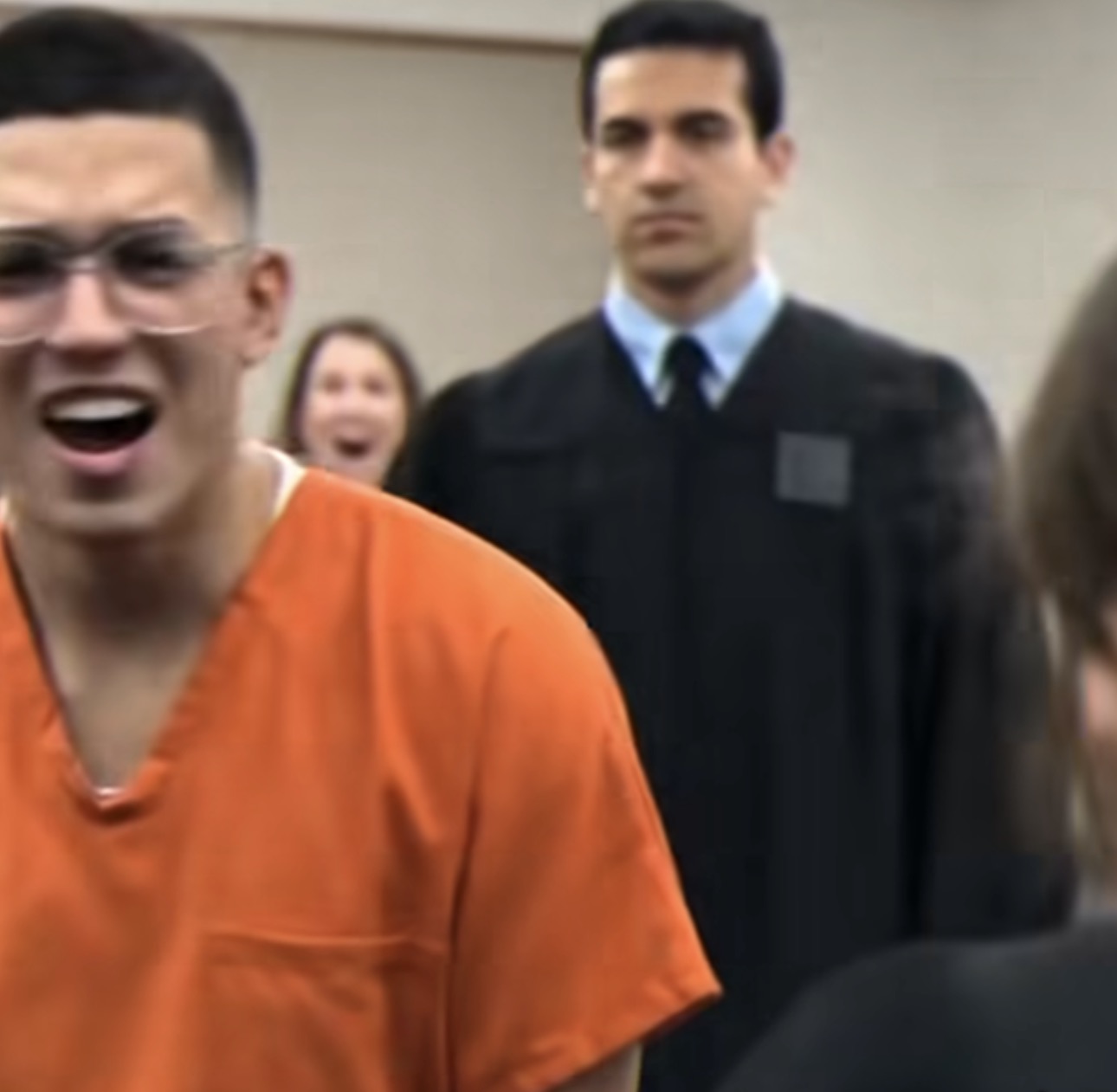
The sentencing of Nikolas Cruz became one of the most closely watched and emotionally intense legal proceedings in recent American history.
Years after the tragic events at Marjory Stoneman Douglas High School in Parkland Florida, the courtroom once again became the center of national attention as the justice system reached its final decision on how Cruz would spend the rest of his life.
The events of February 14, 2018, left a lasting impact not only on the local community but across the entire country. The scale of the tragedy reshaped conversations around safety, responsibility, and the role of institutions in preventing such incidents. In the years that followed, survivors, families, and advocates carried the weight of that day into public discourse, ensuring that it would not be forgotten.
When Cruz entered a guilty plea in October 2021, admitting to multiple counts related to the incident, the focus of the legal process shifted. The question was no longer about guilt, but about punishment. The court now had to determine whether he would receive the most severe penalty available under the law or spend the rest of his life in prison without the possibility of release.
The sentencing phase began in 2022 and extended over several months. It became a platform for a wide range of voices, each contributing to the broader picture the jury was tasked with understanding. Survivors recounted their experiences, offering firsthand perspectives on how the events had affected their lives. Family members spoke about the enduring absence left behind, describing the emotional toll that continued long after the incident.
Prosecutors built their case around the argument that the actions were deliberate and carefully planned. They presented evidence intended to show preparation and intent, emphasizing the seriousness of the situation and the impact on those affected. Their position was clear: the severity of the actions justified the harshest possible sentence.
On the other side, the defense presented a different narrative. They focused on Cruz’s background, highlighting a history marked by instability and challenges. According to their argument, factors such as mental health conditions and early life experiences played a role in shaping his behavior. They urged the jury to consider these elements as mitigating circumstances, suggesting that they should influence the final decision.
This contrast between the two sides reflected a broader tension within the justice system. On one hand, there was a strong call for accountability and consequences that matched the scale of the harm. On the other, there was an emphasis on understanding the complexities of human behavior and the factors that can contribute to it.
When the jury delivered its recommendation on October 13, 2022, it brought an end to months of testimony and deliberation. The decision was that Cruz would receive a life sentence without the possibility of parole rather than the death penalty. Under Florida law, such a penalty requires a unanimous decision from the jury, and in this case, that threshold was not met.
The announcement of the sentence marked a moment of intense emotion in the courtroom. Reactions varied widely, reflecting the deep divisions in how people viewed the outcome. For many family members, the decision was difficult to accept. They expressed frustration and disappointment, feeling that the punishment did not fully reflect the gravity of what had occurred. Their statements conveyed the depth of their loss and the ongoing impact on their lives.
At the same time, others supported the outcome, pointing to the legal standards that govern such decisions. They argued that the process must take into account all relevant factors, including those presented by the defense. From this perspective, the result was seen as consistent with the principles of the legal system, even if it did not satisfy everyone involved.
Legal experts noted that the case highlighted the complexity of sentencing decisions, particularly in situations involving significant mitigating evidence. They pointed out that such cases often involve difficult judgments about how to balance competing considerations, including the nature of the actions and the circumstances surrounding them.
Beyond the courtroom, the case continued to influence national conversations. It became a focal point for debates about the role of punishment, the effectiveness of the justice system, and the broader societal issues connected to such incidents. Discussions about mental health, prevention, and public safety were reignited, reflecting the far-reaching impact of the case.
The events in Parkland also gave rise to a wave of activism, particularly among young people. Survivors and students became prominent voices in advocating for change, using their experiences to push for new policies and greater awareness. Movements that emerged in the aftermath sought to address the conditions that can lead to such tragedies, emphasizing the importance of action at multiple levels.
Today, Nikolas Cruz is serving his sentence in a Florida state prison, where he will remain for the rest of his life. While the legal process has concluded, the broader implications of the case continue to resonate. It remains a reference point in discussions about justice, responsibility, and the challenges of addressing complex social issues.
The story is not only about the events that took place, but also about the questions they raise. How should society respond to actions of such magnitude? What role should personal history play in determining consequences? And how can future incidents be prevented?
These are questions that do not have simple answers. They require ongoing reflection and dialogue, involving individuals, communities, and institutions. The case of Nikolas Cruz serves as a reminder of the importance of these conversations and the need to approach them with both seriousness and care.
In the end, the courtroom moment that captured so much attention represents more than a single decision. It reflects the broader process of seeking justice in the face of profound loss, a process that is often complex, imperfect, and deeply human.