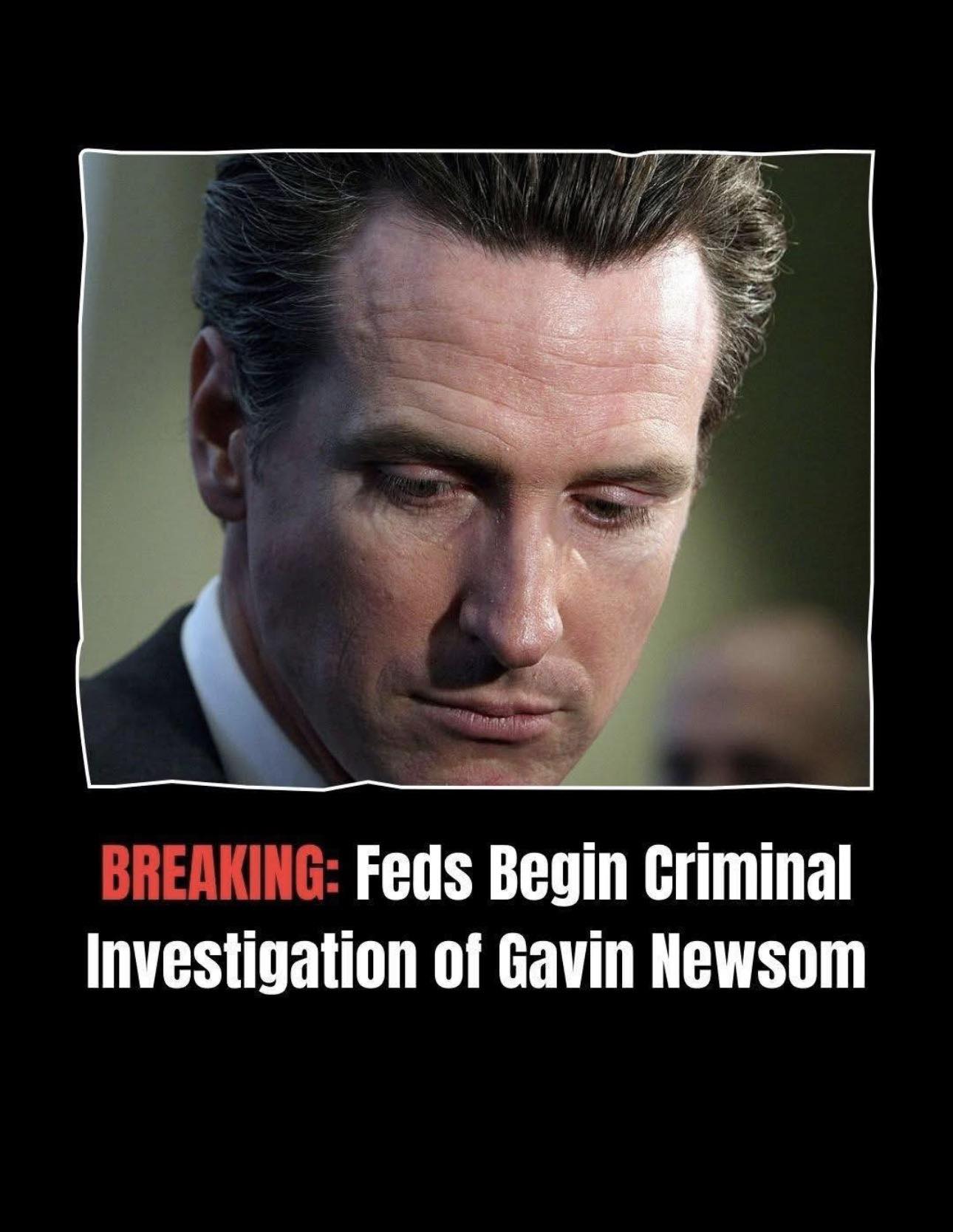
A dramatic escalation in tensions between Washington and California has unfolded after Donald Trump publicly declared that a federal fraud investigation into the state is underway, placing Gavin Newsom at the center of a growing national controversy.
The announcement has quickly transformed what might have been a technical review of public spending into a high-stakes political confrontation with far-reaching implications.
The situation began when Trump, referencing ongoing concerns about misuse of public funds, claimed that California could be facing fraud issues on a scale even greater than those reported elsewhere. His remarks framed the matter not as a routine audit or administrative process, but as something far more serious—a systemic failure that, in his view, demanded federal intervention and accountability.
This declaration did not emerge in isolation. It followed broader scrutiny of government-funded programs across multiple states, particularly those tied to childcare and social services. Federal officials raised concerns about potential misuse of funds, prompting actions that included freezing portions of federal support and implementing stricter oversight measures.
In California, these developments have intensified an already complex debate. Federal letters sent to state officials pointed to what they described as the “potential for extensive and systemic fraud” in programs funded with federal dollars, though critics have noted that specific evidence was not immediately detailed. This lack of clarity has fueled disagreement over whether the investigation is driven primarily by policy concerns or political motivations.
Governor Newsom has responded forcefully, rejecting the accusations and characterizing them as exaggerated or politically charged. At the same time, he has acknowledged that fraud can exist within large systems and has expressed willingness to cooperate with legitimate investigations. His position reflects a dual approach: defending the state’s record while also emphasizing the importance of accountability where wrongdoing is found.
Behind the public statements lies a series of concrete actions that have reshaped the landscape. Federal childcare funding to several states, including California, was temporarily frozen as part of a broader effort to review how funds are being used. New verification requirements have been introduced, with an emphasis on documentation such as receipts and proof of services. These changes signal a shift toward tighter control over how public money is distributed and monitored.
The controversy has also been amplified by widely circulated images and reports suggesting that some facilities receiving funding may not be operating as expected. These accounts, whether fully representative or not, have become a focal point in public discourse, shaping perceptions and intensifying calls for investigation.
Supporters of the federal actions argue that they are necessary to protect taxpayer dollars and ensure that assistance programs serve their intended purpose. They view the investigation as part of a broader effort to address waste, fraud, and abuse in government spending, emphasizing that such oversight is essential regardless of political considerations.
Critics, however, see the situation differently. They argue that the timing and framing of the investigation suggest a political dimension, particularly given the focus on states led by opposing parties. Some have raised concerns that withholding funds before establishing clear evidence of wrongdoing could harm families who rely on these programs, turning a policy dispute into a real-world crisis for vulnerable communities.
The clash has extended beyond policy into rhetoric, with both sides using strong language to describe the situation. Trump’s characterization of California as deeply corrupt contrasts sharply with Newsom’s dismissal of the claims as unfounded. This exchange reflects a broader pattern in national politics, where disagreements over policy often become intertwined with personal and ideological conflict.
At the heart of the issue is a fundamental question about governance and trust. Federal programs rely on cooperation between national and state authorities, and disputes of this magnitude can strain those relationships. When accusations of fraud are introduced into the equation, the stakes become even higher, as they touch on issues of integrity, competence, and public confidence.
The investigation, regardless of its eventual findings, is already influencing the national conversation. It has brought renewed attention to how social programs are managed, how funds are tracked, and how accountability is enforced. It has also highlighted the challenges of balancing oversight with accessibility, ensuring that safeguards do not become barriers for those in need.
For California, the outcome could have significant implications. If substantial evidence of fraud is uncovered, it could lead to reforms, legal actions, and changes in how programs are administered. If the claims are not substantiated, the episode may instead reinforce arguments about political overreach and the risks of using federal power in a partisan context.
More broadly, the situation illustrates how quickly administrative issues can evolve into major political events. What begins as a review of funding practices can become a symbol of larger debates about government effectiveness, leadership, and the role of federal authority.
As the process moves forward, attention will remain focused on what the investigation reveals and how both sides respond. The findings will not only affect policy decisions but also shape public perception, influencing how voters view the credibility and priorities of those involved.
In the meantime, the controversy serves as a reminder of the complexities involved in managing large-scale public programs. It underscores the importance of transparency, oversight, and cooperation, while also highlighting the challenges that arise when those principles are contested.
Ultimately, the debate is about more than numbers or procedures. It is about trust in institutions, confidence in leadership, and the expectations citizens have for how their government operates. Whether this moment leads to meaningful reform or deeper division remains to be seen, but its impact on the national conversation is already undeniable.