President Donald Trump has come under fresh scrutiny over his fitness to lead after posting a heated message about the conflict with Iran, drawing criticism from Democrats and even some fellow Republicans.
In recent days, Trump has been urging US allies to help reopen the Strait of Hormuz, which Iran has closed. Yet leaders including Keir Starmer have made clear they will not send warships, preferring to focus on diplomatic efforts, an approach Trump and his supporters have strongly criticized. The standoff has escalated tensions, with the White House pushing for military action while European allies urge restraint.
On Easter Sunday, the president escalated tensions further with a post suggesting new strikes were imminent, saying Tuesday would be power plant day and bridge day, implying attacks on critical Iranian infrastructure. After that, he added a chilling warning. There will be nothing like it. Open the strait, you crazy individuals, or you will be living in a nightmare. Just watch. The remarks were widely condemned as reckless and unhinged, even by some who have long supported Trump s approach to foreign policy.
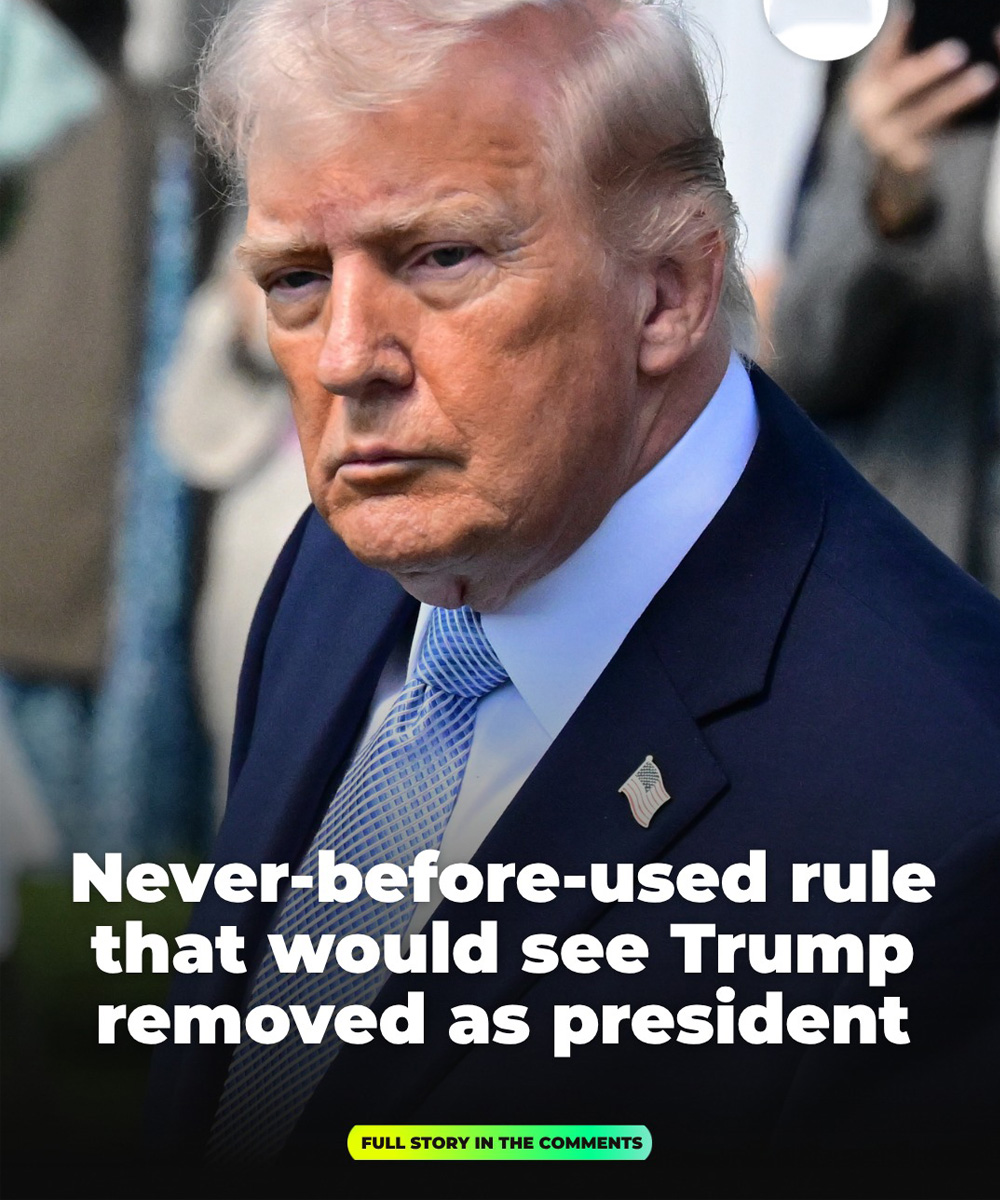
The reaction was swift and intense. Political opponents accused the president of endangering national security and undermining diplomatic efforts. But the most significant response came from those who began discussing a constitutional mechanism so rarely used that most Americans have never heard of it. The Twenty fifth Amendment to the United States Constitution is primarily designed to handle presidential succession and is divided into four sections. The first three outline scenarios where the vice president would take over, such as if a president dies, resigns, or temporarily steps aside, as George W Bush once did for medical procedures.
The fourth section is the most controversial and has never been used. It allows the vice president and a majority of the cabinet to declare that the president is unable to discharge the powers and duties of his office. If that happens, the president can contest the claim. If he does so, the vice president has four days to reaffirm the decision, triggering a vote in Congress. A two thirds majority would then be required to permanently remove the president. The bar is intentionally high. The amendment was designed to prevent a coup, not enable one. But its existence raises a question that many are now asking. Has the president crossed a line that makes his own cabinet question his fitness to serve.
Senator Chris Murphy was one of the first to call for this step, reacting to Trump s post by writing that if he were in the cabinet, he would spend Easter calling constitutional lawyers about the Twenty fifth Amendment. He described the president s message as completely, utterly unhinged. Even some of Trump s most loyal allies have voiced concern. Marjorie Taylor Greene criticized the message, saying it was not what the American people were promised when they voted in the last election. She added that the approach was not making the country great again, but something else entirely. Her words carried weight because she has rarely broken with the president on anything.
The debate over the Twenty fifth Amendment is not just about one controversial post. It is about a pattern of behavior that critics say has grown increasingly erratic. Trump has always been known for his provocative rhetoric, but his recent statements about Iran have alarmed even supporters who previously dismissed his outbursts as strategic bluster. The stakes are higher now. Military action against Iran could draw the United States into a wider regional war with consequences that are difficult to predict.
Invoking the Twenty fifth Amendment would require the vice president and a majority of the cabinet to act. That is a steep political lift. Cabinet members are appointed by the president and serve at his pleasure. Turning against him would require extraordinary courage and would almost certainly end their political careers. JD Vance, the vice president, has shown no indication that he is considering such a move. But the fact that the conversation is happening at all is significant. It means that even within the president s own party, there are questions about his judgment and stability.
The amendment has never been used in this way. It was drafted in the aftermath of President Kennedy s assassination, partly in response to concerns about presidential disability. Over the years, it has been discussed in hypothetical terms, but no president has ever been removed through this mechanism. If it were invoked now, it would trigger a constitutional crisis unlike anything seen in modern American history. The president would almost certainly contest the decision, leading to a bitter fight in Congress and the courts.
Supporters of the president argue that the Twenty fifth Amendment talk is an overreaction driven by political opponents who have never accepted his leadership. They point out that Trump has always used provocative language and that his threats against Iran are no different from statements made by previous presidents. They argue that the real danger is not the president s rhetoric, but the weakness of allies who refuse to stand up to Iranian aggression. From this perspective, calls for the amendment are not about fitness. They are about power.
Critics counter that there is a difference between strategic provocation and reckless endangerment. They argue that the president s post was not a calculated diplomatic move, but an emotional outburst that could have serious consequences. They note that military leaders have expressed concern about the unpredictability of the commander in chief. They point to reports that some in the Pentagon are alarmed by the president s willingness to escalate without clear objectives or exit strategies.
The coming days will be critical. The president has shown no sign of backing down. His allies in Congress are rallying to his defense. The vice president remains publicly supportive. But behind the scenes, conversations are happening that could reshape the presidency. Constitutional scholars are being consulted. Lawyers are reviewing the language of the amendment. Political operatives are calculating the costs and benefits of various outcomes. The world is watching.
Whether the Twenty fifth Amendment is ever invoked or not, the debate itself is a symptom of something larger. Trust in the president s judgment has eroded. Allies are unsure how to respond to his threats. Adversaries are testing the limits of his resolve. And the American people are left wondering what comes next. The amendment was designed for a moment like this, but using it would require a level of political courage that is rare in Washington. For now, the president remains in office. But the questions about his fitness are not going away. They are only getting louder. And the possibility, however remote, that he could be removed before his term ends is now part of the national conversation. That alone is a remarkable development in a presidency that has already defied expectations at every turn.