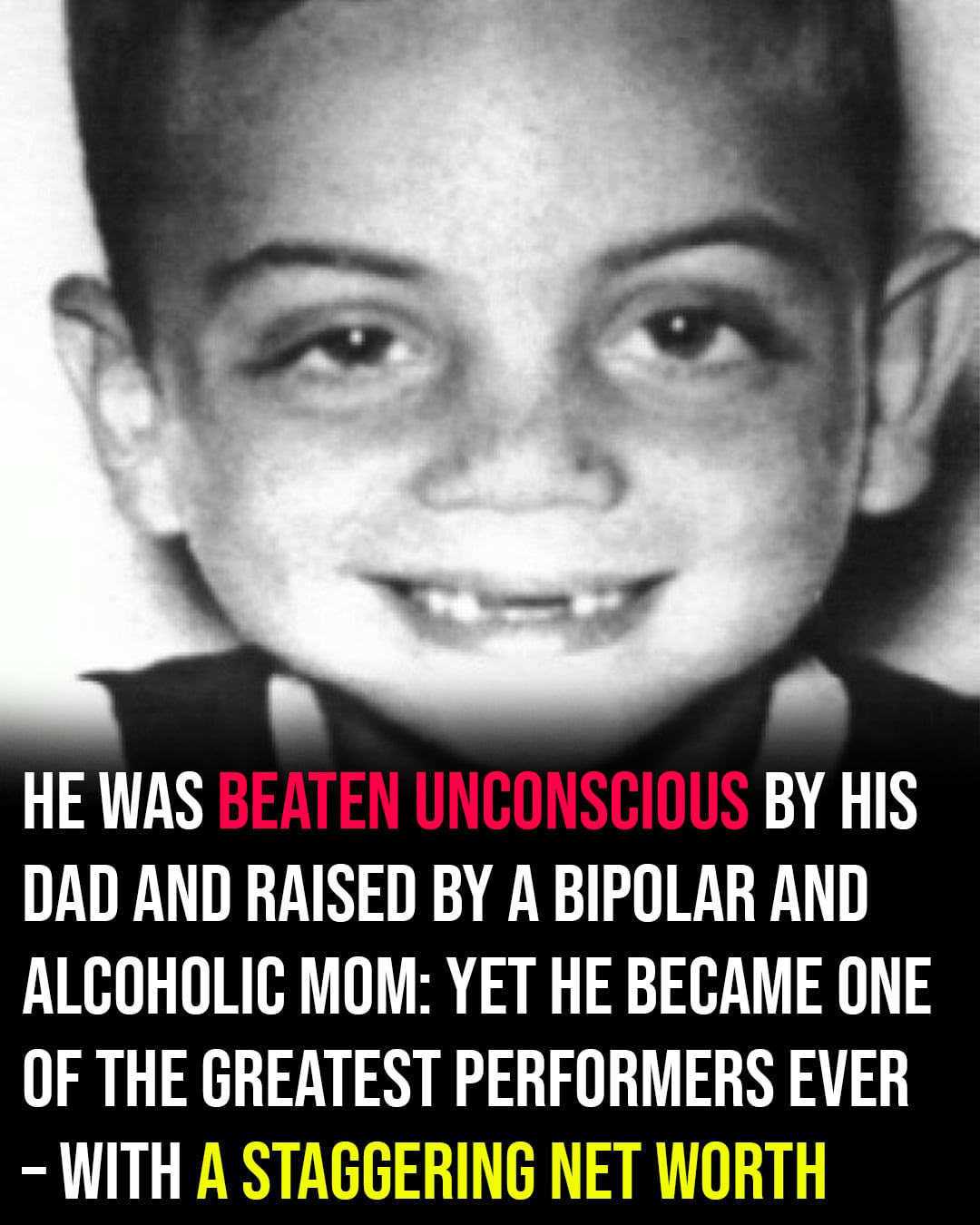
He grew up bruised, bewildered, and poor, a small boy at the piano trying to turn chaos into chords. His father s rage left him unconscious on the floor.
His mother s untreated mental illness left the house flooded with tears and terror. Between them, he learned two things that would shape the rest of his life. Love could vanish without warning. And music would never abandon him. Those early wounds bled into the songs that made the world sing along, but the man behind the melodies carried scars that no hit record could heal.
Billy Joel was not born into fame or fortune. He was born into a household that seemed designed to break him. His father, a classical pianist, left the family when Billy was seven years old. The abandonment cut deep. One day his father was there, the next he was gone, and the boy was left to wonder what he had done wrong. That question would haunt him for decades, whispering in his ear during quiet moments, surfacing in lyrics that sounded like confessions.
His mother did her best, but she was fighting her own battles. Bipolar disorder and alcoholism made her unpredictable. Some days she was loving and present. Other days she was drowning, and the house filled with her pain. Young Billy learned to read those moods, to stay out of the way when the storm was coming, to seek refuge in the one place that felt safe. The piano. His fingers found the keys before he fully understood why. The music gave him something his family could not. Control. Expression. A way to turn suffering into something beautiful.
By the time he was a teenager, Joel was already playing in local bands, skipping school, and getting into trouble. He dropped out of high school to pursue music full time, a decision that terrified his mother but felt inevitable to him. The piano was not a hobby. It was survival. He had nothing else. No backup plan. No safety net. Just the keys and the desperate need to prove that his father had been wrong to leave.
The early years of his career were brutal. He struggled to find his sound, his audience, his place in a music industry that did not know what to make of him. He changed his name to avoid being typecast as a singer songwriter. He played in dives and bars, sleeping in his car when he could not afford a room. He nearly gave up multiple times, convinced that the world did not want what he had to offer. But the piano kept calling him back.
Then came the breakthrough. Piano Man. The song that changed everything. Suddenly, the kid from Hicksville, Long Island, was a star. The albums that followed cemented his place in music history. The Stranger, 52nd Street, Glass Houses. Hit after hit, each one carrying echoes of the pain that had shaped him. Listeners heard catchy melodies and clever lyrics. But those who listened closely heard something else. A man wrestling with his demons in public, turning his wounds into art that millions could sing along to.
Fame did not erase the damage. If anything, it made it worse. The pressure, the expectations, the constant scrutiny. Alcohol became a crutch, then a trap. Depression followed him like a shadow. His marriages crumbled. The woman he loved married his best friend. The betrayal nearly destroyed him. He checked into rehab. He stopped performing for years. The piano sat silent while he tried to figure out who he was without the applause.
Each time, he crawled back to the keys. Not because fame demanded it. Not because the record labels were calling. Because he had nowhere else to go. The piano was the only relationship that had never hurt him, the only thing that had never left. When everything else fell apart, the music remained. And so he kept playing, kept writing, kept showing up for audiences who had no idea how much it cost him to stand on that stage.
Now, in his seventies, Joel is fighting new battles. Age has not been kind to his body. His brain is fragile. His health is uncertain. He has spent time in rehab for physical ailments, not addiction this time, but the fight is no less real. His daughter calls him a trooper. Fans call him a legend. But at his core, he is still that kid at the piano, refusing to let the darkness have the last note.
The sold out shows at Madison Square Garden are a testament to his endurance. Month after month, year after year, he takes the stage and delivers the songs that have become the soundtrack to millions of lives. The crowd sings along, unaware that the man behind the piano is singing his own survival story. Every note is a small victory. Every show is a refusal to give up.
Billy Joel s life is not a fairy tale. It is not a straight line from poverty to prosperity. It is a jagged, painful, beautiful mess of a journey. A boy abandoned by his father. A teenager drowning in his mother s illness. A young man struggling to be heard. A superstar battling addiction and depression. An aging icon fighting time itself. Through it all, the music has been his anchor, his confession booth, his reason to keep going.
His story matters because it reminds us that success does not erase pain. The applause does not heal the wounds. The money does not fill the void left by a parent who walked away. But the music, the art, the act of creation, that can offer something close to redemption. Not a cure. Not an answer. Just a way to keep going, one note at a time.
Billy Joel is not a legend because he wrote great songs. He is a legend because he survived long enough to write them. Because he refused to let his childhood define him. Because he kept showing up, even when showing up was the hardest thing in the world. And because somewhere in all that pain and chaos, he found a way to give the rest of us words for feelings we could not name. That is not just talent. That is grace. And it is the reason we will be singing his songs long after he plays his final note.