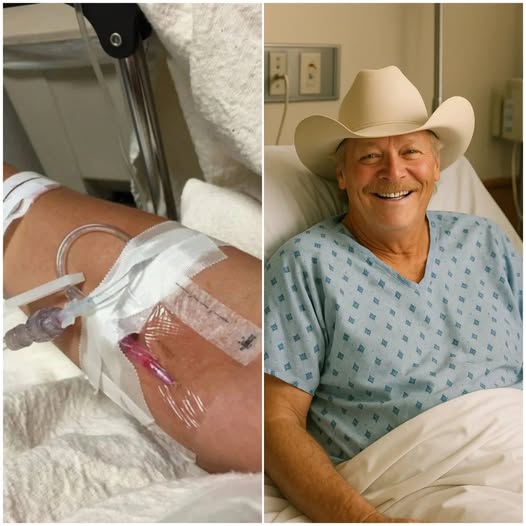
For years, Rebecca endured the slow terror of not being believed. She would sit in sterile exam rooms, watching doctors scribble notes, nod sympathetically, and then deliver the same dismissive verdict: stress. Anxiety.
Maybe she should try meditation, or yoga, or simply worry less. The implication was always the same her symptoms were in her head, products of a mind that had simply learned to manufacture illness.
A Body Betrayed, a Voice Ignored
Subtle tremors, a numb foot, a motionless arm were all waved away as “stress” while her instincts screamed something deeper was wrong. The tremors began almost imperceptibly a slight shake in her fingers when she reached for a glass, a hesitation in her grip that she tried to hide. The numbness followed, creeping up her left foot like a slow freeze, making her stumble on stairs she had climbed a thousand times. Then her arm. Then her handwriting. Then the simple daily rituals brushing her teeth, buttoning a shirt, signing her name that most people take for granted.
Each symptom was a small death. Each loss a quiet grief. But worse than the physical changes was the dismissal. The implication that she was imagining it, exaggerating it, somehow causing it. There is a special kind of loneliness that comes when your body is failing and no one believes you.
Three Long Years
It took three long years, and a Parkinson’s specialist, to finally give her the name for what was stealing her ease, her handwriting, and her sense of self. Three years of appointments, tests, and second opinions. Three years of watching her husband’s concerned face as she described another new symptom. Three years of wondering if the doctors were right if it really was all in her head.
The diagnosis, when it finally came, was both devastating and liberating. Devastating because Parkinson’s disease has no cure. It is a thief, slowly and inexorably taking what it wants. Liberating because she finally had a name for her enemy. She was not crazy. She was not weak. She was not imagining it. Her body was at war with itself, and now she knew what she was fighting.
The Impact on a Family
Terry Crews, known to millions for his powerful physique and booming laugh, crumbled when he heard the news. Not in public he is too disciplined for that but in private, in the quiet moments after the doctor left, in the car ride home, in the dark of their bedroom when he thought no one could see. He held his wife and wept. Not for himself, but for her. For the years of dismissal. For the fear she had carried alone.
Parkinson’s does not just affect the person diagnosed. It ripples through families, changing dynamics, shifting responsibilities, forcing difficult conversations about the future. The Crews family faced those conversations with honesty and, eventually, with hope.
A Breakthrough Treatment
Now, after undergoing focused ultrasound treatment, she’s reclaiming pieces of herself she thought were gone forever. The procedure is non-invasive, targeting specific areas of the brain with sound waves, offering relief for symptoms that once seemed untouchable. It is not a cure. But it is a step. A real, measurable step toward reclaiming what Parkinson’s stole.
Writing her name with her right hand brought Terry to tears; he calls her his “superhero,” the rock of their family. The moment was small a pen, a piece of paper, a few loops and lines. But for Rebecca, it was everything. She had not written with her right hand in years. The Parkinson’s had taken that from her, along with so much else. But now, thanks to the treatment and her relentless determination, she was writing again.
Terry wept openly, unashamed. He posted the video online, sharing the moment with millions. “My superhero,” he wrote. “She never gives up.”
A Message, Not a Plea
Rebecca isn’t asking for sympathy. She’s asking for awareness, especially for women whose symptoms are too easily minimized. Medical gaslighting the dismissal of patients’ real symptoms as psychological disproportionately affects women. Studies have shown that women are more likely to be told their pain is “emotional” or “stress-related,” leading to delayed diagnoses and worsened outcomes.
Rebecca wants that to change. She wants women to trust their bodies, to push for second opinions, to refuse to accept “it’s just anxiety” when they know something is wrong. She wants doctors to listen, to investigate, to treat female patients with the same seriousness as male patients.
Defiant Hope
With new technology offering hope and her faith in a future cure unshaken, she’s chosen to go public not from despair, but from a hard-won, defiant hope. There is a difference between optimism and hope. Optimism assumes things will get better. Hope acts as if they might, even when the evidence is uncertain.
Rebecca Crews is hopeful. She believes that science will catch up to her disease. She believes that treatments will improve, that cures will be found, that her grandchildren will grow up in a world where Parkinson’s is no longer a life sentence. And she is willing to fight for that future not just for herself, but for everyone else living with this diagnosis.
The Road Ahead
The road ahead is long. There will be good days and bad days. There will be setbacks and disappointments. But Rebecca is no longer fighting alone, and she is no longer fighting in the dark. She has a diagnosis, a treatment plan, a family that loves her, and a platform to speak. Those are not small things. They are weapons, and she intends to use them.
Terry stands beside her, not as a protector but as a partner. He does not try to fix her or save her. He simply shows up. He holds her hand. He weeps when she writes her name. He calls her a superhero because, in his eyes, she is.
A Final Reflection
The story of Rebecca Crews is not just a celebrity health story. It is a human story. It is about the terror of not being believed. The relief of finally being heard. The courage to keep fighting when the odds are long. And the quiet, defiant hope that tomorrow might be better than today.
She is not asking for your sympathy. She is asking for your awareness. And perhaps, in that awareness, a small piece of healing can begin not just for her, but for all the women whose symptoms have been dismissed, whose pain has been minimized, whose voices have been ignored.
Rebecca Crews is writing her name again. And in that simple act, she is telling the world: I am still here. I am still fighting. And I am not going anywhere.