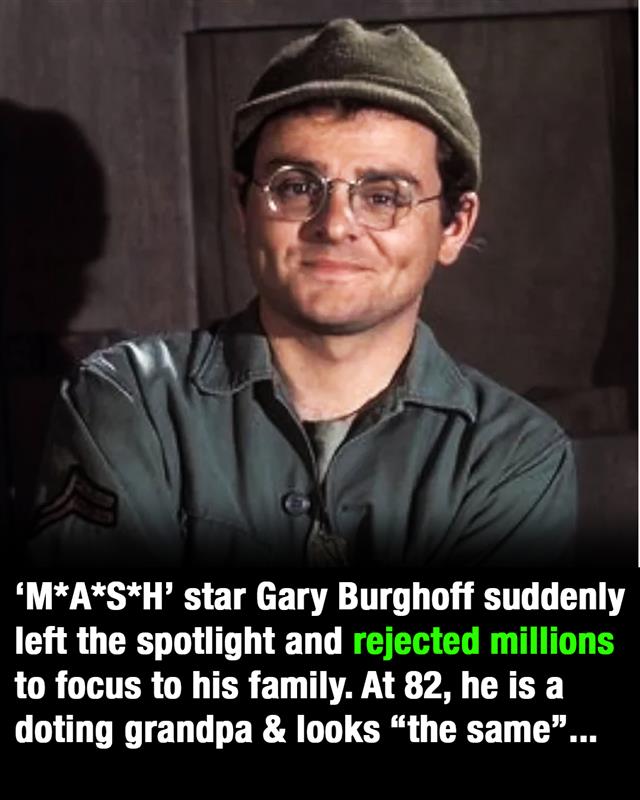
Gary Burghoff’s story is not a Hollywood fairy tale; it’s a human one. In an industry that worships success and often punishes those who walk away from it, Burghoff made a choice that left his agents shaking their heads and his colleagues questioning his sanity.
At the height of his fame on one of the most beloved television shows in American history, he looked at his life and saw something crumbling beneath the surface.
The Weight of Success
At the peak of MASH*, Gary Burghoff was Radar O’Reilly the sweet-natured, soft-spoken company clerk whose teddy bear and folksy wisdom made him a fan favorite. The show was a cultural phenomenon. Ratings were massive. The money was life-changing. But behind the scenes, Burghoff’s family was fraying under the weight of his success. Long hours on set. Constant public attention. The pressure of maintaining a beloved character while also trying to be a present husband and father.
He saw his children growing up in snapshots brief moments between takes, hurried phone calls from location, missed school plays and bedtime stories. His marriage, once strong, was showing cracks. The very success that had made him famous was also making him a stranger in his own home.
A Choice That Shocked Hollywood
Offered a fortune to stay as Radar, he chose instead to be present as a husband and father, insisting you can’t chase fame and still be the dad your children truly need. The decision was not made lightly. He knew what he was giving up. He knew the odds of finding another role as iconic, another paycheck as generous, another wave of public adoration as warm.
But he also knew something that Hollywood too often forgets: you can always make more money. You cannot make more time. His children would only be young once. His wife needed a partner, not a celebrity who passed through like a guest in his own home.
The Brutal Cost of Walking Away
The cost was brutal. Theater work that fizzled. A rejected multimillion-dollar contract that would have secured his financial future. Months of silence where his phone used to ring constantly. A near-bankruptcy that left him with only five hundred dollars and a terrifying quiet where offers used to be. There were moments, he later admitted, when he wondered if he had made a terrible mistake.
The entertainment industry has a short memory. Walk away, and the world moves on without you. Burghoff learned that lesson the hard way. Roles dried up. Friends in the business grew distant. The spotlight that had once warmed him now seemed to shine everywhere except where he stood.
Rebuilding, Not with Applause
But he rebuilt, not with applause, but with paint and quiet persistence. Burghoff had always loved art, but now he turned that love into a second career. He began painting seriously wildlife scenes, landscapes, portraits that captured the soul of their subjects. His work was good. Really good. Galleries took notice. Collectors bought his pieces. He found that art offered something acting never had: solitude, control, and the freedom to work on his own terms.
Turning his love of wildlife into acclaimed artwork gave him a new purpose. He didn’t need a director’s approval. He didn’t need a network to renew his contract. He just needed a canvas, a brush, and the quiet focus that had always been part of his nature.
A Bond Forged on the Water
His bond with his sons became the center of his world. He shared his passions with them fishing, boating, the simple pleasure of being outside, away from phones and schedules and the demands of a world that always wanted more. On the water, he wasn’t Radar O’Reilly. He was just Dad. And that, he discovered, was the role he had been preparing for all along.
Later, he found ways to share those passions online, connecting with fans who had grown up watching MASH* and were now curious about the man behind the teddy bear. He answered questions. He told stories. He spoke honestly about the choices he had made the risks, the regrets, the quiet satisfactions.
From Radar to Grandpa
Now, as “Radar” becomes “Grandpa,” his legacy is no longer just about a beloved character, but about a man who gambled everything on family and, in the long run, won. The money he turned down is a footnote. The fame that once defined him has faded, replaced by something deeper: the love of children who know he chose them, and grandchildren who will grow up hearing stories not just about MASH*, but about a man who understood what truly matters.
A Different Kind of Success
Gary Burghoff did not retire from Hollywood because he failed. He retired because he succeeded in recognizing that some things are more important than success. He understood that when you are old, you will not wish you had worked more late nights or attended more premieres. You will wish you had been there for the small moments the bedtime stories, the fishing trips, the conversations that seem ordinary until they become memories.
In an industry built on ambition and competition, Burghoff chose presence over performance. He chose his children over his audience. And while that choice cost him dearly in the short term, it paid dividends that no amount of money could ever purchase.
What We Can Learn
His story offers a lesson that resonates far beyond Hollywood. How often do we sacrifice the present for the promise of future success? How often do we tell ourselves that we will make time for family later once this project is finished, once this promotion is secured, once this season of busyness passes? Burghoff’s life is a reminder that later is not guaranteed. The only time we truly have is now.
He walked away from millions because he believed his children were worth more than any paycheck. He endured near-bankruptcy because he refused to trade his presence for a price tag. And in the end, he found something that no amount of fame could have given him: peace.
A Legacy of Love
Today, when people remember Gary Burghoff, they still smile at Radar O’Reilly. That character will always be part of television history. But the fuller story the one that matters more is about a man who understood that the most important role he would ever play was not on a soundstage, but in a living room. Not in front of cameras, but around a dinner table. Not for millions of viewers, but for a few people who loved him not because he was famous, but because he showed up.
And in the end, that is a legacy worth more than any Emmy.